

Commentary
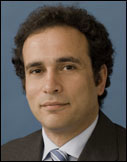
Amr Hamzawy
{
  "authors": [
    "Amr Hamzawy"
  ],
  "type": "legacyinthemedia",
  "centerAffiliationAll": "dc",
  "centers": [
    "Carnegie Endowment for International Peace"
  ],
  "collections": [],
  "englishNewsletterAll": "menaTransitions",
  "nonEnglishNewsletterAll": "",
  "primaryCenter": "Carnegie Endowment for International Peace",
  "programAffiliation": "MEP",
  "programs": [
    "Middle East"
  ],
  "projects": [],
  "regions": [
    "North America",
    "United States",
    "Middle East",
    "North Africa",
    "Egypt",
    "Morocco",
    "Kuwait",
    "Western Europe"
  ],
  "topics": [
    "Political Reform",
    "Foreign Policy"
  ]
}
Source: Getty
A major shift is taking place in the way decision-makers in the U.S. and major European countries view the political role of Islamic movements in the Arab world and also in the way they regard the perils such movements pose for Western interests.
Source: Al-Ahram Weekly Issue No. 872

Current debate in Washington, London, Paris and Berlin is unlike anything we've seen since the Iranian Revolution in 1979 and consequent drama that unfolded with the assassination of Anwar El-Sadat, the rise of Hizbullah and Hamas, bloody confrontations in Algeria in the 1990s, and clashes between authorities and Islamists in Egypt, Jordan, Yemen and Saudi Arabia. No longer is the West dividing Islamists into good Muslims (moderates) and bad Muslims (radicals) according to whether they renounce violence and recognise Israel's right to exist. And no longer is the West adhering to the rather simplistic view that the moderates should be integrated into mainstream politics as a prelude to reform in the Arab world.
Having closely examined the shift in the official view of the West concerning Islamic movements, I sense that four main categories are emerging in the Western perception of Islamists: first, parties and groups such as Morocco's Justice and Development Party and Kuwait's constitutional movement are being regarded as normal political forces that are eligible for participation in the public affairs of their countries. Second, another group of Islamists, including those of Yemen's Reform Party and Bahrain's Shia Reconciliation Society, are seen as eligible for communication. The West is actually encouraging its NGOs to train their members. However, existing tensions between those Islamists and the governments of their countries impel the West to believe that they should remain in the opposition, at least for the foreseeable future.
Third, groups such as Egypt's Muslim Brotherhood and Jordan's Islamic Work Front, which have tense relations with the ruling elites and tend to assume ambiguous (or perceptively ambiguous) positions on various political and societal problems, are kept at an arm's length. However, communication with those groups continues through mediators. Fourth, Hamas, Hizbullah and perhaps the Iraqi Sadr Group, are seen as possible targets for attack, not dialogue. However, their strength on the ground is becoming recognised, and a modicum of communication with them is allowed, at least to avert potential perils.
The simplistic view that once defined the duality of moderate-radical Islamists is being ditched in favour of a more complex and pragmatic view. The fragility of Arab politics and the fact that Islamists have both domestic and external agendas have all contributed to the shift in the way the West perceives various Islamic movements.
In Kuwait and Morocco, the fact that the two countries are geographically removed from the frontlines of the Arab-Israeli conflict helps alleviate Western worries. The opposite is true in Egypt and Jordan where close relations between the West and prevailing governments affects the Western view of local Islamists.
There is another reason why Islamists of both Morocco and Kuwait are regarded with more tolerance in the West. In both countries, there are a variety of Islamist groups vying for public attention. And not one of those groups seems to have a monopoly on religious discourse, unlike the case in Egypt and Jordan.
Still, the social structure and institutional conditions existing in any given country seem to affect the Western view of Islamic groups in that country. For example, Bahrain's Sunni-Shia divide and the fragility of Yemen's government heighten Western fears of instability in both countries. This is why the West is reluctant to talk to Bahrain's Reconciliation and Yemen's Reform members, despite the fact that both are peaceful political movements. Likewise, the erosion of state institutions in Palestine, Lebanon and Iraq discourage the US and Europe from communicating with Islamic powers there, for fear of propelling them into power. But in most of those cases, the West maintains unofficial channels of communication with Islamists in recognition of their strength on the ground.
In short, the US and Europe are ditching the generalisations and simplifications of the past in favour of a more pragmatic view of the Islamic movements in the Arab world.

Director, Middle East Program
Amr Hamzawy is a senior fellow and the director of the Carnegie Middle East Program. His research and writings focus on Egypt’s and other middle powers’ involvement in regional security in the Middle East, particularly through collective diplomacy and multilateral conflict resolution
Recent Work
Amr Hamzawy
Amr Hamzawy, Kathryn Selfe
Carnegie does not take institutional positions on public policy issues; the views represented herein are those of the author(s) and do not necessarily reflect the views of Carnegie, its staff, or its trustees.

As we close out another season of Strategic Europe, it is worth taking stock of the deep shifts underway.

Rym Momtaz

The hybrid warfare landscape is evolving rapidly, leaving policymakers without clear strategies. To better inform their work in addressing emerging challenges, governments must dig deeper into the underlying dynamics at play.


Raluca Csernatoni, Alicia Wanless
The EU had to compromise to adopt a twenty-first sanctions package against Russia, exposing growing cracks in the union’s resolve. Is this latest, weaker round worth it to keep pressure on Moscow?
Rym Momtaz, ed.

Trump is distracted and Ukraine wants Europe to step up. The continent’s leaders must find their voice and assert it in talks with Russia.

Alissa de Carbonnel

Mounting economic strain and battlefield losses will not necessarily make the Kremlin less dangerous. They could instead push Moscow toward a more aggressive hybrid campaign designed to test NATO’s Eastern flank, exploit allied hesitation, and fracture European resolve.

Maksym Beznosiuk