

Commentary
Maria Lipman
{
  "authors": [
    "Maria Lipman"
  ],
  "type": "legacyinthemedia",
  "centerAffiliationAll": "",
  "centers": [
    "Carnegie Endowment for International Peace",
    "Carnegie Russia Eurasia Center"
  ],
  "collections": [],
  "englishNewsletterAll": "",
  "nonEnglishNewsletterAll": "",
  "primaryCenter": "Carnegie Russia Eurasia Center",
  "programAffiliation": "",
  "programs": [],
  "projects": [],
  "regions": [
    "Caucasus",
    "Russia"
  ],
  "topics": [
    "Political Reform",
    "Democracy"
  ]
}
Source: Getty
During Vladimir Putin's presidency, tight control of the mass media evolved as one of the Russian leadership's key political resources. It will be equally indispensable to newly inaugurated President Dmitry Medvedev.
Source: Washington Post

To understand how journalism here changed under Putin, consider two book projects.
In 1999, Natalia Gevorkyan and Andrey Kolesnikov, two reporters at Russia's best daily newspaper, Kommersant, interviewed Putin for a book that was to introduce the president-to-be to the public. Excerpts printed in Kommersant before the book's publication revealed an angry exchange over Andrei Babitsky, a Radio Liberty reporter who was being held incommunicado in Chechnya. The journalists voiced the suspicion, shared then by many in Russia, that Babitsky was being held on state orders. They demanded that Putin release Babitsky and said bluntly that they didn't believe his responses.
The second book interviews involved Medvedev and occurred shortly before he was elected president. This time the excerpts were published on the Kremlin Web site. Medvedev was queried about what the words "great Russia" mean to him, his conception of democracy and his attitude toward private property. The journalists were friendly and respectful, and Medvedev's answers were long and uninterrupted.
If the interviewers, a husband and wife, had wanted to discuss journalists in trouble with the government, they wouldn't have had to struggle for examples. Last year, reporter Natalia Morar' was deported after a weekly magazine ran a series she wrote alleging that high-ranking officials were siphoning huge sums out of the country. Manana Aslamazian, director of Internews Russia, a mostly U.S.-funded organization that since 1992 had trained television journalists and supported independent broadcasters, fled the country fearing arrest; Internews Russia was promptly destroyed. The assassinations and mysterious deaths of several high-profile journalists, including Anna Politkovskaya, Yuri Shchekochikhin and Paul Klebnikov, remain unsolved.
But in today's Russia, journalists don't press top officials. In fact, apart from the interviews with Gevorkyan and Kolesnikov, Putin, as president, never publicly faced a single unfriendly question from a Russian reporter.
During Putin's tenure, television broadcasting was honed to perfection -- as a tool to shape public opinion. Coverage of political and public affairs is now tightly controlled through a coordinated effort of the national channels' top managers and Kremlin aides. The result is that any event, person, group or movement may be boosted or played down in the public eye in a way that would best suit the Kremlin's desires and designs; anyone deemed an adversary of the government may be discredited or vilified.
Polls indicate that the public is highly responsive to television brainwashing -- whether the campaigns are against Georgia, Ukraine or the West, or are intended to influence voting preferences. In contrast to Soviet times, the government's most effective media tools are also highly profitable. Each of the two biggest channels reaches almost all Russian households. While stations don't compete in news coverage -- news shows differ little from channel to channel -- other competition for viewers and advertisers is fierce. The result: first-class soap operas and other entertainment programs that keep people glued to their screens. Advertisers, attracted to large audiences, eagerly commit their budgets to state-controlled television.
This business model and the controlled political content are inseparable and mutually beneficial. The Kremlin-designed television diet is easily digested: Bland information is supplemented by exciting entertainment shows. As he completed his second term, Putin granted special letters of commendation to the top managers of the national channels.
The government has radically curtailed broadcast freedom, but it does not totally control speech. Some broadcast, print and online outlets with smaller audiences have maintained relatively independent editorial lines, which serves to let off steam. These outlets may create an appearance of media freedom, but they are tightly insulated from national television, effectively marginalized and kept politically irrelevant.
Shortly before his inauguration this month, Medvedev disagreed with the view that there has been "regress" in the way Russian media are regulated. He told the popular weekly Argumenty i Fakty that the "mass media develop not badly at all." "In its quality and the means used," he continued, "Russian television is among the best in the world" and is not "pro-government." This is blatantly untrue. People who work in television privately admit that they operate under tight government control. Some have even said so publicly. Prominent TV journalist Vladimir Posner said recently at a public meeting that "on television and not only on television [there is] no press freedom." During recent parliamentary and presidential election campaigns, Posner added, some issues were "entirely banned" and certain public figures could not be invited on air.
Whether or not Medvedev believes his statements about Russian television, he'll have to draw on the system of manipulative politics -- and its key element, the state-controlled media -- that Putin's Kremlin created. The national TV channels are a political resource of uncontested might. However power-sharing between Putin and Medvedev may evolve, they will have to share the power of television as well.
Masha Lipman, editor of the Carnegie Moscow Center's Pro et Contra journal, writes a monthly column for The Post.
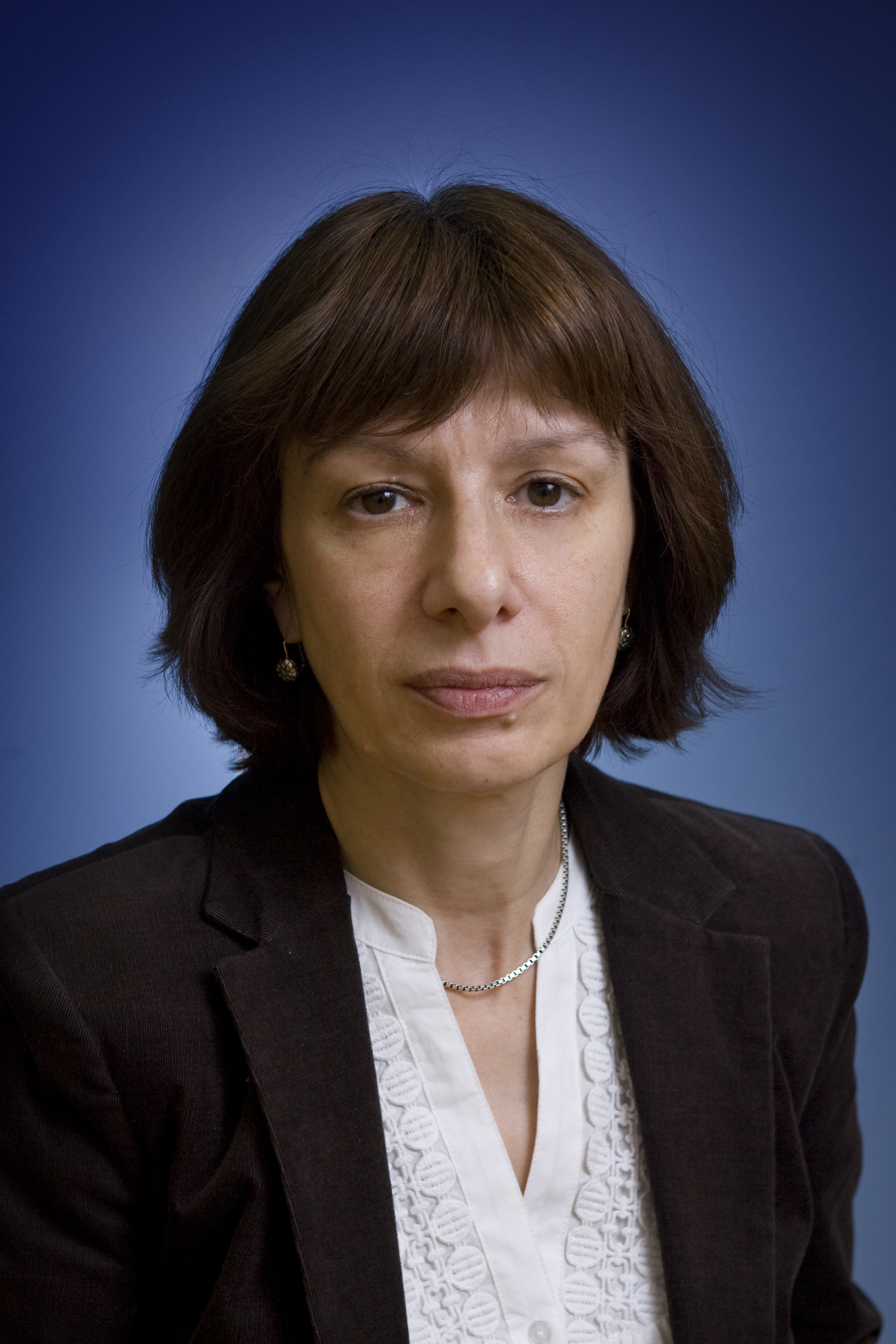
Former Scholar in Residence, Society and Regions Program, Editor in Chief, Pro et Contra, Moscow Center
Lipman was the editor in chief of the Pro et Contra journal, published by the Carnegie Moscow Center. She was also the expert of the Carnegie Moscow Center’s Society and Regions Program.
Recent Work
Maria Lipman
Maria Lipman
Carnegie does not take institutional positions on public policy issues; the views represented herein are those of the author(s) and do not necessarily reflect the views of Carnegie, its staff, or its trustees.

A summer of escalation in the Black Sea has hurt Ukraine economically and is exacerbating world food security. A truce is needed—as is a broader reframing of Europe’s Ukraine strategy.

Thomas de Waal

European Commission President Ursula von der Leyen is about to give her annual address on the state of the EU. Here’s what she won’t—but should—say.

Rym Momtaz

Radical-right parties are expected to do well in upcoming elections in four of the EU's biggest member states. If successful, they could prevent the union from addressing key challenges ahead.

Stefan Lehne

An overwhelming victory by a far-right-wing party in a small state in eastern Germany will have major repercussions for Chancellor Friedrich Merz’s coalition.

Judy Dempsey

The EU’s responses to two recent incidents expose the gulf between European perceptions and capabilities. Unless the union can bridge that gap, it will never become a real geostrategic power.
Rym Momtaz