

Paper
Ashley J. Tellis
{
  "authors": [
    "Ashley J. Tellis"
  ],
  "type": "legacyinthemedia",
  "centerAffiliationAll": "dc",
  "centers": [
    "Carnegie Endowment for International Peace"
  ],
  "collections": [],
  "englishNewsletterAll": "ctw",
  "nonEnglishNewsletterAll": "",
  "primaryCenter": "Carnegie Endowment for International Peace",
  "programAffiliation": "SAP",
  "programs": [
    "South Asia"
  ],
  "projects": [],
  "regions": [
    "North America",
    "United States",
    "South Asia",
    "India"
  ],
  "topics": [
    "Foreign Policy",
    "Nuclear Policy",
    "Nuclear Energy"
  ]
}
Source: Getty
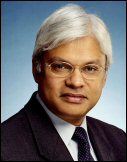
The U.S.-India Civil Nuclear Agreement is a recognition of India’s rise as a global player, and its strategic importance to the United States. This is part of a transforming world order, which the U.S. wants to shape to its advantage, says Ashley J. Tellis in an interview with Mint - Wall Street Journal.
Source: Mint - Wall Street Journal

I think at the US end there’s only good news. The House is expected to vote on the Bill sometime today (Friday) in the US and I expect once that happens it will be reported to the Senate. I think we will cross that hurdle before Congress adjourns. So I am very optimistic about it.
So we are going to have a 123 agreement?
Absolutely.
What does the Indo-US nuclear agreement really mean for India?
I would say it means three things. (One) It is a changing of a very powerful set of global rules to accommodate India; it is a recognition of India’s responsibility and its rising capabilities; and the importance of the US-India partnership. Two, it gives India access to something it has never had for the last 30-odd years, and that is nuclear energy cooperation with a whole range of countries, which is going to be vital if India is going to meet its developmental goals. The third is more symbolic, in that it means the end of the nuclear apartheid regime to use (former external affairs minister) Jaswant Singh’s famous phrase, that kept India out of the group of elite countries. I think it is truly a transformative event and when historians write about in the coming decades, I have absolutely no doubt in my mind that this will have been one of those turning points in India’s march towards becoming a great power.
This new world order that you are outlining — what is in it for the US?
That is a hard question to answer satisfactorily, because the honest answer is that in part, it depended greatly on the President’s (George W. Bush) own instincts. It’s an unsatisfying answer because it’s a complex policy
question. But the President had an instinct about India and a desire to make this relationship work, to put it on new foundations and he drove this initiative really as an act of will… It starts actually not in 2005, but goes back to his first term...
Former Senior Fellow
Ashley J. Tellis was a senior fellow at the Carnegie Endowment for International Peace.
Recent Work
Ashley J. Tellis
Ashley J. Tellis
Carnegie does not take institutional positions on public policy issues; the views represented herein are those of the author(s) and do not necessarily reflect the views of Carnegie, its staff, or its trustees.

European Commission President Ursula von der Leyen is about to give her annual address on the state of the EU. Here’s what she won’t—but should—say.

Rym Momtaz

Radical-right parties are expected to do well in upcoming elections in four of the EU's biggest member states. If successful, they could prevent the union from addressing key challenges ahead.

Stefan Lehne

The aftermath of the Ceuta crisis shows Europe has drawn the wrong lessons. Rather than doubling down on failed migration policies, the EU needs to address the underlying roots of such episodes.

Richard Youngs

Canadian Prime Minister Mark Carney has twice inspired praise for standing up to U.S. President Donald Trump: at the 2026 World Economic Forum in Davos and on Canada-U.S. trade negotiations. Is Carney showing a third way better than the EU has in dealing with the Trump administration?
Rym Momtaz, ed.

The EU’s responses to two recent incidents expose the gulf between European perceptions and capabilities. Unless the union can bridge that gap, it will never become a real geostrategic power.
Rym Momtaz