

Paper
Ashley J. Tellis
{
  "authors": [
    "Ashley J. Tellis"
  ],
  "type": "legacyinthemedia",
  "centerAffiliationAll": "dc",
  "centers": [
    "Carnegie Endowment for International Peace"
  ],
  "collections": [],
  "englishNewsletterAll": "ctw",
  "nonEnglishNewsletterAll": "",
  "primaryCenter": "Carnegie Endowment for International Peace",
  "programAffiliation": "SAP",
  "programs": [
    "South Asia"
  ],
  "projects": [],
  "regions": [
    "South Asia",
    "Afghanistan",
    "Pakistan"
  ],
  "topics": [
    "Security",
    "Military",
    "Foreign Policy"
  ]
}
Source: Getty
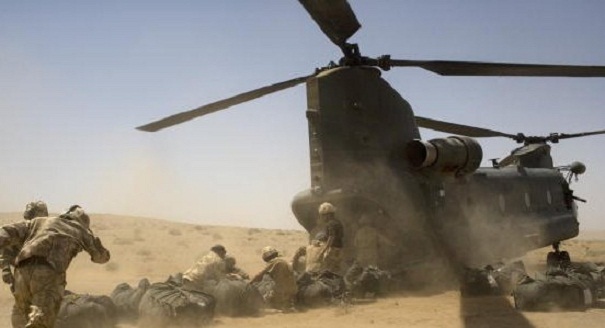
President Obama's failure to explicitly mention that the U.S. intends to stay in Afghanistan could could strengthen the Taliban, which seeks to outlast the international coalition.
Source: Yale Global

Comprehensive engagement in Afghanistan, of course, was opposed by a variety of constituencies. Senator John Kerry (D-Mass.), for example, warned against any reconstruction intended “to make [Afghanistan] our 51st state,” suggesting instead that allied objectives in that country be limited to ensuring that “it does not become an al-Qaeda narco-state and terrorist beachhead capable of destabilizing neighboring Pakistan.” Others, such as the former president of the Council on Foreign Relations, Leslie Gelb, urged Obama “to explore a strategy of power extrication” by which the United States would “leave Afghanistan” because “trying to eliminate the Taliban and Qaeda threat [therein] is unattainable.” Some other alternatives were proposed as well. David Boaz of the libertarian Cato Institute wondered whether the US would “be able to extricate [itself] sooner if we accept a decentralized Afghanistan with some regions ruled by groups that are currently fighting against our troops?” And, one senior NATO official, reflecting the view of many European governments eager to end their involvement in Afghanistan, has been quoted by the Guardian as arguing that Kabul “doesn’t need to be a democracy, just secure.”
Former Senior Fellow
Ashley J. Tellis was a senior fellow at the Carnegie Endowment for International Peace.
Recent Work
Ashley J. Tellis
Ashley J. Tellis
Carnegie does not take institutional positions on public policy issues; the views represented herein are those of the author(s) and do not necessarily reflect the views of Carnegie, its staff, or its trustees.

With its public finances in shambles, the far right polling at 35 percent ahead of the 2027 presidential election, and a growing protest movement, is France’s crisis a threat to the EU’s geopolitical awakening?

Rym Momtaz, ed.

Ahead of a tough winter for Ukraine, Donald Trump’s swing back toward Russia bodes ill. But instead of panicking, Kyiv’s European allies are focusing on action.
Rym Momtaz

Funding Ukraine remains a priority for European leaders. As Russia’s war of aggression heads into another winter, two feasible options to mobilize support for Kyiv should be fast-tracked.


Vladyslav Rashkovan, Gregory P. Wilson

While the EU and European governments are embracing the much-lauded middle-power moment, this entails three difficult conundrums.

Richard Youngs

Europe is facing rising populism internally as well as external pressures from Russia, China, Turkey, and the United States.

Dimitar Bechev