• Research
  • Strategic Europe
  • About
  • Experts
Carnegie Europe logoCarnegie lettermark logo
EUUkraine
  • Donate
{
  "authors": [
    "Dmitri Trenin"
  ],
  "type": "legacyinthemedia",
  "centerAffiliationAll": "",
  "centers": [
    "Carnegie Endowment for International Peace",
    "Carnegie Russia Eurasia Center"
  ],
  "collections": [],
  "englishNewsletterAll": "",
  "nonEnglishNewsletterAll": "",
  "primaryCenter": "Carnegie Russia Eurasia Center",
  "programAffiliation": "",
  "programs": [],
  "projects": [],
  "regions": [
    "Caucasus",
    "Russia"
  ],
  "topics": [
    "Economy",
    "Climate Change"
  ]
}
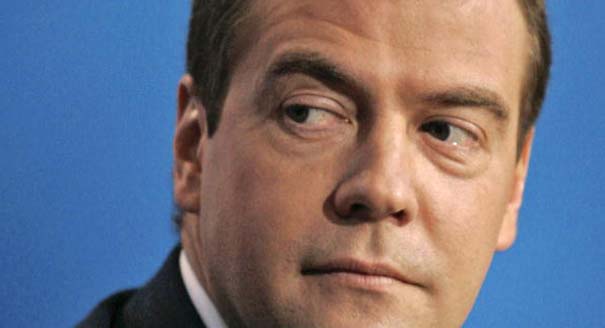
Source: Getty

In The Media
Carnegie Russia Eurasia Center

The 2009 Time 100: Alexander Medvedev

Europe's security requires Russia's integration into a common compact with the countries of NATO and the European Union, as well as with newer states like Ukraine, Georgia and others. And a stable security arrangement needs to be flanked by an economic one encompassing the entire continent.

Link Copied
By Dmitri Trenin
Published on May 11, 2009

Source: Time

The 2009 Time 100: Alexander Medvedev
If Alexei Miller, Gazprom's CEO, is the company's public face and conduit to the Russian political leadership, Alexander Medvedev, head of Gazprom Export, is its link to the outside world. One-third of the gas consumed in Europe passes through Medvedev's hands, and 60% of Gazprom's total revenues come from exports.

Medvedev, 53, believes that Russia's business is predominantly business. Medvedev also believes in a bright future for natural gas and looks beyond the present crisis to the day when Gazprom's capitalization will shoot to a trillion dollars. Last summer it stood at a mere third of that amount.

Yet as the recurrent gas wars between Russia and Ukraine demonstrate, Europe's energy security is an area of high tension. After four decades of being Europe's main gas provider, Russia has seen its originally stellar reputation — it pumped away even as the Soviet Union was disintegrating — become severely damaged. Medvedev can give brilliant rejoinders to critics, but more and more people are talking about how to ensure Europe's energy security against the whims of Russia, its lead supplier.

Those thinking strategically about energy, however, need to think outside the box. Europe's security requires Russia's integration into a common compact with the countries of NATO and the European Union, as well as with newer states like Ukraine, Georgia and others. And a stable security arrangement needs to be flanked by an economic one encompassing the entire continent. After World War II, the nucleus of what later became the European Union was formed around the European Coal and Steel Community. With luck, a European Energy Community will be a similar catalyst for the E.U. and its post-Soviet neighbors, including Russia. Alexander Medvedev of Gazprom and President Dmitri Medvedev of the Kremlin have their work cut out for them.
 
This article originally appeared in Time
Dmitri Trenin
Former Director, Carnegie Moscow Center
EconomyClimate ChangeCaucasusRussia

Carnegie does not take institutional positions on public policy issues; the views represented herein are those of the author(s) and do not necessarily reflect the views of Carnegie, its staff, or its trustees.

More Work from Carnegie Europe

  • Commentary
    Strategic Europe
    How Europe Can Survive the AI Labor Transition

    Integrating AI into the workplace will increase job insecurity, fundamentally reshaping labor markets. To anticipate and manage this transition, the EU must build public trust, provide training infrastructures, and establish social protections.

      Amanda Coakley

  • Commentary
    Strategic Europe
    Taking the Pulse: Can the EU Attract Foreign Investment and Reduce Dependencies?

    EU member states clash over how to boost the union’s competitiveness: Some want to favor European industries in public procurement, while others worry this could deter foreign investment. So, can the EU simultaneously attract global capital and reduce dependencies?

      • Rym Momtaz

      Rym Momtaz, ed.

  • Commentary
    Strategic Europe
    Europe Falls Behind in the South Caucasus Connectivity Race

    The EU lacks leadership and strategic planning in the South Caucasus, while the United States is leading the charge. To secure its geopolitical interests, Brussels must invest in new connectivity for the region.

      Zaur Shiriyev

  • Commentary
    Strategic Europe
    The EU and India in Tandem

    As European leadership prepares for the sixteenth EU-India Summit, both sides must reckon with trade-offs in order to secure a mutually beneficial Free Trade Agreement.

      Dinakar Peri

  • Commentary
    Strategic Europe
    Taking the Pulse: What Issue Is Europe Ignoring at Its Peril in 2026?

    2026 has started in crisis, as the actions of unpredictable leaders shape an increasingly volatile global environment. To shift from crisis response to strategic foresight, what under-the-radar issues should the EU prepare for in the coming year?

      Thomas de Waal

Get more news and analysis from
Carnegie Europe
Carnegie Europe logo, white
Rue du Congrès, 151000 Brussels, Belgium
  • Research
  • Strategic Europe
  • About
  • Experts
  • Projects
  • Events
  • Contact
  • Careers
  • Privacy
  • For Media
  • Gender Equality Plan
Get more news and analysis from
Carnegie Europe
© 2026 Carnegie Endowment for International Peace. All rights reserved.








