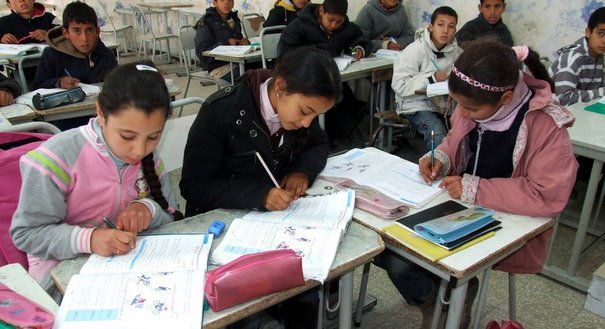
Without dramatic improvement in the Arab world at all educational levels, unemployment, illiteracy, and income inequality will continue to worsen, and the region will remain a danger to itself and its neighbors.
Education is the Most Powerful WeaponReport after report from the World Bank, United Nations Development Programme, and the Arab League emphasise that the education deficit in the Arab world is among the main causes of its underdevelopment. With 5% of the world's population and the bulk of the world's oil and gas, the Arab world nonetheless lags behind most of the rest of the world, and suffers from what can best be termed "educational poverty." Without dramatic improvement at all educational levels, unemployment, illiteracy, and income inequality will continue to worsen, and the region will remain a danger to itself and its neighbors.
Even before the current economic recession, unemployment in the Arab world was estimated at 14% – the world's highest average outside sub-Saharan Africa. Among young people and recent graduates, the figure is more than double.
The Arab world also has the highest population growth rate in the world, with almost 40% of its population now below the age of 15. According to some estimates, the Arab world accounts for one-quarter of the world's unemployment among the 15-24 age group. Just to keep up with the inflow of young people into the labour market, Arab economies will have to generate 100 million new jobs over the next 10 years, which will be impossible if education remains impoverished.
Enrollment ratios in the Arab world have improved over the past decade, but Arab countries still have one of the lowest average net enrollment ratios in the developing world. About one-fifth of eligible children, more than seven million, are not in school, and 60% of these are girls. The average years of schooling for Arabs is less than half that for the East Asian countries. Not surprisingly, despite progress in recent decades, illiteracy remains at around 30% on average, and in some Arab countries reaches 50% and 60%.
The quality of Arab education is also an obstacle. Today's job market demands skills based on problem-solving, critical thinking, modern languages, and technology, but Arab educational systems generally remain traditional, rote-based, and authoritarian.
Research throughout the world shows that education is a key prerequisite for sustainable growth. The East Asian tigers invested heavily in education, and it paid off in terms of a capable and modern workforce. By contrast, development in the Arab world, driven largely by oil revenues, has left the population under-educated and economically marginalised.
Education is also important in the Arab context because of its special status in Islam, which, like Judaism and Christianity, is a religion of the book. The Gospel of St John says, "In the Beginning was the Word"; the first word that was revealed to the prophet Muhammad by the Angel Gabriel was "Read … " Among the prophet's sayings is, "It is the duty of every Muslim man and woman to seek learning."
Moreover, Islam does not have a priesthood, just scholars. The Arab golden ages, in 11th-century Baghdad and 14th-century Andalucía, are revered as periods of great learning. Schools and universities received large-scale support, and students and scholars traveled from city to city in pursuit of knowledge. After these golden ages, education fell into decline.
By the 1970's and 1980's, the Arab world's post-independence states had made great improvements in their education sector. But they did not have the resources to keep up with their own growing populations. The dramatic levels of investment of the 1950s and 1960s tapered off, with the result that too many children are now either outside the school system or are receiving a low-quality education that leaves them without basic literacy and numeracy skills. And there are still too many disparities based on gender, location, wealth, disability, and other markers of marginalisation.
What the west has most, and what the Arab world most needs, is education. It requires more schools and fewer guns; more universities and fewer aircraft carriers. The American University of Beirut, founded in 1866, has arguably done more to transform the Middle East in positive ways than any other comparable institution, yet it receives only $3m in annual aid from the United States, which spends billions on armies and weaponry in the region.
Indeed, the cost of a single month of western military spending in Iraq or Afghanistan would be enough to triple total aid for education in the Middle East. The cost of two cruise missiles would build a school, the cost of a Eurofighter a small university.
Education can also have a fundamental effect on forming values. Radical Islamists recognised this long ago and plowed their resources into schools. Saudi Arabia recognised it in the 1970's as it sought to expand its influence, and over the years the kingdom has funded thousands of schools and colleges that teach its stringent brand of Wahhabi Islam.
In Afghanistan and Pakistan, the radical vision is conveyed to the young in religious schools known as madrasas. Indeed, "Taliban" means "students." The struggle for the future of the Arab and Muslim worlds that is being fought now will be won or lost not on the battlefield, but in the classroom.
Carnegie does not take institutional positions on public policy issues; the views represented herein are those of the author(s) and do not necessarily reflect the views of Carnegie, its staff, or its trustees.
French President Emmanuel Macron has unveiled his country’s new nuclear doctrine. Are the changes he has made enough to reassure France’s European partners in the current geopolitical context?
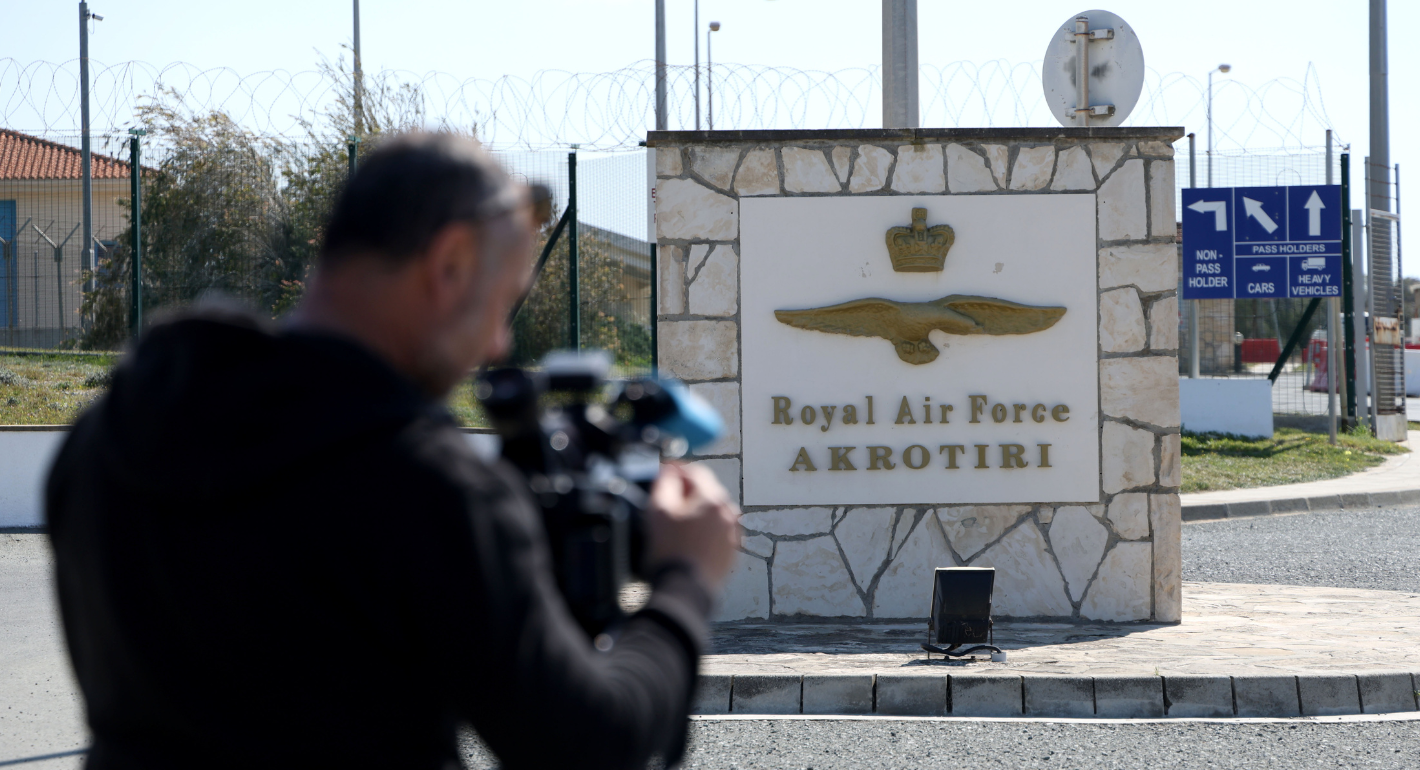
The drone strike on the British air base in Akrotiri brings Europe’s proximity to the conflict in Iran into sharp relief. In the fog of war, old tensions in the Eastern Mediterranean risk being reignited, and regional stakeholders must avoid escalation.
European reactions to the war in Iran have lost sight of wider political dynamics. The EU must position itself for the next phase of the crisis without giving up on its principles.
Europe’s reaction to the war in Iran has been disunited and meek, a far cry from its previously leading role in diplomacy with Tehran. To avoid being condemned to the sidelines while escalation continues, Brussels needs to stand up for international law.
France has stopped clinging to notions of being a great power and is embracing the middle power moment. But Emmanuel Macron has his work cut out if he is to secure his country’s global standing before his term in office ends.