

Paper
George Perkovich
{
  "authors": [
    "George Perkovich"
  ],
  "type": "other",
  "centerAffiliationAll": "dc",
  "centers": [
    "Carnegie Endowment for International Peace",
    "Carnegie Europe",
    "Carnegie Russia Eurasia Center"
  ],
  "collections": [
    "Transatlantic Cooperation",
    "U.S. Nuclear Policy"
  ],
  "englishNewsletterAll": "ctw",
  "nonEnglishNewsletterAll": "",
  "primaryCenter": "Carnegie Endowment for International Peace",
  "programAffiliation": "NPP",
  "programs": [
    "Nuclear Policy"
  ],
  "projects": [],
  "regions": [
    "North America",
    "United States",
    "Eastern Europe",
    "Western Europe",
    "Germany",
    "Europe"
  ],
  "topics": [
    "Nuclear Policy"
  ]
}
Source: Getty
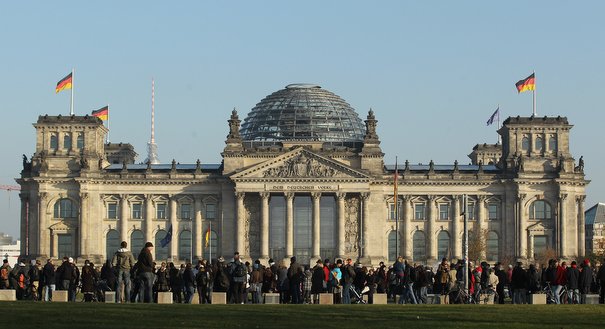
Recent arguments against a withdrawal of U.S. nuclear weapons from Germany are based on anachronistic perceptions regarding NATO’s nuclear weapons capacity, but bring up important points concerning broader implications for nuclear disarmament.
The London-based Centre for European Reform released a brief last week by Franklin Miller, George Robertson, and Kori Schake criticizing the new German government for proposing the withdrawal of all U.S. nuclear weapons from Germany. The authors’ international standing makes their essay worthy of debate. A new paper by George Perkovich analyzes their main arguments.
Key Conclusions
“Thinking in terms of nuclear deterrence, and especially in terms of bombs on German soil, obscures the broader challenge of reinvigorating NATO and extending deterrence against lower-scale threats,” writes Perkovich. “The moral hazard in Europe today is not in taking useless tactical nuclear weapons out, it is in pretending that they can protect allies from twenty-first century threats and doing too little in the meantime to develop capabilities and diplomatic strategies to deny those threats.”

Japan Chair for a World Without Nuclear Weapons, Senior Fellow
George Perkovich is the Japan Chair for a World Without Nuclear Weapons and a senior fellow in the Carnegie Endowment for International Peace’s Nuclear Policy Program. He works primarily on nuclear deterrence, nonproliferation, and disarmament issues.
Recent Work
George Perkovich
George Perkovich
Carnegie does not take institutional positions on public policy issues; the views represented herein are those of the author(s) and do not necessarily reflect the views of Carnegie, its staff, or its trustees.

The domestic impacts of how long it is taking to end the war in Ukraine have pushed the French electorate to the political extremes and compromised the country’s diplomatic capacity.

Rym Momtaz

Before the next wave of EU enlargement takes place, the union needs to grapple with thorny questions of how power is distributed among its members.


Emil Sondaj Hansen, Ditte Brasso Sørensen

The new U.S.–Denmark–Greenland agreement will help Washington exert political, economic, and financial dominance under the guise of security. Yet, it acknowledged Copenhagen’s and Nuuk’s sovereignty on the island.

Marc Pierini

A summer of escalation in the Black Sea has hurt Ukraine economically and is exacerbating world food security. A truce is needed—as is a broader reframing of Europe’s Ukraine strategy.

Thomas de Waal

Are Germany’s economic, industrial, and political struggles becoming a liability for the EU’s ability to rise to the geopolitical moment?
Rym Momtaz, ed.