

Commentary
Fabrice Pothier
{
  "authors": [
    "Fabrice Pothier"
  ],
  "type": "legacyinthemedia",
  "centerAffiliationAll": "",
  "centers": [
    "Carnegie Endowment for International Peace",
    "Carnegie Europe"
  ],
  "collections": [],
  "englishNewsletterAll": "",
  "nonEnglishNewsletterAll": "",
  "primaryCenter": "Carnegie Europe",
  "programAffiliation": "",
  "programs": [],
  "projects": [],
  "regions": [
    "Europe"
  ],
  "topics": [
    "Foreign Policy"
  ]
}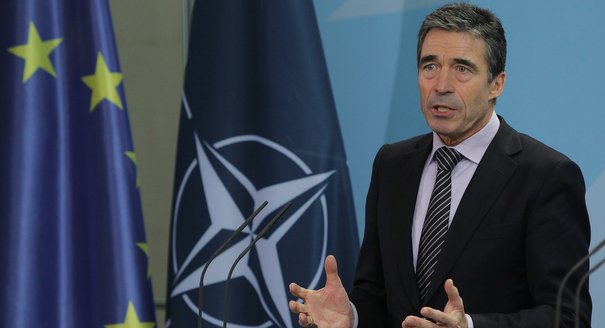
Source: Getty
Two decades after the end of the Cold War, NATO must demonstrate that it can adapt to the security challenges of the 21st century, including nuclear weapons proliferation, terrorism and cyber-warfare.
Source: Global Europe

The predicament NATO faces in the coming decade boils down to one simple truth: it is not enough to share values; you must share the will to fight for and defend those values. Two decades after the end of the Cold War, the moment of truth has finally arrived for NATO: it must demonstrate that it can adapt to the security challenges of the 21st century.
The alliance must begin by identifying these challenges, and defining the role it can play in tackling them. From the threat of nuclear weapons proliferation to terrorism and cyber-warfare, NATO needs to pick its issues. It is only then, when the alliance faces the task of shaping its capabilities according to these threats, that the real work will begin.
NATO members are ill-equipped to deal with the emerging threats of the 21st century. The United States, for example, is wholly unprepared to respond to cyber-threats, while Europe can barely deploy 30 percent of its troops, few of whom are equipped or trained for modern warfare and training missions.
Finally, a 21st century NATO must be prepared to reach out to other regional and multilateral organizations. This would necessarily involve other organizations, such as the United Nations, improving their own effectiveness, but would make interventions in complex theatres like Afghanistan as comprehensive and legitimate as possible. Ultimately, the early 21st century is a time when NATO needs to fight for both effectiveness and relevance.
This article first appeared in Global Europe.

Former Director, Carnegie Europe
Pothier, director of Carnegie Europe, is a noted commentator on European policy in Afghanistan and Pakistan, transatlantic issues, and global drug policy.
Recent Work
Fabrice Pothier
Fabrice Pothier
Carnegie does not take institutional positions on public policy issues; the views represented herein are those of the author(s) and do not necessarily reflect the views of Carnegie, its staff, or its trustees.

An overwhelming victory by a far-right-wing party in a small state in eastern Germany will have major repercussions for Chancellor Friedrich Merz’s coalition.

Judy Dempsey

Canadian Prime Minister Mark Carney has twice inspired praise for standing up to U.S. President Donald Trump: at the 2026 World Economic Forum in Davos and on Canada-U.S. trade negotiations. Is Carney showing a third way better than the EU has in dealing with the Trump administration?

Rym Momtaz, ed.

The EU’s responses to two recent incidents expose the gulf between European perceptions and capabilities. Unless the union can bridge that gap, it will never become a real geostrategic power.
Rym Momtaz

European states control several Overseas Countries and Territories around the world that carry strategic, economic, and environmental weight. As great powers challenge the rules-based order, defending them is a geopolitical imperative for Europe.

Marc Pierini

In supporting Europe’s far-right, MAGA and Russia both want the same thing: a weaker EU. Europe must defend itself without abandoning the openness these forces exploit.

Armida van Rij