• Research
  • Strategic Europe
  • About
  • Experts
Carnegie Europe logoCarnegie lettermark logo
EUUkraine
  • Donate
{
  "authors": [],
  "type": "pressRelease",
  "centerAffiliationAll": "dc",
  "centers": [
    "Carnegie Endowment for International Peace"
  ],
  "collections": [],
  "englishNewsletterAll": "asia",
  "nonEnglishNewsletterAll": "",
  "primaryCenter": "Carnegie Endowment for International Peace",
  "programAffiliation": "AP",
  "programs": [
    "Asia"
  ],
  "projects": [],
  "regions": [
    "Southeast Asia"
  ],
  "topics": []
}
REQUIRED IMAGE

REQUIRED IMAGE

Press Release

Bakrie Center Foundation Endows Carnegie Southeast Asia Chair

The Carnegie Endowment for International Peace announced that the Bakrie Center Foundation will generously support a new senior associate to work on Southeast Asian issues, based in Washington, D.C.

Link Copied
Published on Jul 26, 2010

WASHINGTON, July 26—The Carnegie Endowment for International Peace announced today that the Bakrie Center Foundation will generously support a new senior associate to work on Southeast Asian issues, based in Washington, D.C.

The Bakrie chair will focus on political, economic, and strategic developments in Southeast Asia and the region’s global influence. In collaboration with colleagues in Carnegie’s offices in Moscow, Beirut, Brussels, and Beijing, the position will research and analyze policy pertaining to Southeast Asia.

Making the announcement, Douglas Paal, vice president for studies at the Carnegie Endowment, said:

“Carnegie is grateful for the Bakrie Center Foundation’s commitment to shaping international knowledge—and therefore global policy—on Southeast Asia and its geopolitical importance. The region is too often overlooked and we thank the Foundation for expanding its long-term commitment to increasing global understanding on Southeast Asia.”

Anindya Novyan Bakrie, head of the Bakrie Foundation and CEO of Bakrie Telecom, said:

“Working out of the world-class Carnegie Endowment, the Bakrie chair will contribute policy relevant research by revealing key political, economic, and socio-cultural trends in Indonesia and Southeast Asia. The senior associate will address the unanswered questions of the region and become a reference point for policy makers in the United States and the international community.”

###


ABOUT

  • The Bakrie Chair for Southeast Asian Studies will focus on the political, economic, and strategic developments in Southeast Asia and the region’s global influence. Based in Washington, the position will provide research and analysis on policy pertaining to Southeast Asia in collaboration with colleagues in Carnegie’s offices in Moscow, Beirut, Brussels, and Beijing. The chair is endowed by a generous contribution from the Bakrie Center Foundation.
  • With today’s announcement, Carnegie is beginning a search for a new senior associate to fill the Bakrie chair. For additional information, please visit www.carnegieendowment.org/employment.

NOTES

  • The Bakrie Center Foundation (BCF) is led directly by Anindya Novyan Bakrie and the third generation of the Bakrie family. Its primary objective is to provide Indonesia’s best and brightest with a chance to study for a higher education at some of the best universities at home and abroad. It is a private sector initiative to identify and develop leaders in Indonesia, creating a talent pool that will eventually drive economic development and growth. The BCF is an integral part of the established Yayasan Bakrie Untuk Negri (BUN) in philosophy and values. Initiatives complement and expand the work of BUN which has pioneered several philanthropic and educational efforts in Indonesia, including the establishment of Bakrie University, a full-fledged undergraduate institution. All its efforts go back to the deep-rooted conviction of its founding father and enduring mission of the Bakrie Group: to give back to society and build a more prosperous Indonesia.
  • The Carnegie Asia Program in Beijing and Washington provides clear and precise analysis to policy makers on the complex economic, security, and political developments in the Asia-Pacific region.
  • The Carnegie–Tsinghua Center for Global Policy is a joint U.S.–China research center based at Tsinghua University in Beijing, China. The Center brings together senior scholars and experts from the United States and China for collaborative research on common global challenges that face the United States and China.
  • Following its century-long practice of changing as global circumstances change, the Carnegie Endowment for International Peace is undertaking a fundamental redefinition of its role and mission. Carnegie aims to transform itself from a think tank on international issues to the first truly multinational—ultimately global—think tank. The Endowment has added operations in Beijing, Beirut, and Brussels to its existing centers in Washington and Moscow. These five locations include the two centers of world governance and the three places whose political evolution and international policies will most determine the near-term possibilities for international peace and economic advance. More information on the Carnegie Endowment's Global Vision.

PRESS CONTACT

  • Kendra Galante, 202-939-2233, pressoffice@ceip.org
Southeast Asia

Carnegie does not take institutional positions on public policy issues; the views represented herein are those of the author(s) and do not necessarily reflect the views of Carnegie, its staff, or its trustees.

More Work from Carnegie Europe

  • Commentary
    Strategic Europe
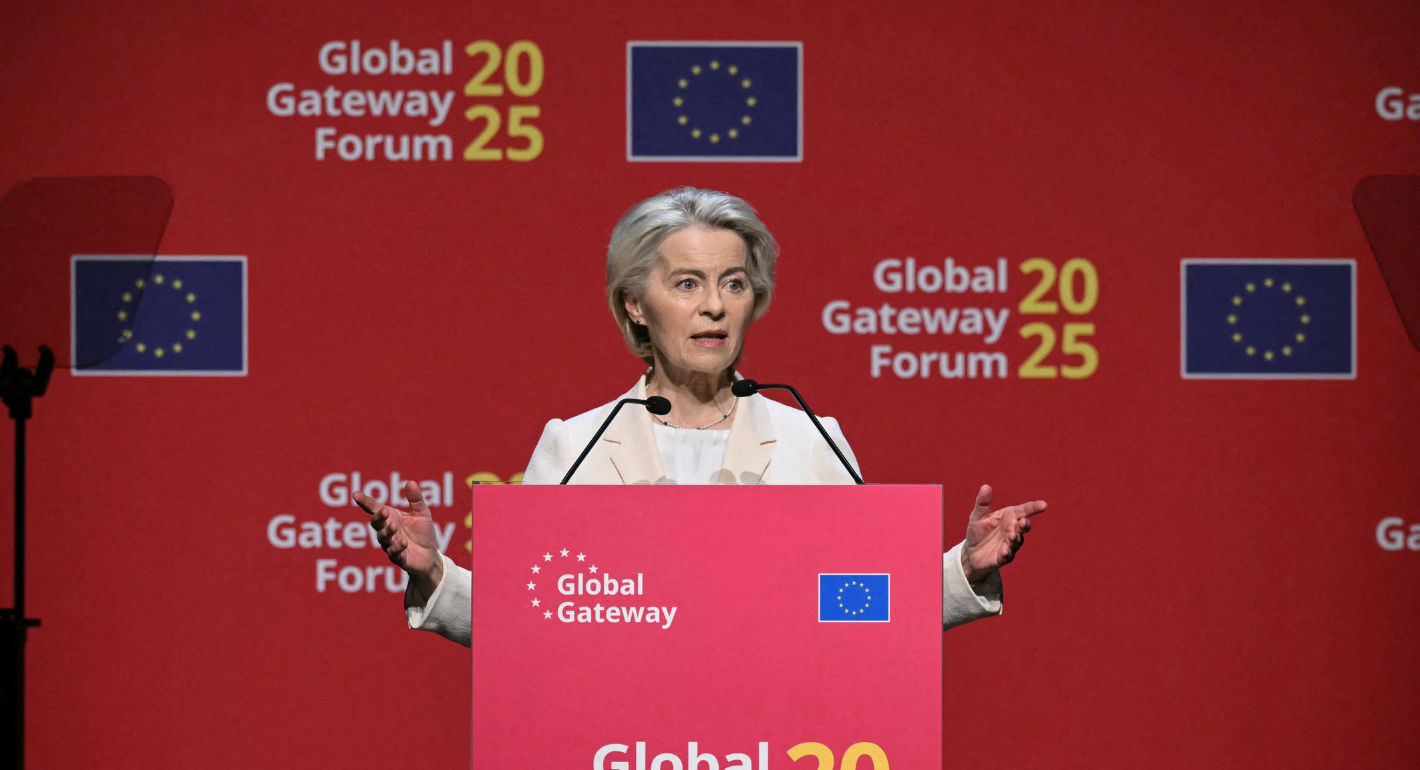
    How the EU’s Global Gateway Can Compete in the Global South

    In competition with China’s Belt and Road Initiative, the Global Gateway strategy needs to find an edge. To better promote its interests through investment, the EU’s offer must become more coherent, transparent, and accountable.

      Ceren Ergenc, Chaofan Yu
  • Research
    Reimagining EU-ASEAN Relations: Challenges and Opportunities

    The EU and ASEAN have diverging priorities in climate, security, technology, trade, and democracy. Stronger cooperation in these fields would enable the two blocs to tackle shared challenges and pursue common interests.

      Lizza Bomassi

  • REQUIRED IMAGE
    Commentary
    What Is the Future for Global Cooperation on Democracy?

    The first Summit for Democracy succeeded in bringing democratic governments together to discuss a range of issues. But to achieve more effective democratic coordination, the process should move away from its intergovernmental nature and involve more civil society actors.

      Richard Youngs

  • Article
    Development Assistance in Different Political Regime Contexts

    In the last decade, nondemocratic regimes have received more development assistance than democratic countries. This reveals how donors struggle with autocratization despite a rhetorical commitment to democracy.

      Marc de Tollenaere

  • REQUIRED IMAGE
    Commentary
    A Commemorative EU-ASEAN Summit

    Expectations were high for the first in-person EU-ASEAN summit in years but the meeting agenda did not rise to the occassion. Despite having plenty of common ground, the bloc missed an opportunity to strengthen its commitment to ASEAN by leaving the big ticket items to the side.

      Lizza Bomassi

Get more news and analysis from
Carnegie Europe
Carnegie Europe logo, white
Rue du Congrès, 151000 Brussels, Belgium
  • Research
  • Strategic Europe
  • About
  • Experts
  • Projects
  • Events
  • Contact
  • Careers
  • Privacy
  • For Media
  • Gender Equality Plan
Get more news and analysis from
Carnegie Europe
© 2026 Carnegie Endowment for International Peace. All rights reserved.