• Research
  • Strategic Europe
  • About
  • Experts
Carnegie Europe logoCarnegie lettermark logo
EUUkraine
  • Donate
{
  "authors": [
    "Marwan Muasher"
  ],
  "type": "legacyinthemedia",
  "centerAffiliationAll": "dc",
  "centers": [
    "Carnegie Endowment for International Peace",
    "Carnegie Europe",
    "Malcolm H. Kerr Carnegie Middle East Center",
    "Carnegie Russia Eurasia Center"
  ],
  "collections": [],
  "englishNewsletterAll": "menaTransitions",
  "nonEnglishNewsletterAll": "",
  "primaryCenter": "Carnegie Endowment for International Peace",
  "programAffiliation": "MEP",
  "programs": [
    "Middle East"
  ],
  "projects": [
    "Eurasia in Transition"
  ],
  "regions": [
    "Middle East",
    "Israel",
    "Palestine",
    "Egypt",
    "Gulf",
    "Levant"
  ],
  "topics": [
    "Security"
  ]
}
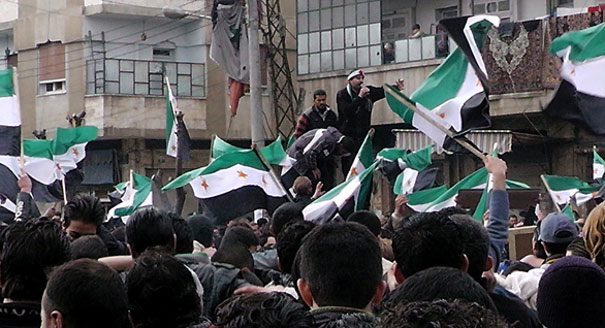
Source: Getty

In The Media

Only A Regional Approach Can Bring Middle East Peace

The best hope for a two state solution is a new, comprehensive approach that involves the most important regional players, including Saudi Arabia and Syria.

Link Copied
By Marwan Muasher
Published on Sep 5, 2010
Project hero Image

Project

Eurasia in Transition

Learn More

Source: Financial Times

Only A Regional Approach Can Bring Middle East PeaDespite an agreement to keep talking, expectations are low for the talks between Israelis and Palestinians that began in Washington last week. There is a small chance that an incremental process will eventually lead to a breakthrough. But a two-state solution negotiated between these two parties alone is unlikely. Instead, the best hope is a new, comprehensive approach that brings on board the most important regional players, including Saudi Arabia and Syria.

As the rounds of talks move forward there are three basic limitations to direct negotiations. First, President Barack Obama’s administration seems to value process over substance, and consequently risks falling into the trap of unending negotiations. Despite expressions of confidence that the central disputes can be resolved over the next year, a great deal separates the two sides. The Palestinians are concerned that talks without deadlines simply allow Israel more time to build more settlements, which will further undermine any possible agreement. The Israelis doubt their Arab neighbours can deliver results, and are hesitant to offer compromises without a clear end in sight.
 
The second problem is that a bilateral peace deal is no longer attractive to either side. Israel would find it difficult to stomach the painful concessions necessary to win peace with only some Palestinians – Hamas, who run Gaza, are not involved – while the Palestinians need cover from the wider Arab world to sell tough choices to their own people.
 
Finally, and worst of all, a two-state solution will no longer work. Despite serious efforts to build a Palestinian state, this option effectively disappeared as Israeli settlers spread throughout the West Bank.
 
Given this trio of deficiencies, the bilateral approach alone should be abandoned. Instead, a comprehensive accord between Israel and all Arab countries should be pursued. This could build on the terms laid out in the Arab Peace Initiative, adopted during an Arab League meeting in Beirut in 2002. This offered Israel both normalised relations with the Arab world and security guarantees, in exchange for agreements over borders and the problem of refugees. A further strength of the plan was that it offered regional cover for both sides.
 
Such a move would change the entire approach to negotiations. Instead of relying on pressure to cajole Israelis and Palestinians to act, a regional initiative allows both sides to find a settlement that serves their national interests. It also obliges Arabs to be responsible for pressing Hamas and Hezbollah. The US could still be responsible for collecting the so-called “end-game” deposits. These hypothetical pledges from all parties could be deposited with Washington, and committed to only if others are willing to do the same. Saudi Arabia, Syria, the Palestinians, and Israel will need to concede contentious points to get what they ultimately want.
 
Citing his governing coalition, Benjamin Netanyahu, Israeli prime minister, is likely to resist a regional agreement. But the Israeli public will find it hard to turn down. It offers peace with the entire Arab world, resolves the issues of Hamas and Hizbollah, and rids Iran of any excuse to repeat its heated rhetoric against Israel. It can also solve the refugee matter while avoiding a major influx of Palestinians. In other words, it tackles all of the average Israeli’s concerns.
 
While it ought to be difficult for other parties to say no to a regional deal capable of solving these long-term issues, there is clearly still the potential for failure. But not acting carries greater risk. Although a two-state solution is increasingly unlikely, the alternative – a one-state solution, where the growing population of Palestinians demand to become full citizens of Israel – is much more widely problematic for both sides.
 
The conditions for bilateral settlement do not currently exist. Renewed talks between Israelis and Palestinians are unlikely to change this, no matter how much the Obama administration hope they might. Delaying difficult decisions today in hope of better opportunities tomorrow will only make it harder to end the conflict. But a regional solution is both possible and desirable as a way forward. And the time to act is now.

About the Author

Marwan Muasher

Vice President for Studies

Marwan Muasher is vice president for studies at Carnegie, where he oversees research in Washington and Beirut on the Middle East. Muasher served as foreign minister (2002–2004) and deputy prime minister (2004–2005) of Jordan, and his career has spanned the areas of diplomacy, development, civil society, and communications.

    Recent Work

  • Commentary
    The Iran War Is Uncovering the Weakness in U.S.-Gulf Ties

      Marwan Muasher

  • Commentary
    Bombing Campaigns Do Not Bring About Democracy. Nor Does Regime Change Without a Plan.

      Marwan Muasher

Marwan Muasher
Vice President for Studies
Marwan Muasher
SecurityMiddle EastIsraelPalestineEgyptGulfLevant

Carnegie does not take institutional positions on public policy issues; the views represented herein are those of the author(s) and do not necessarily reflect the views of Carnegie, its staff, or its trustees.

More Work from Carnegie Europe

  • Commentary
    Strategic Europe
    Taking the Pulse: Can NATO Survive the Iran War?

    Donald Trump has repeatedly bashed NATO and European allies, threatening to annex Canada and Greenland and deploring their lack of enthusiasm for his war of choice in Iran. Is this latest round of abuse the final straw?

      • Rym Momtaz

      Rym Momtaz, ed.

  • Commentary
    Strategic Europe
    Taking the Pulse: Is it NATO’s Job to Support Trump’s War of Choice?

    Donald Trump has demanded that European allies send ships to the Strait of Hormuz while his war of choice in Iran rages on. He has constantly berated NATO while the alliance’s secretary-general has emphatically supported him.

      • Rym Momtaz

      Rym Momtaz, ed.

  • Commentary
    Strategic Europe
    Russia’s Imperial Retreat Is Europe’s Strategic Opportunity

    The war in Ukraine is costing Russia its leverage overseas. Across the South Caucasus and Middle East, this presents an opportunity for Europe to pick up the pieces and claim its own sphere of influence.

      William Dixon, Maksym Beznosiuk

  • Research
    Planetary vs International Security: Economic Growth at the Crossroads

    Economic growth is at the heart of a dilemma between planetary and international security.

      Olivia Lazard

  • Commentary
    Strategic Europe
    Europe and the Arab Gulf Must Come Together

    The war in Iran proves the United States is now a destabilizing actor for Europe and the Arab Gulf. From protect their economies and energy supplies to safeguarding their territorial integrity, both regions have much to gain from forming a new kind of partnership together.

      • Rym Momtaz

      Rym Momtaz

Get more news and analysis from
Carnegie Europe
Carnegie Europe logo, white
Rue du Congrès, 151000 Brussels, Belgium
  • Research
  • Strategic Europe
  • About
  • Experts
  • Projects
  • Events
  • Contact
  • Careers
  • Privacy
  • For Media
  • Gender Equality Plan
Get more news and analysis from
Carnegie Europe
© 2026 Carnegie Endowment for International Peace. All rights reserved.