• Research
  • Strategic Europe
  • About
  • Experts
Carnegie Europe logoCarnegie lettermark logo
EUUkraine
  • Donate
{
  "authors": [
    "Michele Dunne"
  ],
  "type": "legacyinthemedia",
  "centerAffiliationAll": "dc",
  "centers": [
    "Carnegie Endowment for International Peace",
    "Carnegie Europe",
    "Malcolm H. Kerr Carnegie Middle East Center"
  ],
  "collections": [],
  "englishNewsletterAll": "menaTransitions",
  "nonEnglishNewsletterAll": "",
  "primaryCenter": "Carnegie Endowment for International Peace",
  "programAffiliation": "MEP",
  "programs": [
    "Middle East"
  ],
  "projects": [],
  "regions": [
    "Middle East",
    "Israel",
    "Palestine",
    "Levant"
  ],
  "topics": [
    "Political Reform",
    "Security",
    "Foreign Policy"
  ]
}
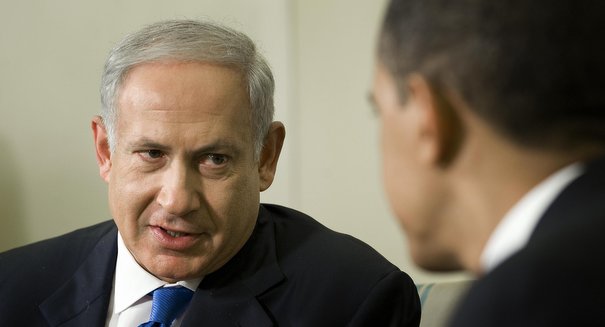
Source: Getty

In The Media

Peace Talks A Test Of Netanyahu

The timing of the recent direct peace talks in Washington has more to do with local political realities in the United States, Palestine, and Israel than any belief that the time is ripe for negotiating a sustainable peace.

Link Copied
By Michele Dunne
Published on Sep 3, 2010

Source: CNN

Peace Talks A Test Of NetanyahuWatching the Israeli and Palestinian leaders trudge to Washington for one more peace summit, one might wonder why President Obama invited them. Why should the president invest his prestige in an effort that looks so unpromising?

Palestinian President Mahmoud Abbas is desperate for a peace agreement but so politically weak that he probably cannot make one. And Israeli Prime Minister Netanyahu is politically strong now but probably does not want an agreement because he has good reason to believe it could cause his fall from power.
 
And while Palestinian stances on most of the divisive issues have not changed in some time, the current Israeli government takes positions that are more hard line than those of its predecessors over the past decade.
 
Obama's decision to host the talks and push the Palestinian president into participating makes sense only in light of his need to perform two specific tasks: to test Netanyahu's intentions and to show that he and the Israeli prime minister are on the same page before the midterm elections.
 
That might sound paradoxical, but for Netanyahu it is a chance to make good on the pledge he made on July 8 to "confound the critics and the skeptics" once he had a Palestinian partner for direct talks.
 
Netanyahu certainly played the role of the statesman well at the start of this week's events. Despite the killing of four Israeli civilians in the West Bank on the eve of talks, he voiced his "respect" for the Palestinian "desire for sovereignty" and said Israel was prepared to go "a long way in a short time."
 
Working closely with Netanyahu now also serves Obama's domestic political agenda; it will take some of the air out of a pre-electoral campaign by Republicans to portray Obama, and by association other Democrats, as unfriendly to Israel.
 
The stated U.S. goal of reaching a peace agreement in one year also seems almost unbelievably naive in the face of years of failed efforts. But this time frame says something about the thinking of U.S. negotiators.
 
The next year will be the best time for Obama to invest political capital in the negotiations. As of fall 2011, he will be absorbed in another presidential campaign season and what will help him is a success -- not necessarily a final agreement but at least a negotiating process that appears to be going somewhere.
 
Another reason for the one-year time frame is that U.S. officials know the Palestinian government headed by President Abbas is living on borrowed time. Abbas is well past his electoral mandate, which expired in January 2009. He has no control over Gaza. which Hamas has ruled since a takeover in 2007. And he has little in the 80 percent of the West Bank that is still under Israeli military rule.
 
He and his government are able to stay in power because of diplomatic and financial support from the United States and Europe. This situation is not sustainable indefinitely.
 
It was undoubtedly out of concern for Abbas that President Obama criticized in his September 1 statement "those who insist that this is a top priority and yet do very little to actually support efforts that could bring about a Palestinian state," an oblique reference to Arab states, including Saudi Arabia and the United Arab Emirates, that have cut their donations to the Palestinian Authority recently.
 
As direct talks begin, there are several possible scenarios.
 
The most pessimistic is that talks fall apart over the issue of Israeli settlement construction in the West Bank later this month, when Netanyahu's settlement "moratorium" (not a freeze of all construction but a limit on new housing starts) expires.
 
The most optimistic is that Netanyahu really does surprise his critics and makes proposals -- for example, on the future borders of a Palestinian state -- that allow negotiations to progress.
 
The most likely scenario, however, is that talks continue for three to six months without making real headway. They might eventually fall apart because of an external crisis -- such as violence in the West Bank or Gaza, war in Lebanon, an attack on Iran -- or Abbas might withdraw and even threaten to resign from his post.
 
At that point Obama and his administration would have to decide whether to pull out or to increase their involvement by announcing a U.S. peace plan, for example, and putting pressure on the two parties to accept.
 
That would be a high-stakes effort and would require extensive diplomacy to build support from Arab and Muslim states, but would show that the United States will not give up without exhausting all possibilities.
 
In considering such a step, Obama would have to weigh the likely tension with Israel and resulting discomfort in U.S. political circles against the damage to U.S. security interests in the broader Middle East if another failed peace process.

About the Author

Michele Dunne

Former Nonresident Scholar, Middle East Program

Michele Dunne was a nonresident scholar in Carnegie’s Middle East Program, where her research focuses on political and economic change in Arab countries, particularly Egypt, as well as U.S. policy in the Middle East.

    Recent Work

  • Research
    Islamic Institutions in Arab States: Mapping the Dynamics of Control, Co-option, and Contention
      • +6

      Yasmine Farouk, Nathan J. Brown, Maysaa Shuja Al-Deen, …
  • Research
    From Hardware to Holism: Rebalancing America’s Security Engagement With Arab States
      • +8

      Robert Springborg, Emile Hokayem, Becca Wasser, …

Michele Dunne
Former Nonresident Scholar, Middle East Program
Michele Dunne
Political ReformSecurityForeign PolicyMiddle EastIsraelPalestineLevant

Carnegie does not take institutional positions on public policy issues; the views represented herein are those of the author(s) and do not necessarily reflect the views of Carnegie, its staff, or its trustees.

More Work from Carnegie Europe

  • Commentary
    Strategic Europe
    Taking the Pulse: Is it NATO’s Job to Support Trump’s War of Choice?

    Donald Trump has demanded that European allies send ships to the Strait of Hormuz while his war of choice in Iran rages on. He has constantly berated NATO while the alliance’s secretary-general has emphatically supported him.

      • Rym Momtaz

      Rym Momtaz, ed.

  • Commentary
    Strategic Europe
    Time to Merge the Commission and EEAS

    The EU is structurally incapable of reacting to today’s foreign policy crises. The union must fold the EEAS into the European Commission and create a security council better prepared to take action on the global stage.

      Stefan Lehne

  • Commentary
    Strategic Europe
    Russia’s Imperial Retreat Is Europe’s Strategic Opportunity

    The war in Ukraine is costing Russia its leverage overseas. Across the South Caucasus and Middle East, this presents an opportunity for Europe to pick up the pieces and claim its own sphere of influence.

      William Dixon, Maksym Beznosiuk

  • Research
    Planetary vs International Security: Economic Growth at the Crossroads

    Economic growth is at the heart of a dilemma between planetary and international security.

      Olivia Lazard

  • Commentary
    Strategic Europe
    Europe and the Arab Gulf Must Come Together

    The war in Iran proves the United States is now a destabilizing actor for Europe and the Arab Gulf. From protect their economies and energy supplies to safeguarding their territorial integrity, both regions have much to gain from forming a new kind of partnership together.

      • Rym Momtaz

      Rym Momtaz

Get more news and analysis from
Carnegie Europe
Carnegie Europe logo, white
Rue du Congrès, 151000 Brussels, Belgium
  • Research
  • Strategic Europe
  • About
  • Experts
  • Projects
  • Events
  • Contact
  • Careers
  • Privacy
  • For Media
  • Gender Equality Plan
Get more news and analysis from
Carnegie Europe
© 2026 Carnegie Endowment for International Peace. All rights reserved.