

Paper
Adam Baczko, Gilles Dorronsoro, Arthur Quesnay
{
  "authors": [
    "Gilles Dorronsoro"
  ],
  "type": "legacyinthemedia",
  "centerAffiliationAll": "dc",
  "centers": [
    "Carnegie Endowment for International Peace",
    "Carnegie Europe"
  ],
  "collections": [],
  "englishNewsletterAll": "ctw",
  "nonEnglishNewsletterAll": "",
  "primaryCenter": "Carnegie Endowment for International Peace",
  "programAffiliation": "SAP",
  "programs": [
    "South Asia"
  ],
  "projects": [],
  "regions": [
    "South Asia",
    "Afghanistan",
    "Asia"
  ],
  "topics": [
    "Security",
    "Military",
    "Foreign Policy"
  ]
}
Source: Getty
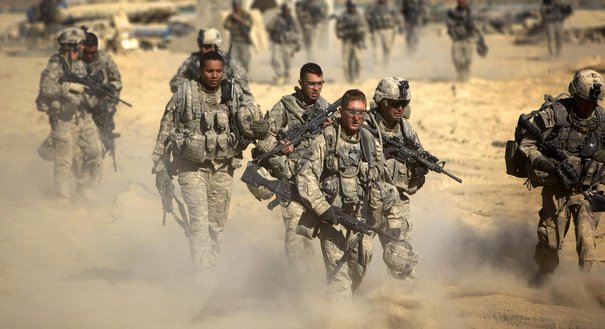
In spite of the military surge in Afghanistan, the situation is worsening and neither the civilian surge nor relying on the Afghan army to increase its offensive capabilities will prevent the situation from deteriorating further.
Source: Foreign Policy

Wrong. This is the same argument that the war's supporters have used for nearly a decade now to justify more troops and rationalize continued involvement in Afghanistan, but the outlook is worsening. Some believe that given time, the current strategy can change the course of the war and defeat the Taliban. But just because President Barack Obama's administration has "surged" U.S. troop strength to over 100,000 and Gen. David Petraeus, the top U.S. commander in Afghanistan, is aggressively targeting militant safe havens in Pakistan does not mean that the fundamentals of this war have changed. It's now a nine-year war -- not nine one-year wars. There is no reset button in Afghanistan, and the coalition lost its political capital with the Afghans long ago.
With conditions deteriorating on the ground and the Taliban gaining strength across the country, coalition forces will be in an even worse position next year than they are now. The situation around the major cities of Jalalabad and Kabul is seriously deteriorating, and the state structure in the north is disappearing. In the southern city of Kandahar, a sustained U.S.-led effort has proved unable to dislodge the Taliban from their traditional stronghold; the Taliban have also launched a systematic campaign targeting anyone ready to work with the coalition, killing hundreds since last spring. Instead of being able to start pulling out troops next summer, as Obama has pledged, the United States will be forced to send additional troops just to hold ground. And the longer Washington waits, the harder it will be to negotiate. As the Taliban solidify their power, they will be less and less likely to talk. It's time to negotiate -- this is the only way forward. The Taliban's Quetta Shura, an insurgent organization led by former Taliban leader Mullah Omar, has repeatedly made contacts with Afghan President Hamid Karzai, but real negotiations must involve the United States and the Pakistani military.
No it won't. The situation in Afghanistan is often compared to the war in Iraq and, with the arrival of Petraeus, the architect of the surge in Iraq, the new strategy in Afghanistan is seen as nearly the same thing. After all, critics argued the United States faced an impossible situation in Iraq, and they were proved too pessimistic.
But Iraq is the wrong metaphor, and the surge is often misread. That situation turned around largely because Iraqi Sunni groups, fed up with al Qaeda, switched sides -- not because of the extra U.S. troops. The situation is different in Afghanistan, as there isn't a comparable group that opposes the Taliban and could be coaxed into supporting U.S. forces. Additional U.S. troops are not even leading to a tactical victory, as we've already seen in the southern provinces of Kandahar and in Helmand, where the Taliban are holding their ground and the coalition's outposts are surrounded by insurgents. And the concentration of troops in the south, mostly European troops who are not trained for intense combat or willing to accept a high level of casualties, merely opens the rest of the country up to the Taliban.
Not so fast. Despite a lack of empirical evidence, there is widespread belief that providing more money for development will marginalize the Taliban and improve people's lives. This civilian surge would complement the military surge -- the two go hand in hand.
But if anything, the reverse is true: The civilian surge is only making the military's job harder.
The United States is pumping billions into Afghanistan -- some $30 billion in the last three years alone. There's no way the country, whose annual GDP barely exceeds $27 billion, can absorb that kind of cash infusion. The new money destabilizes the population, feeds corruption, and props up an economy that perpetuates violence. It is common knowledge in Afghanistan that subcontractors and logistics companies are paying off the Taliban -- this phenomenon was even the subject of a U.S. congressional report, titled "Warlord Inc.," which detailed how trucking companies paid off insurgents in return for protection. According to the report, the trucking companies paid tens of millions of dollars every year to local warlords, "in what amounts to a vast protection racket." So even with the best intentions, a rapid increase in development assistance in the most violent provinces is a mistake.
Wishful thinking. U.S. strategy relies on a credible partner in Afghanistan, and Obama's planned troop drawdown slated for next year depends on an effective Afghan army. Neither of these exists, and there are no signs of change.
Karzai's administration has lost all credibility and -- more importantly -- the government's presence is quickly disappearing, not increasing, across the country. NGOs have less and less access to the countryside and have publicly stated that the deterioration of stability is becoming a primary obstacle to their work. It's incredibly difficult to build an army if the civilian structures around it are crumbling. And the Afghan Army continues to suffer from high turnover rates and will not be ready to face the Taliban without support anytime soon. The Afghan Army's disastrous offensive in the northeastern Laghman province in August, which left dozens of Afghan soldiers dead or captured after a Taliban ambush, was a stern reminder of the military's lack of trained officers and fighting spirit.
No way. U.S. officials have made clear that they view the Taliban's sanctuaries in Pakistan as a mortal threat to their mission in Afghanistan and have leaned hard on the Pakistanis to crack down on these safe havens while escalating a campaign of drone strikes against al Qaeda-linked militants along the border areas. It's clear, however, that the Pakistani military plans to continue its support for the Taliban. The Pakistani military's ties to these groups go back decades, and it is unrealistic to expect it to cut off these relationships after a few months of U.S. pressure. In any case, the Pakistani Army doesn't have the resources to launch a serious offensive against insurgents operating within its territory anytime soon.
Meanwhile, NATO logistics remain dependent on Pakistan -- as we saw recently, when the Pakistani Army sealed one of the two main roads used by the coalition to send military supplies into Afghanistan in response to a U.S. helicopter strike that destroyed a Pakistani military outpost, killing two soldiers. The idle convoys left sitting near the Afghanistan-Pakistan border made a perfect target for the Taliban, which has burned dozens of trucks over the past week.
Pakistani influence over the Taliban is not necessarily a bad thing. Instead of engaging in a futile effort to change the Pakistani Army's entire worldview, the United States should use Pakistan's connections to start talking with the Taliban. The insurgents are ready to negotiate over their participation in a government in Kabul, along with the withdrawal of coalition forces from Afghanistan. It's not clear whether the negotiations will lead anywhere -- but this option must be explored without more delay. It's Obama's only ticket out of this war.

Former Nonresident Scholar, South Asia Program
Dorronsoro’s research focuses on security and political development in Afghanistan. He was a professor of political science at the Sorbonne in Paris and the Institute of Political Studies of Rennes.
Recent Work
Adam Baczko, Gilles Dorronsoro, Arthur Quesnay
Gilles Dorronsoro
Carnegie does not take institutional positions on public policy issues; the views represented herein are those of the author(s) and do not necessarily reflect the views of Carnegie, its staff, or its trustees.

With its public finances in shambles, the far right polling at 35 percent ahead of the 2027 presidential election, and a growing protest movement, is France’s crisis a threat to the EU’s geopolitical awakening?

Rym Momtaz, ed.

Ahead of a tough winter for Ukraine, Donald Trump’s swing back toward Russia bodes ill. But instead of panicking, Kyiv’s European allies are focusing on action.
Rym Momtaz

Funding Ukraine remains a priority for European leaders. As Russia’s war of aggression heads into another winter, two feasible options to mobilize support for Kyiv should be fast-tracked.


Vladyslav Rashkovan, Gregory P. Wilson

While the EU and European governments are embracing the much-lauded middle-power moment, this entails three difficult conundrums.

Richard Youngs

Europe is facing rising populism internally as well as external pressures from Russia, China, Turkey, and the United States.

Dimitar Bechev