{
  "authors": [
    "Christopher Boucek"
  ],
  "type": "legacyinthemedia",
  "centerAffiliationAll": "dc",
  "centers": [
    "Carnegie Endowment for International Peace",
    "Malcolm H. Kerr Carnegie Middle East Center"
  ],
  "collections": [],
  "englishNewsletterAll": "menaTransitions",
  "nonEnglishNewsletterAll": "",
  "primaryCenter": "Carnegie Endowment for International Peace",
  "programAffiliation": "MEP",
  "programs": [
    "Middle East"
  ],
  "projects": [],
  "regions": [
    "Middle East",
    "Yemen",
    "Gulf"
  ],
  "topics": [
    "Security",
    "Political Reform"
  ]
}
Source: Getty
In The Media
Don't Take Your Eyes Off of Yemen
The solution to Yemen's problems is not an exclusive reliance on counterterrorism and military assistance from the West, but rather a greater concentration on helping Yemen confront its converging economic, political, environmental, and social challenges.
Don't Take Your Eyes Off of YemenWith explosive devices sent to the United States from Yemen, attention is turning again to this country on the brink of total collapse—as it has in similar circumstances more than half a dozen times this year alone. Authorities are reportedly focusing on Yemen-based al-Qaeda in the Arabian Peninsula (AQAP) as the source and possible mastermind behind a plot to bomb U.S. interests. In fact, security officials have had their eye on Yemen for some time as the country’s instability and undergoverned spaces provide a nearly perfect haven for terrorists. AQAP is now a bigger risk to U.S. national security than al-Qaeda’s central leaders hiding in South Asia.
Yemen has been on everyone’s map since last year’s failed Christmas Day attack on a flight headed for Detroit. And attention has continued with the notoriety of U.S.-born cleric Anwar al-Awlaki, who calls for deadly strikes on the United States from his place of refuge in Yemen. The attention and support Yemen garners, however, pales in comparison to al-Qaeda central in South Asia.
But the threat coming out of other states of concern—not only Pakistan and Afghanistan, but also Somalia—is not as immediate as the danger from Yemen and AQAP. While al-Qaeda central has been under continuous danger with an aggressive drone campaign in Pakistan and a large U.S. military presence in Afghanistan, AQAP is relatively free to operate within Yemen’s borders.
AQAP was officially announced in January 2009 following the merger of the militant outfits in Saudi Arabia and Yemen. While it modeled itself on the original group, it is autonomous and doesn't take direction from Osama bin Laden. AQAP is agile, opportunistic, and, most dangerously, they learn from their mistakes and try again.
Despite Western security assistance and the clandestine use of U.S. airstrikes, al-Qaeda is surging in Yemen and the pace of its attacks is intensifying. Within the country, there have already been more than forty attacks this year and around sixty Yemeni security officials have been killed in the violence.
Yemen has a long history of terrorism and extremism and is strategically located between Saudi Arabia and Somalia—serving as a bridge between the Arabian Peninsula and the Horn of Africa. There were many Yemenis who fought in Afghanistan in the 1980s against the Soviet occupation and there was a large contingent of Yemenis in al-Qaeda training camps before 9/11. Additionally, al-Qaeda’s very first attack on an American target took place in Yemen two decades ago, and this year marked the tenth anniversary of the USS Cole bombing on Yemen’s coast that killed seventeen U.S. sailors.
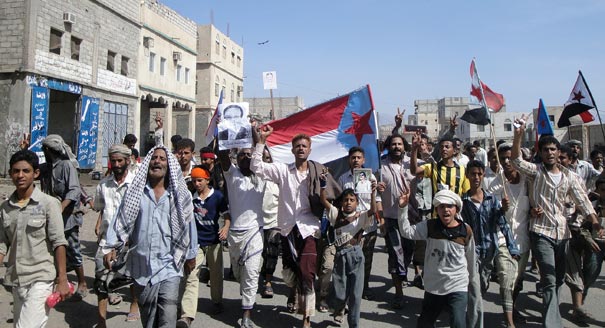
Besides the resurgent al-Qaeda organization, the country faces an ongoing civil war in the north, an increasingly violent secessionist movement in the south, inadequate governance, economic ruin and is quickly running out of water. And while many failing states confront similar problems, Yemen is unique in that it is dealing with them all at the same time. In fact, these are the real dangers facing Yemen—even more so than terrorism.
With an expanding recruiting pool of increasingly poor, undereducated and underemployed men, AQAP has firmly taken root in Yemen, capitalizing on the absence of the central government and widespread poverty and instability to spread their message. And the group’s ability to frame the situation in Yemen and cast U.S. military assistance and counterterrorism strikes as an American occupation has drawn foreign terrorists to the country. Yemen is now an inspiration to foreign-based extremists.
While the details of this latest incident are still being revealed, it’s clear that the U.S. national-security threat emanating from Yemen continues to rise. With a balanced approach, Washington can limit al-Qaeda’s reach out of Yemen. The solution is not found in an exclusive reliance on counterterrorism and military assistance, but in a greater concentration on helping Yemen confront the converging challenges. A singular focus on counterterrorism will only increase the danger for America.
With this in mind, Washington must find a way to help Yemeni leaders improve government and social services, fight corruption, encourage economic development and deal with the legitimate grievances of resistance groups. Long-term development and financial assistance is one of the best ways to do this, but Washington devotes a disproportionately small sum today. This is clear when looking at the resources devoted to Yemen and Pakistan—they don't match the relative dangers. The United States intends to send almost $200 million to Yemen, but Pakistan expects to receive billions next year.
If President Obama is serious in helping to build a "stable, secure, and prosperous" Yemen, as he said Friday shortly after the bombs were discovered, then he should appoint a special representative to globally coordinate U.S. policy on Yemen. This needs to be someone with the gravitas to organize disparate international aid efforts and push the Yemeni government to address their systemic challenges. The country’s problems are too important to ignore—this latest incident only underscores that Yemen’s problems are America’s problems too.
Given the risk terrorists in the country pose, the United States must remain focused on all of the problems facing Yemen—only then can the nearly flawless setting for terrorist activity be contained.
Boucek was an associate in the Carnegie Middle East Program where his research focused on security challenges in the Arabian Peninsula and Northern Africa.
Carnegie does not take institutional positions on public policy issues; the views represented herein are those of the author(s) and do not necessarily reflect the views of Carnegie, its staff, or its trustees.
European states control several Overseas Countries and Territories around the world that carry strategic, economic, and environmental weight. As great powers challenge the rules-based order, defending them is a geopolitical imperative for Europe.
Mounting economic strain and battlefield losses will not necessarily make the Kremlin less dangerous. They could instead push Moscow toward a more aggressive hybrid campaign designed to test NATO’s Eastern flank, exploit allied hesitation, and fracture European resolve.
Over the past ten years, NATO has held almost as many summits as it did during the entirety of the Cold War. Are they still useful, or is it time to stop holding annual meetings?
As the EU confronts profound challenges, several leaders have called for fundamental reform to the union’s model—but only modest, superficial changes have resulted. What if Europe really could be reimagined from zero today: What should such a redesigned European order look like?