

Paper
Ashley J. Tellis
{
  "authors": [
    "Ashley J. Tellis"
  ],
  "type": "legacyinthemedia",
  "centerAffiliationAll": "dc",
  "centers": [
    "Carnegie Endowment for International Peace"
  ],
  "collections": [],
  "englishNewsletterAll": "ctw",
  "nonEnglishNewsletterAll": "",
  "primaryCenter": "Carnegie Endowment for International Peace",
  "programAffiliation": "SAP",
  "programs": [
    "South Asia"
  ],
  "projects": [],
  "regions": [
    "South Asia",
    "India"
  ],
  "topics": [
    "Foreign Policy"
  ]
}
Source: Getty
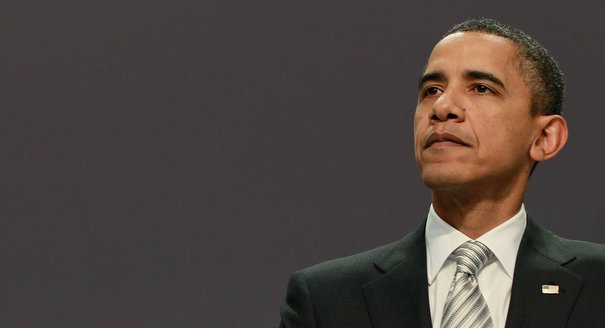
During his trip to India, President Obama signaled his administration’s commitment to the bilateral relationship and took significant steps to strengthen security and economic ties.
Source: The Times of India

In response, some pundits have dubbed Obama's Asia tour a failure. In fact, the exact opposite is true. In India, where the stakes of the trip were highest, the president's visit was a resounding success - and one that will have beneficial repercussions long after the other setbacks have been forgotten.
President Obama's trip to India was a triumph for both Washington and New Delhi because the two democracies took important steps to strengthen security and economic ties. Most importantly, the president reaffirmed the US commitment to a durable partnership with India - which helped to correct the widening and disturbing gap that had characterised US-India relations since the beginning of his term in office.
This was the true measure of the visit's success. After two years of hesitation, Obama signalled for the first time his clear recognition of the need to strengthen Indian power - through a deepened US-Indian bilateral relationship - as a means of peacefully managing the rise of China in Asia. Because shaping Beijing's strategic trajectory remains the single biggest challenge facing the United States in this new century, Obama's public commitment to standing "shoulder to shoulder" with India not only represented a welcome continuation of his predecessor President George W Bush's successful regional strategy, it also assuaged the deep Indian anxieties about his administration's perceived disregard of Asian geopolitics.
Although the White House had advertised the president's trip as being largely about securing American "jobs" through increased Indian imports, Obama's words and actions confirmed that he was pursuing a broader agenda: affirming India's importance to the United States as a global rather than as a local South Asian power; making a transparent commitment to include India in the institutions of global governance; and expediting efforts to integrate India into the diplomatic, economic, and security architectures of the Indo-Pacific geopolitical space. On all counts, he succeeded brilliantly.
While other administration officials - including Secretary of State Hillary Clinton and Under Secretary of State William J Burns - had previously acknowledged India's growing importance, this trip marked Obama's clearest and most unmistakable judgements about India. "In Asia and around the world, India is not simply emerging, " Obama said both at a press conference and in speaking to India's parliament. "India has emerged. "
In one fell swoop, he thus affirmed three fundamental propositions. First, India matters - for the world and especially for the United States. Second, the success of the Indian experiment has profound consequences for global order and, consequently, the US does not simply cheer the rise of Indian power, but will support its ascendency. Third, unlike Pakistan, which currently represents trouble, and China, which potentially represents threat, India represents mainly unbounded opportunity - and, therefore, a global partnership between the United States and India is indispensable because it brings only benefits for both and for all.
By endorsing India's claim to a permanent seat on the United Nations Security Council, Obama officially declared US support for India on this issue for the first time - a strategically sensible move because if UNSC reform occurs, India will be on the Council and if so, the US gains most by supporting India for UNSC membership before it becomes inevitable, not after. That the US has now endorsed India over treaty allies like Germany and other claimants such as Brazil is very significant because it speaks volumes about what Obama thinks about India and its importance for stability in the emerging Asian order.
Confirming this perception, he also announced a far-reaching initiative that expands India's access to US high technology. In exchange for an Indian commitment to continually upgrade its export control system to the best international standards - an important step toward tightening the global nonproliferation regime - Obama declared that the US would rationalise its export control regulations to permit India to purchase more easily commodities that were previously restricted; that it would remove all the Indian defence and space organisations from the Entity List maintained by the US Department of Commerce; and that it would support India's membership in the four critical global nonproliferation regimes, namely the Nuclear Suppliers Group (NSG), the Missile Technology Control Regime (MTCR), the Australia Group (AG), and the Wassenaar Arrangement (WA).
While these decisions both cheered his Indian audience and conveyed to a watching world India's growing importance to the US, perhaps no better assurance of a lasting bilateral relationship exists than the deepening of economic relations between the United States and India. Here, too, Obama's visit succeeded, as he announced $10 billion in new trade deals with India, several of which involved the Indian military's purchase of equipment from US manufacturers, such as Boeing and General Electric. America - whose armed forces exercise more with India's, and vice versa, than they do with any other partner - now sits on the cusp of becoming India's largest foreign supplier of weaponry this year.
All these initiatives taken together will not only help to provide the needed US jobs sought by the White House, but a greater Indian openness to American goods, services, and investments will deepen Washington's commitment to India's success even further and increase the opportunities for greater political collaboration. The private sector in both countries is already leading the way in this regard and the growing volume of US-India trade will in fact dwarf the deals brought home by Obama during this trip - which is only good news for both countries.
The President's visit improved bilateral relations in other areas as well. As he remembered the victims of the 2008 Mumbai terror attacks, Obama stated that the US and India "stand united" against terrorism. While many Indians would have liked him to have been more critical of Islamabad's continuing support of terrorism, there are limits to what the president could have said on Indian soil while the US continues to rely on Pakistan for access to Afghanistan. In any event, Obama's declaration that the US "will continue to insist to Pakistan's leaders that terrorist safe-havens within their border are unacceptable" clearly indicated that his administration is not oblivious to Pakistan's treacherous behaviour in regard to terrorism.
While Obama's remarks emphasised US support for India in its struggle against terrorism, authorising increased cooperation between the intelligence, counter-terrorism, and homeland security communities in both countries - through increased crosstraining and expanded information and technology sharing - will yield high payoffs in the future.
The visit also produced two other achievements that are profoundly important and which have not yet received the attention they deserve.
The first is the US-Indian commitment to intensify and expand bilateral cooperation in, and relating to, Afghanistan. At the American end, it signifies that Obama has rejected the Pakistani claim that India's involvement in Afghanistan undermines the international mission in that country and threatens Pakistan - a common assertion heard in Islamabad and sometimes in Washington. At the Indian end, it signifies a momentous shift in the traditional Indian position which cheered the US on in Afghanistan but sought to maintain a clear distance from Washington where any collaborative activities were concerned. The consequences of this Indian shift are potentially important not only for Afghanistan but also for larger US-Indian cooperation.
The second is the US-Indian commitment to, again, jointly collaborate in Africa: this too is significant because whatever the Indian sympathy for any American goals in the abstract, New Delhi always sought to steer an independent path in its relations with third countries. The announcement about Africa - besides providing now a democratic alternative to the continent's authoritarian patrons - conveys a growing Indian willingness to partner with the US more publicly. For those who argued that such collaboration was impossible, given India's supposedly immutable commitment to "strategic autonomy, " New Delhi's decision regarding Africa says "think again!"
As Obama noted during his trip, the relationship between the US and India is one of the "defining and indispensable partnerships of the 21st century. " His visit there - following up on Prime Minister Manmohan Singh's trip to Washington last November - has helped bring the two countries together on shared interests and moved their relationship forward significantly.
Continuing to do so is ultimately in the strategic interests of the US. As Senator John McCain summarised it succinctly, "Contrary to the old dictates of realpolitik, we seek not to limit or diminish India's rise, but to bolster and catalyze it - economically, geopolitically, and yes, militarily. In short, the United States has a compelling stake in the success of India. "
Former Senior Fellow
Ashley J. Tellis was a senior fellow at the Carnegie Endowment for International Peace.
Recent Work
Ashley J. Tellis
Ashley J. Tellis
Carnegie does not take institutional positions on public policy issues; the views represented herein are those of the author(s) and do not necessarily reflect the views of Carnegie, its staff, or its trustees.

The EU’s responses to two recent incidents expose the gulf between European perceptions and capabilities. Unless the union can bridge that gap, it will never become a real geostrategic power.

Rym Momtaz

European states control several Overseas Countries and Territories around the world that carry strategic, economic, and environmental weight. As great powers challenge the rules-based order, defending them is a geopolitical imperative for Europe.

Marc Pierini
As we close out another season of Strategic Europe, it is worth taking stock of the deep shifts underway.
Rym Momtaz
The EU had to compromise to adopt a twenty-first sanctions package against Russia, exposing growing cracks in the union’s resolve. Is this latest, weaker round worth it to keep pressure on Moscow?
Rym Momtaz, ed.

Trump is distracted and Ukraine wants Europe to step up. The continent’s leaders must find their voice and assert it in talks with Russia.

Alissa de Carbonnel