• Research
  • Strategic Europe
  • About
  • Experts
Carnegie Europe logoCarnegie lettermark logo
EUUkraine
  • Donate
{
  "authors": [
    "Michele Dunne"
  ],
  "type": "legacyinthemedia",
  "centerAffiliationAll": "dc",
  "centers": [
    "Carnegie Endowment for International Peace",
    "Malcolm H. Kerr Carnegie Middle East Center"
  ],
  "collections": [
    "Arab Awakening"
  ],
  "englishNewsletterAll": "menaTransitions",
  "nonEnglishNewsletterAll": "",
  "primaryCenter": "Carnegie Endowment for International Peace",
  "programAffiliation": "MEP",
  "programs": [
    "Middle East"
  ],
  "projects": [],
  "regions": [
    "North Africa",
    "Egypt"
  ],
  "topics": [
    "Political Reform"
  ]
}
Source: Getty

In The Media

A Look At The Day's Events In Egypt

A fundamental difference remains between what Egyptian President Hosni Mubarak and even Vice President Suleiman have been offering and what the demonstrators are looking for.

Link Copied
By Michele Dunne
Published on Feb 10, 2011

Source: NPR

ROBERT SIEGEL, host: For more, I'm joined now by Michele Dunne. She's a founding member of the Working Group on Egypt and senior associate at the Carnegie Endowment for International Peace. Her group, the Working Group, had warned the State Department that Egypt was on the verge of revolt and that advised diplomats to push harder for Democratic reforms.

What do you make of this speech? It seemed to be terribly disappointing to a crowd of a million people expecting him to announce that he's stepping down?
 
Ms. MICHELE DUNNE (Founding Member, Working Group on Egypt): Yeah. There's a fundamental difference here between what Mubarak and even Vice President Suleiman have been saying and what the demonstrators are looking for. Demonstrators are looking for a break with the past. They are looking for something that would say that the old era is over and the new era is beginning, and we didn't hear that from Mubarak.
 
I mean, for example, had he even lifted the state of emergency, as he's been promising to do for five years and so forth, that would've been something. The only thing I heard in here that was a small concession to the demonstrators is he mentioned six articles of the constitution that this constitutional committee is tasked with proposing amendments for. That was already known.
 
The only thing that was new in what he said was that he would propose annulment of Article 179 of the constitution, which is a particularly hated article that was amended in 2007 that essentially said that human rights provisions can be set aside in cases of terrorism. So - but it's a very small concession at this point. It's nothing that would get the protestors excited.
 
SIEGEL: Hosni Mubarak spent a lot of time in this speech today trying to assure protestors that he is committed to punishing those responsible for violent attacks on those protestors and trying to position himself, evidently, as an advocate of Egyptian youth. I think of lot of those people in the square assume that it's his - it's he and his regime who are behind those attacks of protestors.
 
Ms. DUNNE: Absolutely. I mean, those attacks, the use of armed thugs, this is a well-known tactic in Egypt. It was totally familiar to people there. And so the - in fact, the continued claims sort of disassociating the government, the claims by Mubarak, by Suleiman and others that they weren't responsible or the government wasn't responsible or it was rogue elements, it just - it detracts from their credibility even further every time they repeat it.
 
SIEGEL: What did you make of the development earlier in the day, which lent some credence to the reports that President Mubarak would be stepping down, which was that the military command met without President Mubarak present? There was an implication there that the military was taking over.
 
Ms. DUNNE: Yes, it certainly was, that the supreme military command would meet without the commander in chief. I have to say, I do think we're seeing things start to fall apart a bit. I mean, for example, we saw the state controlled media kind of revolt in the last couple of days and insist on covering the story differently.
 
Now we saw some - the strange communique out of the army today. It really makes you wonder if they're starting to lose their grip a bit.
 
SIEGEL: So, what happens? What do you think happens for a huge crowd in the middle of Cairo anticipating their triumph, at least their first demand, Mubarak out, and instead being confronted with the news that he's staying on and that he's not about to lift the emergency decree?
 
Ms. DUNNE: Well, there have been three consistent demands out of the demonstrators. Mubarak leaves, state of emergency lifted, parliament dissolved. They really got nothing on any of those tonight. And they are planning a very large march for tomorrow. The danger is at some point they're not going to stay in places like Tahrir. We already saw that developing a little bit yesterday with a demonstration at the Egyptian parliament.
 
And that's going to place the army under pressure. You know, when the demonstrators want to move, large crowds, hundreds of thousands of people on the move, that's going to place the army under pressure, what to do, to let this happen, to fire on them or what.
 
SIEGEL: This speech could be the provocation you suspect, for a new turn and a more violent turn in Cairo, possibly.
 
Ms. DUNNE: Unfortunately it could be.
 
SIEGEL: Michele Dunne, thank you very much for talking with us.
 
Ms. DUNNE: You're welcome.
 
SIEGEL: Michele Dunne of the Carnegie Endowment for International Peace. One of the leaders, she is, of the Working Group on Egypt.

About the Author

Michele Dunne

Former Nonresident Scholar, Middle East Program

Michele Dunne was a nonresident scholar in Carnegie’s Middle East Program, where her research focuses on political and economic change in Arab countries, particularly Egypt, as well as U.S. policy in the Middle East.

    Recent Work

  • Research
    Islamic Institutions in Arab States: Mapping the Dynamics of Control, Co-option, and Contention
      • +6

      Yasmine Farouk, Nathan J. Brown, Maysaa Shuja Al-Deen, …
  • Research
    From Hardware to Holism: Rebalancing America’s Security Engagement With Arab States
      • +8

      Robert Springborg, Emile Hokayem, Becca Wasser, …

Michele Dunne
Former Nonresident Scholar, Middle East Program
Michele Dunne
Political ReformNorth AfricaEgypt

Carnegie does not take institutional positions on public policy issues; the views represented herein are those of the author(s) and do not necessarily reflect the views of Carnegie, its staff, or its trustees.
More Work from Carnegie Europe

  • Commentary
    Strategic Europe
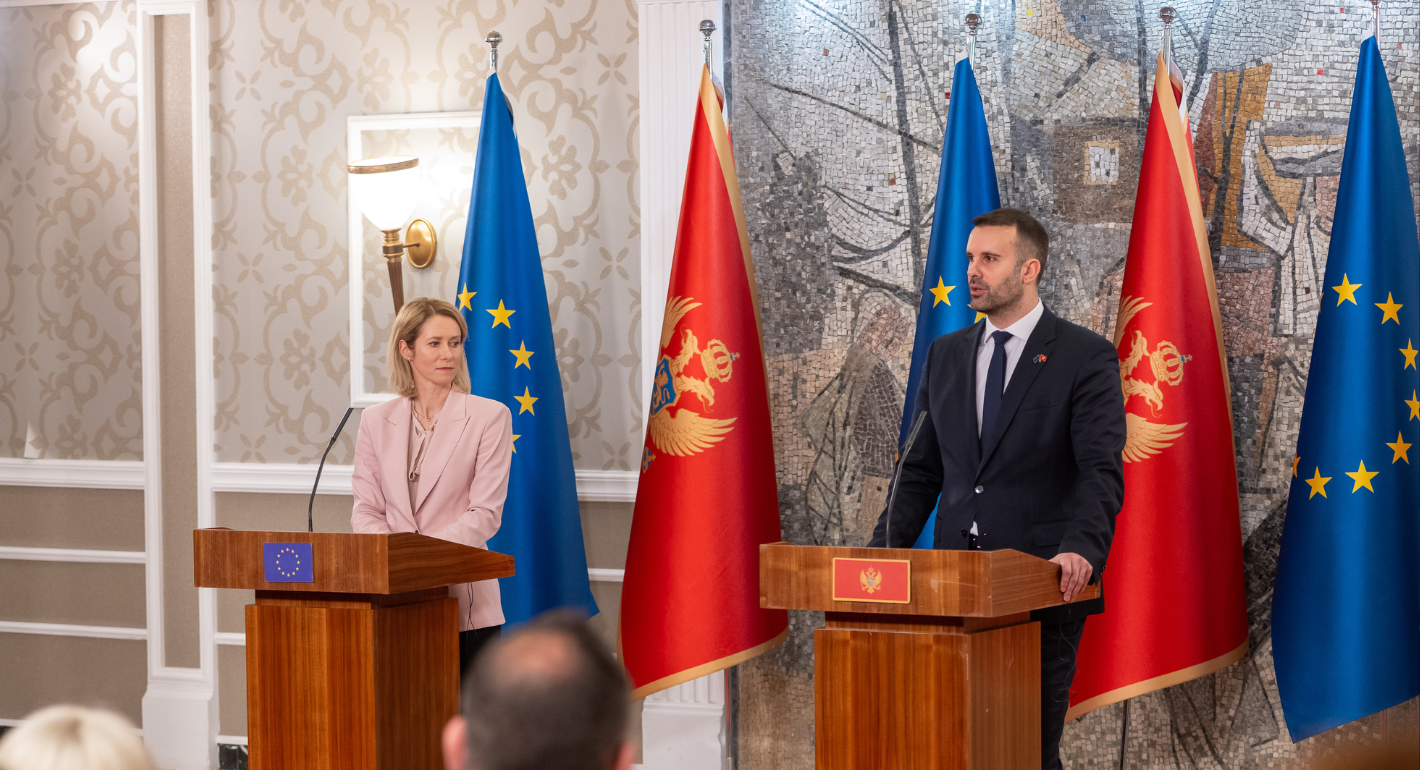
    How to Join the EU in Three Easy Steps

    Montenegro and Albania are frontrunners for EU enlargement in the Western Balkans, but they can’t just sit back and wait. To meet their 2030 accession ambitions, they must make a strong positive case.


      Dimitar Bechev, Iliriana Gjoni
  • Commentary
    Strategic Europe
    The EU Needs a Third Way in Iran

    European reactions to the war in Iran have lost sight of wider political dynamics. The EU must position itself for the next phase of the crisis without giving up on its principles.

      Richard Youngs
  • Commentary
    Strategic Europe
    Can Europe Still Matter in Syria?

    Europe’s interests in Syria extend beyond migration management, yet the EU trails behind other players in the country’s post-Assad reconstruction. To boost its influence in Damascus, the union must upgrade its commitment to ensuring regional stability.
      Bianka Speidl, Hanga Horváth-Sántha
  • Commentary
    Strategic Europe
    Europolis, Where Europe Ends

    A prophetic Romanian novel about a town at the mouth of the Danube carries a warning: Europe decays when it stops looking outward. In a world of increasing insularity, the EU should heed its warning.

      Thomas de Waal
  • Commentary
    Strategic Europe
    Taking the Pulse: What Issue Is Europe Ignoring at Its Peril in 2026?

    2026 has started in crisis, as the actions of unpredictable leaders shape an increasingly volatile global environment. To shift from crisis response to strategic foresight, what under-the-radar issues should the EU prepare for in the coming year?

      Thomas de Waal

Get more news and analysis from
Carnegie Europe
Carnegie Europe logo, white
Rue du Congrès, 151000 Brussels, Belgium
  • Research
  • Strategic Europe
  • About
  • Experts
  • Projects
  • Events
  • Contact
  • Careers
  • Privacy
  • For Media
  • Gender Equality Plan
Get more news and analysis from
Carnegie Europe
© 2026 Carnegie Endowment for International Peace. All rights reserved.