• Research
  • Strategic Europe
  • About
  • Experts
Carnegie Europe logoCarnegie lettermark logo
EUDemocracy
  • Donate
{
  "authors": [
    "Joe Lieberman",
    "Michele Dunne",
    "Jeff Gedmin",
    "Uri Dadush"
  ],
  "type": "commentary",
  "centerAffiliationAll": "dc",
  "centers": [
    "Carnegie Endowment for International Peace"
  ],
  "collections": [
    "Arab Awakening"
  ],
  "englishNewsletterAll": "menaTransitions",
  "nonEnglishNewsletterAll": "",
  "primaryCenter": "Carnegie Endowment for International Peace",
  "programAffiliation": "MEP",
  "programs": [
    "Middle East"
  ],
  "projects": [],
  "regions": [
    "Middle East",
    "North Africa",
    "Egypt",
    "North America"
  ],
  "topics": [
    "Political Reform",
    "Economy"
  ]
}
REQUIRED IMAGE

REQUIRED IMAGE

Commentary

Egypt’s Democratic Transition: Five Important Myths About the Economy and International Assistance, July, 22, 2011

The Egyptian economy will play a critical role in the success or failure of the country’s transition to democracy. The U.S. Congress can take concrete steps to help drive Egypt’s economic development at this critical stage.

Link Copied
By Joe Lieberman, Michele Dunne, Jeff Gedmin, Uri Dadush
Published on Jul 22, 2011

The health of the Egyptian economy and international assistance will both play a critical role in the success or failure of Egypt’s transition to democracy.

Senator Joe Lieberman discussed the importance of building a stable, democratic, and prosperous Egypt. Following his remarks, Michele Dunne, Jeff Gedmin, and Uri Dadush discussed the current state of the Egyptian economy. They also outlined the options available to Congress—including further debt relief, trade incentives, investment, and other forms of assistance—to help drive Egypt’s economic development at this critical stage.
 

About the Authors

Joe Lieberman

Michele Dunne

Former Nonresident Scholar, Middle East Program

Michele Dunne was a nonresident scholar in Carnegie’s Middle East Program, where her research focuses on political and economic change in Arab countries, particularly Egypt, as well as U.S. policy in the Middle East.

Jeff Gedmin

Uri Dadush

Former Senior Associate, International Economics Program

Dadush was a senior associate at the Carnegie Endowment for International Peace. He focuses on trends in the global economy and is currently tracking developments in the eurozone crisis.

Authors

Joe Lieberman
Michele Dunne
Former Nonresident Scholar, Middle East Program
Michele Dunne
Jeff Gedmin
Uri Dadush
Former Senior Associate, International Economics Program
Uri Dadush
Political ReformEconomyMiddle EastNorth AfricaEgyptNorth America

Carnegie does not take institutional positions on public policy issues; the views represented herein are those of the author(s) and do not necessarily reflect the views of Carnegie, its staff, or its trustees.

More Work from Carnegie Europe

  • Europe from Scratch: Visions for a New European Order
    Report
    Europe from Scratch: Visions for a New European Order

    As the EU confronts profound challenges, several leaders have called for fundamental reform to the union’s model—but only modest, superficial changes have resulted. What if Europe really could be reimagined from zero today: What should such a redesigned European order look like?

      Richard Youngs, ed.

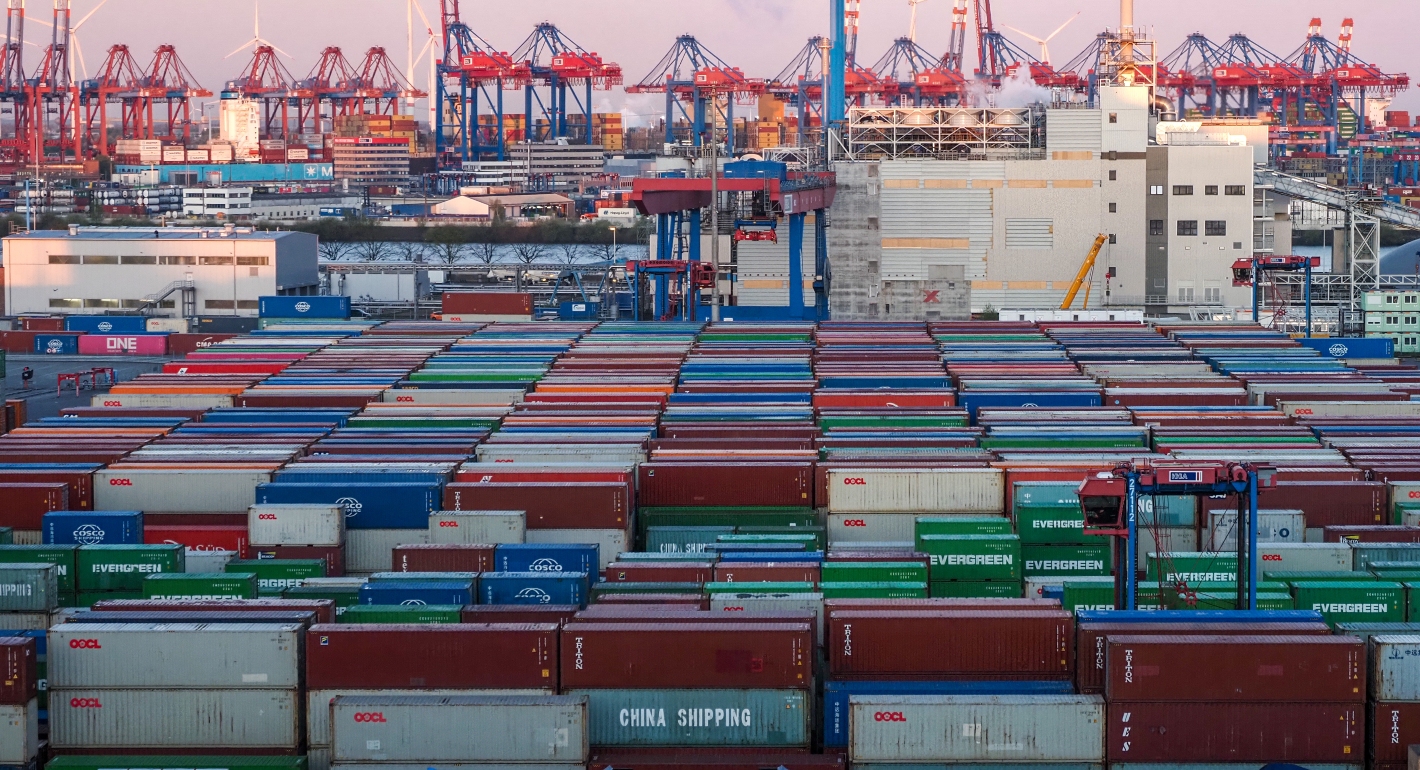
  • Europe trade economy container supply chains
    Paper
    From Trade Dependence to Geopolitical Leverage: The EU in an Era of Weaponized Interdependence

    As geopolitical rivalry weaponizes global supply chains, the EU’s true vulnerability lies in emerging-risk imports. For these goods, suppliers are growing more concentrated, substitution more difficult, and political risk is looming.

      Sinan Ülgen

  • Commentary
    Strategic Europe
    European Security Strategy: In Search of a New Ambition

    The EU is putting together a new security strategy to meet today’s myriad challenges. But for any proposal to be effective, the union needs to grapple with its identity and ambitions.

      Pierre Vimont

  • Commentary
    Strategic Europe
    The Climate Blind Spot in Europe’s New Migration Pact

    The EU’s new migration policy is not suited to today’s realities. With climate change increasingly becoming a driver of displacement, Europe needs to rethink its deterrence-focused approach.

      • Shana Tabak headshot

      Shana Tabak

  • Commentary
    Strategic Europe
    In the Middle East, Europeans Bow Down to the United States

    Europe seems to have accepted its sidelining in the Middle East. The EU must reassert its support for the international rules-based order and step up engagement.

      • Rym Momtaz

      Rym Momtaz

Get more news and analysis from
Carnegie Europe
Carnegie Europe logo, white
Rue du Congrès, 151000 Brussels, Belgium
  • Research
  • Strategic Europe
  • About
  • Experts
  • Projects
  • Events
  • Contact
  • Careers
  • Privacy
  • For Media
  • Gender Equality Plan
Get more news and analysis from
Carnegie Europe
© 2026 Carnegie Endowment for International Peace. All rights reserved.