• Research
  • Strategic Europe
  • About
  • Experts
Carnegie Europe logoCarnegie lettermark logo
EUDemocracy
  • Donate
{
  "authors": [
    "Moisés Naím"
  ],
  "type": "legacyinthemedia",
  "centerAffiliationAll": "",
  "centers": [
    "Carnegie Endowment for International Peace"
  ],
  "collections": [],
  "englishNewsletterAll": "",
  "nonEnglishNewsletterAll": "",
  "primaryCenter": "Carnegie Endowment for International Peace",
  "programAffiliation": "",
  "programs": [],
  "projects": [],
  "regions": [
    "North America",
    "United States",
    "Western Europe"
  ],
  "topics": [
    "Political Reform",
    "Economy"
  ]
}
Source: Getty

In The Media

Take Note America: The Public is Angry

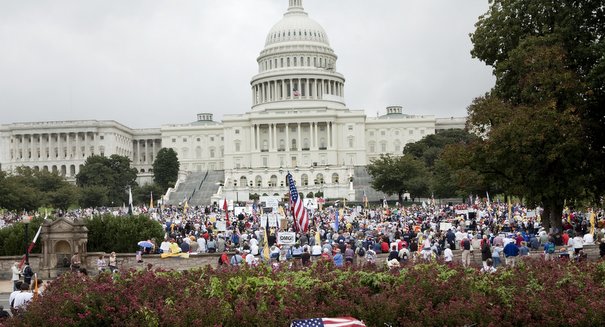
American protestors are motivated by the belief that social mobility in the United States has stalled or even reversed, resulting in growing intolerance toward the extremely wealthy.

Link Copied
By Moisés Naím
Published on Oct 26, 2011

Source: Financial Times

Take Note America: The Public is Angry
Being stuck in traffic is more bearable if the other lanes are moving. If all lanes are jammed for a long time, tempers flare. And if the police eventually arrive and let a few selected cars get out of their lanes and move through a special path, a riot is likely to ensue. This in short is the sentiment that propels the Occupy Wall St protests. We should take note.
 
The traffic jam metaphor for the political consequences of economic mobility was originally proposed by Albert Hirschman, the noted economist, in 1973 to explain changes in tolerance for income in equality in poor countries. The idea was as simple as it was powerful: even a modicum of social mobility – sparked by economic growth – buys patience and political stability in developing countries. As people see their relatives and neighbours improve their lot they are willing to wait for their turn.
 
This idea, which was offered to explain the tolerance for inequality in poor countries, is now in theory applicable to some of the world’s wealthiest nations – except that the Occupy Wall Street crowds, the protesters in the City of London, or the Italian and Greek protesters are getting out of their “cars”, and clashing with the police not just because they see their “traffic lane” horribly jammed. It’s also because they are moving backwards.
 
They are also paying more attention to the fact that others are advancing thanks to what they perceive as tricks, special privileges and corner-cutting. This is not about hopes sparked by others doing well, but about the collective rage at an elite doing obscenely well while the rest backslides.
 
Over a century ago Alexis De Tocqueville wrote that Americans’ higher tolerance for inequality relative to Europe’s was the result of more social mobility in the US.
 
This is over; at least for now. The long, peaceful coexistence with income and wealth inequality is ending. Americans are now infuriated by the fact that chief executives at some of the nation’s largest companies earned around 340 times more than a typical American worker.
 
While the numbers are unnerving and US income disparities are growing even more unequal, this is not new. What is new is the intolerance towards the hoarding by the “few” of unfathomable wealth, and also towards their profiting even in the midst of the crisis. The rich are seen to be either benefiting from bail-outs and other stimulus measures, or to be immune to the fiscal austerity that governments in many countries have had to adopt to stabilise their economies.
 
Nothing makes people take to the streets in protest like public budget cuts. In a recent study, Jacopo Ponticelli and Hans-Joachim Voth, professors at Pompeu Fabra University in Barcelona, looked at a large data base that tracked political violence in 26 European countries between 1919 and 2009. They found that “expenditure cuts carry a significant risk of increasing the frequency of riots, anti-government demonstrations, strikes, political assassinations, and attempts at revolutionary overthrow of the established order.” While such events have a low probability in normal years, they concluded, they become much more common as austerity measures are implemented.
 
We know we have entered new political territory when Mitt Romney, the leading contender for the Republican party presidential nomination, who initially called the Occupy Wall Street movement “dangerous”, is quoted as saying: “I look at what’s happening on Wall Street and my own view is, boy I understand how those people feel …The people in this country are upset.” Yes, they are. They will stay that way until their lanes start moving again. Or, at least, those of their friends and neighbours.
 

About the Author

Moisés Naím

Distinguished Fellow

Moisés Naím is a distinguished fellow at the Carnegie Endowment for International Peace, a best-selling author, and an internationally syndicated columnist.

    Recent Work

  • Research
    The World Reacts to Biden’s First 100 Days
      • +10

      Rosa Balfour, Frances Z. Brown, Yasmine Farouk, …

  • Commentary
    View From Latin America

      Moisés Naím

Moisés Naím
Distinguished Fellow
Moisés Naím
Political ReformEconomyNorth AmericaUnited StatesWestern Europe

Carnegie does not take institutional positions on public policy issues; the views represented herein are those of the author(s) and do not necessarily reflect the views of Carnegie, its staff, or its trustees.

More Work from Carnegie Europe

  • Commentary
    Strategic Europe
    Why Europe Must Take Charge of its Russia Diplomacy Now

    Trump is distracted and Ukraine wants Europe to step up. The continent’s leaders must find their voice and assert it in talks with Russia.

      Alissa de Carbonnel

  • Commentary
    Strategic Europe
    Taking the Pulse: Enough with the Annual NATO Summits, Already?

    Over the past ten years, NATO has held almost as many summits as it did during the entirety of the Cold War. Are they still useful, or is it time to stop holding annual meetings?

      • Rym Momtaz

      Rym Momtaz, ed.

  • Europe from Scratch: Visions for a New European Order
    Report
    Europe from Scratch: Visions for a New European Order

    As the EU confronts profound challenges, several leaders have called for fundamental reform to the union’s model—but only modest, superficial changes have resulted. What if Europe really could be reimagined from zero today: What should such a redesigned European order look like?

      Richard Youngs, ed.

  • Commentary
    Strategic Europe
    European Sycophancy Worked on Trump

    Nearly a year and a half after Europeans leaned into sucking up to Trump, the strategy has produced some benefits when it comes to Ukraine.

      • Rym Momtaz

      Rym Momtaz

  • Agentic AI Anthropic bot
    Paper
    When AI Agents Attack: Autonomous Cyber Operations and Europe’s Governance Gap

    Autonomous AI agents are increasingly prevalent in cyberspace. The EU needs a real-time monitoring strategy, to invest in AI defenses, and to reduce its strategic dependence on U.S. frontier models.

      Raluca Csernatoni, Patryk Pawlak

Get more news and analysis from
Carnegie Europe
Carnegie Europe logo, white
Rue du Congrès, 151000 Brussels, Belgium
  • Research
  • Strategic Europe
  • About
  • Experts
  • Projects
  • Events
  • Contact
  • Careers
  • Privacy
  • For Media
  • Gender Equality Plan
Get more news and analysis from
Carnegie Europe
© 2026 Carnegie Endowment for International Peace. All rights reserved.











