

Commentary
Maria Lipman
{
  "authors": [
    "Maria Lipman"
  ],
  "type": "legacyinthemedia",
  "centerAffiliationAll": "",
  "centers": [
    "Carnegie Endowment for International Peace",
    "Carnegie Russia Eurasia Center"
  ],
  "collections": [],
  "englishNewsletterAll": "",
  "nonEnglishNewsletterAll": "",
  "primaryCenter": "Carnegie Russia Eurasia Center",
  "programAffiliation": "",
  "programs": [],
  "projects": [],
  "regions": [
    "Caucasus",
    "Russia"
  ],
  "topics": [
    "Political Reform",
    "Foreign Policy"
  ]
}
Source: Getty
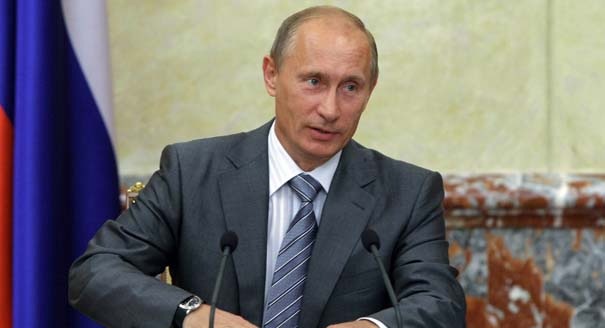
Vladimir Putin is expected to win Russia's presidential election on March 4, but growing popular alienation is likely to erode his power.
Source: Washington Post

Major polls show that their efforts, combined with Putin’s own energetic campaigning, have indeed helped boost his rating. But an opposite trend is also at work: the disingenuousness of his campaign deepens anti-Putin sentiments that have already inspired tens of thousands here to take to the streets.
After several large anti-Putin rallies, the government devised a “symmetric response”: pro-Putin events, staged by Moscow, St. Petersburg and other big cities, to mimic those protests organized by the people. Administrators of various levels and government employers have used a combination of coercion and compensation to ensure broad participation. Many pro-Putin ralliers have been bused or even flown in to Moscow from faraway places. Though the not-quite-voluntary participants are reluctant to give their names, more than a few have anonymously posted online copies of instructions from authorities to deliver a certain number of their staffers to pro-Putin events. Nongovernmental media have reported that such employers include the Russian Postal Service; Moscow communal services; Russia’s largest bank, Sberbank; the state-run oil company, Rosneft; and many others.At a Putin rally in St. Petersburg, those carrying signs smiled timidly and failed to explain why they were attending or what their signs meant. “I wish I knew,” one attendee said.
The government has not admitted that pro-Putin events are organized from above; the cost and financing of these rallies remain hidden. Meanwhile, the organization of the mass anti-Putin events that brought together tens of thousands of Muscovites is transparent, with the organizing committee’s sessions broadcast live online and funding dependent on online donations. Anti-Putin rallies are much cheaper to organize than are massive acts of political loyalty, given the cost of transporting and sometimes lodging the pro-Putin ralliers.
On Feb. 23 a huge pro-Putin rally was organized at Luzhniki, a Moscow stadium; some participants were delivered from as far away as the Urals by a chartered train.
Russia’s government may show leniency toward the protesters: All massive anti-Putin rallies have been sanctioned by city authorities; police behavior has been impeccable — nobody was detained or roughed up. The rallies were broadcast by state-controlled television, which has a penchant for ignoring unwelcome political activism. Putin critics, who for years have been barred from the national TV channels, have recently appeared on political talk shows.
But this permissiveness dovetails with the manipulative techniques central to Putin’s soft authoritarianism. Talk shows are not broadcast live, so undesired episodes can be censored by loyal TV managers (and the government doesn’t seem to care that the excised footage is broadly circulated online). A talk show launched recently on the entertainment channel MTV was promptly closed because the anchor dared to invite Aleksey Navalny, an anti-corruption crusader and a leading figure of the protests. Navalny’s ambition and political talents make the government wary — and he has been kept off national TV.
Prominent nongovernmental media, such as Echo Moskvy, Novaya Gazeta and TV Dozhd’, a quickly rising online/cable television outlet, have become more defiant in recent months — and faced government pressure related to their financing, management or ownership.
Putin’s campaign doesn’t care about rules or fairness. Whereas his competitors are shown in 30-second campaign clips, Putin’s achievements and his vision for the future have been featured in one-hour “documentaries.” Vladimir Churov, the head of the central electoral commission and the person broadly regarded as the mastermind behind the major rigging of the Dec. 4 parliamentary elections, presides over Putin’s campaign; his commission obligingly clarified that Putin “documentaries” and his several lengthy newspaper articles are “information” and do not qualify as campaign materials.
Amid all this, public resentment is rising. Ill-disguised campaign tricks are discussed online and generate anger and derision. Even some of those sign-carrying Russians dutifully attending pro-Putin rallies seem to get exasperated. The government and Putin himself may pretend that such rallies are a genuine expression of support. But these people know that attending was not their choice.
The main idea of Putin’s campaign is that there is no alternative to his leadership and that, without him at the top, Russia will fall apart. While his own campaign rhetoric may be a bit more subtle, his loyalists commonly treat their anti-Putin compatriots as enemies and traitors inspired or, worse, paid by evil, alien forces out to destroy Russia.
Such aggressive rhetoric, exploitation of xenophobic fears, and the blatant abuse of government authority and resources are not new: They have been part and parcel of the Putin regime. This behavior has antagonized the new class of urban professionals and has eventually led them to protest Putin’s rule. Since the government shows no interest in changing its practices, the rift between government and Russia’s modernized constituencies is becoming irreparable. Putin will win Sunday’s presidential election, but this growing alienation will steadily erode his power.
This article was originally published in the Washington Post.
Former Scholar in Residence, Society and Regions Program, Editor in Chief, Pro et Contra, Moscow Center
Lipman was the editor in chief of the Pro et Contra journal, published by the Carnegie Moscow Center. She was also the expert of the Carnegie Moscow Center’s Society and Regions Program.
Recent Work
Maria Lipman
Maria Lipman
Carnegie does not take institutional positions on public policy issues; the views represented herein are those of the author(s) and do not necessarily reflect the views of Carnegie, its staff, or its trustees.
The full list of humiliations Europe has endured since Donald Trump returned to the White House makes for grim reading. But Washington’s adversarial approach to its allies undermines its own power base.

Rym Momtaz
The closure of the Strait of Hormuz has triggered a global energy crisis, but Europe is stuck in reaction mode. Without more strategic foresight, the EU will remain dependent on fossil fuels and will never be truly secure.

Milo McBride, Pauline Gerard
Debate is heating up on how Turkey could be integrated into a common European defense framework. Commercial and industrial deals offer a better chance at alignment than sweeping political efforts.

Marc Pierini
After spending much of 2025 trying to placate Donald Trump, some European leaders are starting to change posture. But is even a hostile Washington still so important to Europe that the U.S. president’s outbursts are worth putting up with?
Rym Momtaz, ed.
European leaders have now not only lost faith in Donald Trump’s U.S. presidency, but also in America’s hegemony as a whole. But short-term challenges make an immediate divorce unwise.
Rym Momtaz