

Q&A
Stephen Tankel
{
  "authors": [
    "Stephen Tankel"
  ],
  "type": "legacyinthemedia",
  "centerAffiliationAll": "dc",
  "centers": [
    "Carnegie Endowment for International Peace"
  ],
  "collections": [],
  "englishNewsletterAll": "ctw",
  "nonEnglishNewsletterAll": "",
  "primaryCenter": "Carnegie Endowment for International Peace",
  "programAffiliation": "SAP",
  "programs": [
    "South Asia"
  ],
  "projects": [],
  "regions": [
    "North America",
    "United States",
    "South Asia",
    "Pakistan"
  ],
  "topics": [
    "Security",
    "Military",
    "Foreign Policy"
  ]
}
Source: Getty
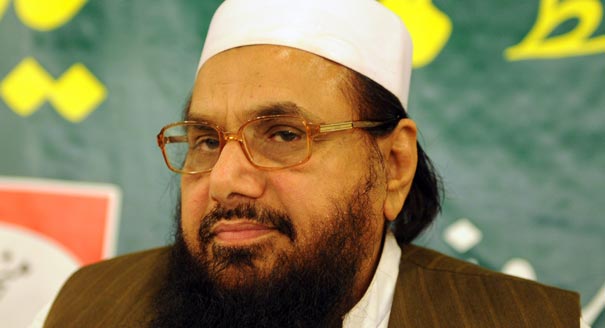
Hafiz Saeed, the head of the Pakistani militant organization Lashkar-e-Taiba, has emerged as a powerful player in the region and has the potential to cause significant tensions in the U.S.-Pakistani relationship.
Source: Christian Science Monitor

"[Hafiz Muhammad] Saeed is the leader of Jamaat-ul-Dawa (JuD), a religious organization in Pakistan widely known to be the social welfare wing of the militant group Lashkar-e-Taiba (LeT). LeT is considered to be among the most powerful and prolific militant organizations in South Asia. It rose to prominence fighting in Indian-administered Kashmir and is responsible for the 2008 Mumbai attacks [which killed more than 160 people] than as well as a number of others against India. Since roughly 2005, it has sent fighters to Afghanistan as well.
From its founding through late 2001, [Mr.] Saeed openly led LeT and its social welfare wing, which used to go by another name. In advance of a pending ban on LeT its social welfare wing ostensibly split off and was renamed JuD. The group’s leaders claimed the two wings were entirely separate entities, but in reality LeT and JuD are still two sides of the same coin. Most experts agree Saeed remains the overall head of both.There is debate about how hands-on a role he plays in LeT’s militant operations. My sense is that he plays a strategic role and has some input on important operational matters, but is not managing militant operations on a day-to-day basis."
"The precise impetus for the bounty remains unclear. It’s certainly the case that the US has been more concerned about the potential threats LeT poses since Mumbai.
And it is possible additional evidence came to light that spurred this action. Specifically, some reports suggest that evidence collected from Osama bin Laden’s Abbottabad compound during the 2011 raid in which he was killed suggested he had been in touch with Saeed regularly. LeT’s precise relationship with Al Qaeda remains the subject of significant debate, but if true then this might have spurred the US government to take this action.
In some respects, the more important question is what the US hopes to accomplish. Given that Saeed is not difficult to locate, it is possible this was intended to signal the seriousness of US concerns to Pakistan and pressure it to rein in Saeed (and through him LeT) via a practice of naming and shaming. This decision also might have been taken in an attempt to put pressure on the group directly."
"LeT possesses transnational networks that have included operatives based in the US and Europe and a robust training infrastructure in Pakistan, where it still operates relatively freely. So there is pretty broad agreement that it has the capabilities to strike US targets not only in South Asia but also further afield.
The debate revolves around its intention to do so. LeT is not ideologically opposed to launching a terrorist attack against the US, but it is viewed as focused primarily on regional issues, subject to pressure by the Pakistani military to remain so, and fearful of inviting US retaliation.
The problem is that LeT’s leaders or factions within the group could decide to push the envelope, which is a concern that rose significantly following its decision to strike Western targets during the 2008 Mumbai attacks. The fact that LeT’s presence in Afghanistan has grown over the past several years only adds to fears that it is moving in a more global direction."
"To begin with, the Pakistani security establishment continues to view LeT as its most reliable proxy against India and the group also plays a small, but important, role in Afghanistan. LeT is also one of the few groups built up by Pakistan's military and its Inter-Service Intelligence Directorate (ISI) for use against India during the 1990s that has not splintered or turned against the Pakistani state.
Recently, the Pakistani military and ISI have begun using LeT in Afghanistan and against some of those insurgents attacking the state as well as employing the group in its traditional role as a proxy against India.
In addition to wanting to avoid losing the benefits LeT provides, there are significant concerns that attempting to dismantle the group could lead it to fragment and turn its guns on Pakistan.
The aim, instead, is to control LeT to the degree possible. Maintaining Saeed in a position of power is considered to be an essential component of doing so. He has led the organization since it was founded in 1986, commands respect from significant quarters within the group, and is viewed as generally reliable by the Pakistan military and ISI.
Finally, although JuD's favorability ratings are not high throughout Pakistan, it does possess a fair amount of suasion in Punjab Province where it has penetrated pockets of the population as a result of its provision of social welfare and the support it receives from the Pakistani establishment."
"Saeed has emerged as one of the most vehement opponents of reopening NATO ground supply lines through Pakistan for forces in Afghanistan. The polarizing invective Saeed and his cohorts, both hyper-nationalist and jihadist, are peddling makes it more difficult for those in Pakistan seeking to repair relations with the US. As for how great an irritant he has the potential to become, Pakistan is unlikely to take significant and lasting action against him in the near term and so much of that depends on how LeT evolves and how the US responds. But it’s already clear that in the last few days he’s become a much greater irritant than anyone would have expected."
This article originally appeared in The Christian Science Monitor.
Former Nonresident Scholar, South Asia Program
Tankel was a nonresident scholar at the Carnegie Endowment, where his research focuses on insurgency, terrorism, and the evolution of nonstate armed groups.
Recent Work
Stephen Tankel
Stephen Tankel
Carnegie does not take institutional positions on public policy issues; the views represented herein are those of the author(s) and do not necessarily reflect the views of Carnegie, its staff, or its trustees.

Are Germany’s economic, industrial, and political struggles becoming a liability for the EU’s ability to rise to the geopolitical moment?

Rym Momtaz, ed.

European Commission President Ursula von der Leyen is about to give her annual address on the state of the EU. Here’s what she won’t—but should—say.
Rym Momtaz

Radical-right parties are expected to do well in upcoming elections in four of the EU's biggest member states. If successful, they could prevent the union from addressing key challenges ahead.

Stefan Lehne

The aftermath of the Ceuta crisis shows Europe has drawn the wrong lessons. Rather than doubling down on failed migration policies, the EU needs to address the underlying roots of such episodes.

Richard Youngs

Canadian Prime Minister Mark Carney has twice inspired praise for standing up to U.S. President Donald Trump: at the 2026 World Economic Forum in Davos and on Canada-U.S. trade negotiations. Is Carney showing a third way better than the EU has in dealing with the Trump administration?
Rym Momtaz, ed.