

Paper
David Burwell
{
  "authors": [
    "David Burwell"
  ],
  "type": "legacyinthemedia",
  "centerAffiliationAll": "dc",
  "centers": [
    "Carnegie Endowment for International Peace"
  ],
  "collections": [],
  "englishNewsletterAll": "ctw",
  "nonEnglishNewsletterAll": "",
  "primaryCenter": "Carnegie Endowment for International Peace",
  "programAffiliation": "SCP",
  "programs": [
    "Sustainability, Climate, and Geopolitics"
  ],
  "projects": [],
  "regions": [
    "North America"
  ],
  "topics": [
    "Climate Change"
  ]
}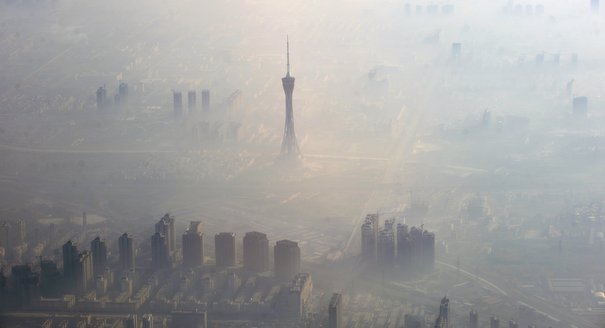
Source: Getty
Excessive heat is becoming a public health threat, especially in cities, but it may also be an opportunity for climate change believers, agnostics, and deniers to work together to address a common danger to modern society.
Source: Huffington Post

However, and perhaps even more importantly, heat may be the bridge to climate consensus. While extreme heat is not climate change in itself, it amplifies the heat impacts of climate change -- thus also amplifying the threats to human health. It therefore provides an opportunity that allows climate believers, agnostics, and deniers to work together to address a common threat to our society. Regardless of the motivations, dealing with extreme heat can help mitigate climate change, providing added benefits to society.
That heat is an amplifier of climate change -- especially in cities -- is not a theory. It is a fact, and it has a name: "the heat island effect." When the weather gets hot, cities get hotter. According to 50 years of data collected by Brian Stone at Georgia Institute of Technology, this heat island effect can be anywhere from two to 12 degrees Fahrenheit compared to the surrounding countryside. Since more than 50 percent of the global population now lives in cities -- a percentage that is expected to rise to 70 percent by 2050, this is a growing problem.
And heat kills -- 70,000 in Europe during the heat wave of the summer of 2003 and more than 10,000 in Russia in 2010, the year of the wildfires. Heat stimulates a photochemical reaction that converts vehicle emissions to ozone -- a precipitator of asthma and cardiovascular disease. Heat also facilitates the transmission of pathogens, thus accelerating the spread of disease.
What's next? Do we just crank up our air conditioners higher -- hoping the power grid doesn't fail and that we stay healthy enough to avoid succumbing to these new threats? Abandon our cities? The reality is that there is no place to hide from a hotter future. Regardless of our location on the ideological spectrum, we have to address this problem together. To paraphrase former Mayor Fiorello LaGuardia of New York City, there is no Republican or Democratic way to deal with heat.
The cause of urban heat islands is well known. Impermeable and dark pavements, roads and parking lots; vehicle emissions; dark roofs; waste heat from air conditioning and power generation, loss of tree canopy and urban vegetation that both shades sunlight and helps evapo-transportation. The solutions are also well known -- more porous and lighter pavement, white roofs, energy-efficient buildings, fewer vehicles driven less miles, more tree canopy and vegetation, and better storm-water management.
The issue is pressing. It need not be an Alfonse-Gaston routine where everyone politely steps aside waiting for someone else to move first. New York, Houston and Los Angeles have each pledged to plant one million trees. San Francisco is painting it roofs white; Chicago is replacing alleys with permeable surfaces; Philadelphia is building integrated storm-water management systems, trapping water to nourish urban forests, vegetation and greenways; and bike-share and car-share programs are popping up everywhere.
States can help as well, with tax and finance policies that encourage cities to act. California has adopted a Transit Priority Program that accelerates mixed use development approvals near transit combined with bike share and car share facilities. It has also approved the creation of local-option Infrastructure Financing Districts (no car dealerships or big box retailers allowed), with authority to issue bonds for transit and other infrastructure improvements. Debt will be paid off over 40 years from the higher-district tax receipts.
There is also a role for the federal government -- most directly by tailoring federal infrastructure assistance in urban areas to projects that minimize, or actually reduce, heat effects. Heat-reduction measures could be included in state clean air plans, and proposals could be fleshed out for amending the U.N. Framework Convention on Climate Change to cover thermal radiation as well as greenhouse-gas emissions. The response to urban heat has been cautious and local. A larger policy debate is needed.
William Gibson, the writer and philosopher, first made the observation that "the future is already here, it is just unevenly distributed." Heat is here -- and it is concentrated in high population areas. This is a problem unblemished by theory or politics. Perhaps heat is the bridge to somewhere we have been waiting for in the climate debate... because heat carries no ideological baggage. It is just hot.
This article was originally published in the Huffington Post.
Former Nonresident Senior Fellow, Energy and Climate Program
Burwell focused on the intersection between energy, transportation, and climate issues, as well as policies and practice reforms to reduce global dependence on fossil fuels.
Recent Work
David Burwell
David Burwell
Carnegie does not take institutional positions on public policy issues; the views represented herein are those of the author(s) and do not necessarily reflect the views of Carnegie, its staff, or its trustees.
Europe’s industrial supply chains leave it vulnerable to global shocks. The EU needs a pragmatic green industrial strategy that balances durable partnerships and bolsters homegrown clean tech without sacrificing low-carbon ambition.


Milo McBride, Pauline Gerard

The EU’s new migration policy is not suited to today’s realities. With climate change increasingly becoming a driver of displacement, Europe needs to rethink its deterrence-focused approach.

Shana Tabak
The U.S.-Iran war has crossed a dangerous threshold: water infrastructure in the Gulf is now a target. Ecological statecraft is no longer peripheral to security, it's part of its foundations.


Olivia Lazard, Ali Bin Shahid
The closure of the Strait of Hormuz has triggered a global energy crisis, but Europe is stuck in reaction mode. Without more strategic foresight, the EU will remain dependent on fossil fuels and will never be truly secure.
Milo McBride, Pauline Gerard
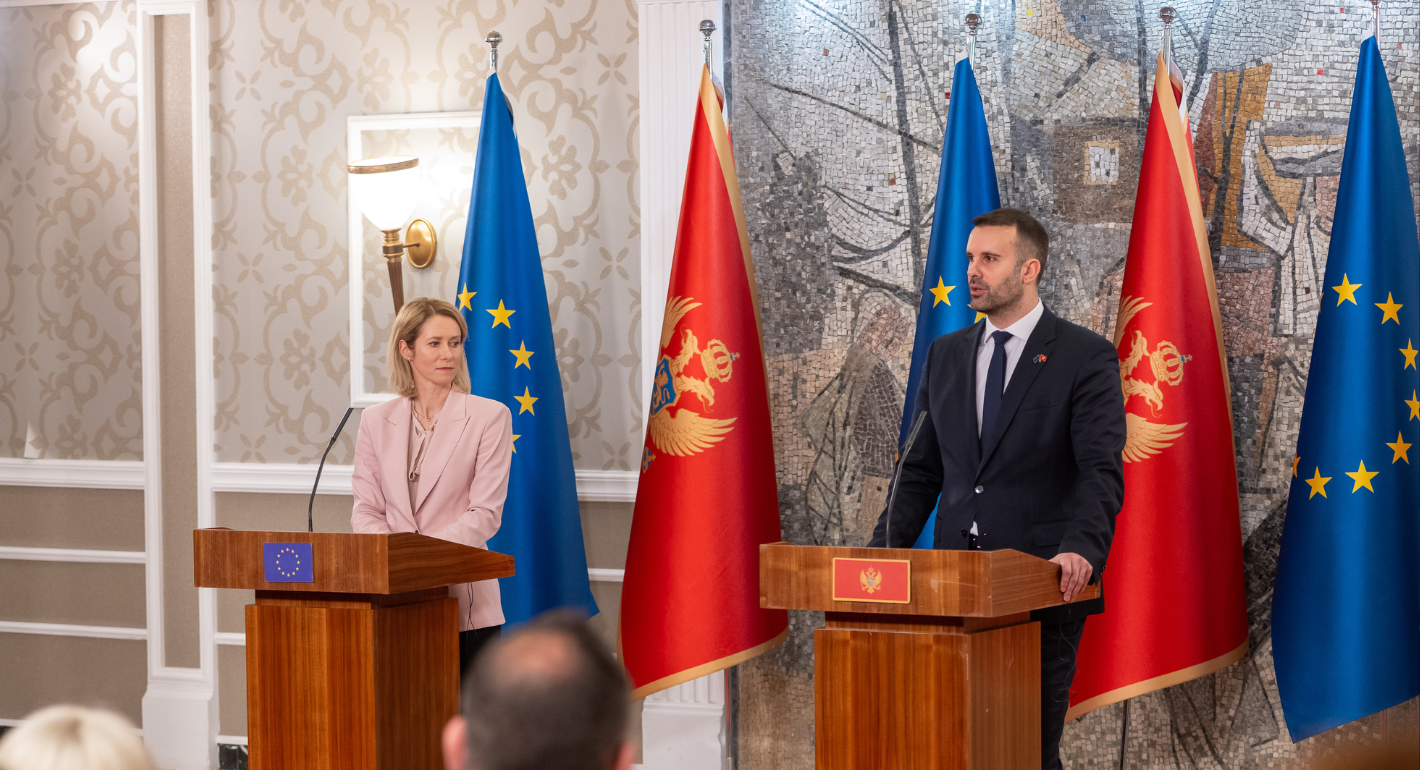
Montenegro and Albania are frontrunners for EU enlargement in the Western Balkans, but they can’t just sit back and wait. To meet their 2030 accession ambitions, they must make a strong positive case.


Dimitar Bechev, Iliriana Gjoni