

Commentary
Judy Dempsey
{
  "authors": [
    "Judy Dempsey"
  ],
  "type": "legacyinthemedia",
  "centerAffiliationAll": "",
  "centers": [
    "Carnegie Endowment for International Peace",
    "Carnegie Europe"
  ],
  "collections": [],
  "englishNewsletterAll": "",
  "nonEnglishNewsletterAll": "",
  "primaryCenter": "Carnegie Europe",
  "programAffiliation": "",
  "programs": [],
  "projects": [],
  "regions": [
    "Europe"
  ],
  "topics": [
    "Foreign Policy"
  ]
}
Source: Getty
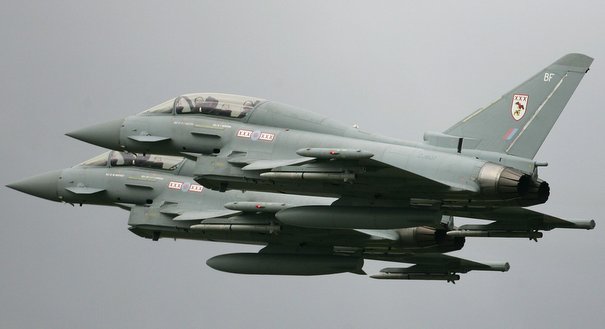
A merger between the European aerospace giant EADS and its British rival, BAE Systems, could be a catalyst for Europe taking a hard look at not only its defense but also its research and development sectors.
Source: New York Times

With the British government now so extraordinarily anti-European, it is hard to see any future BAE-EADS tie-up making a difference.
BAE has had a special relationship with the United States as one of the few European defense manufacturers to supply the Defense Department with cutting-edge military equipment.
Yet with defense spending being cut, even in the United States, BAE is now looking to EADS for growth, especially in the civil aircraft sector.What an irony for BAE, which a few years ago sold its share in EADS.
A merger should surely provide BAE and the British government with some influence over the future direction of EADS. BAE would only hold a minority stake and one would only expect lots of political interference by France and Germany in the joint company. Along with Spain, they are the shareholders in EADS — and famous for wrangling to get the maximum of jobs in their own countries.
But, say analysts, there is a bigger, strategic interest at stake for Europe and for Britain: A merger would make Europe a very serious competitor to the United States, a point I make in my column this week.
Boeing, the American aerospace giant, is already a fierce competitor with Airbus. But with BAE’s state-of-the-art military technology, Europe could find new markets in Asia and elsewhere.
A merger could, in the longer term, also be a catalyst for Europe taking a hard look at not only its defense but also its research and development sectors. The former is hampered by duplication, the latter by a lack of funding. Both have been a brake on Europe’s ability to decide what kind of security and defense policy it needs for the 21st century.
Of course, British conservative lawmakers would balk at the idea that a BAE-EADS deal could lead to a more integrated European defense policy.
Yet Britain’s conservative government is pushing the deal because it knows that it presents the only hope for keeping a national stake in a major aerospace company.
British conservative prime ministers, from Edward Heath to John Major, have found over time that their country could not do without Europe. The BAE-EADS deal may be a similar moment of truth for David Cameron.

Nonresident Senior Fellow, Carnegie Europe
Judy Dempsey is a nonresident senior fellow at Carnegie Europe
Recent Work
Judy Dempsey
Judy Dempsey
Carnegie does not take institutional positions on public policy issues; the views represented herein are those of the author(s) and do not necessarily reflect the views of Carnegie, its staff, or its trustees.

As we close out another season of Strategic Europe, it is worth taking stock of the deep shifts underway.

Rym Momtaz

The hybrid warfare landscape is evolving rapidly, leaving policymakers without clear strategies. To better inform their work in addressing emerging challenges, governments must dig deeper into the underlying dynamics at play.


Raluca Csernatoni, Alicia Wanless
The EU had to compromise to adopt a twenty-first sanctions package against Russia, exposing growing cracks in the union’s resolve. Is this latest, weaker round worth it to keep pressure on Moscow?
Rym Momtaz, ed.

Trump is distracted and Ukraine wants Europe to step up. The continent’s leaders must find their voice and assert it in talks with Russia.

Alissa de Carbonnel

Mounting economic strain and battlefield losses will not necessarily make the Kremlin less dangerous. They could instead push Moscow toward a more aggressive hybrid campaign designed to test NATO’s Eastern flank, exploit allied hesitation, and fracture European resolve.

Maksym Beznosiuk