Can Social Expenditures Be Reformed in the Arab States?
Subsidies for basic foodstuffs and fuel are both popular and endemic to the Middle East. But if Arab states want to avert a looming budgetary crisis, reform is an economic imperative.
According to a new report by the World Bank, Arab states spend far more on social programs than other developing countries. Whereas states outside the region with comparable income levels spend roughly 3 percent of their GDP on social expenditures, the weighted average in the Arab world stands at nearly double that amount—5.7 percent. What is worrying is that most of these expenditures have no bearing on the region’s employment.
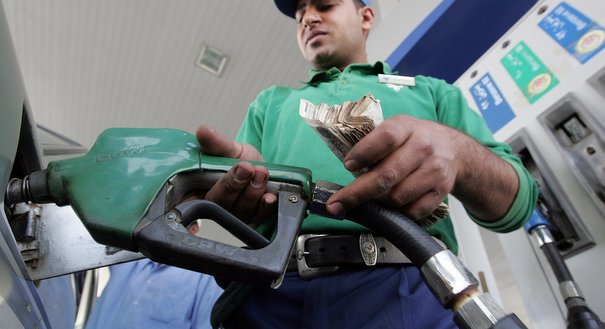
Governments spend the most on cash handouts, tax exemptions for health and education costs, and subsidies for basic goods and utilities. Fuel subsidies in particular are draining the region’s economies, amounting to 14 percent of GDP in Yemen, 10 percent in Saudi Arabia, and 6 percent in Egypt. Even in non-energy-producing countries like Jordan and Tunisia, subsidies amount to roughly 3 percent of GDP. If these subsidies persist, a budgetary crisis could engulf much of the region, posing problems for domestic stability in many Arab states.
Politicians across the region face a dilemma. Despite the necessity of reform, altering the current system carries substantial political risks. Indeed, these expenditures have long been part of a social contract between the public and the state. As part of the “authoritarian bargain,” subsidies are provided while questions of public expenditure—mostly on national defense and internal security—are left under the state’s purview. While the compact differs from country to country, it has endured for decades throughout most of the Arab world.
Beyond the Persian Gulf, Arab rulers have used subsidies to achieve political gains at the expense of sound economic policy. But as states grapple with the consequences of the Arab Spring, many now find themselves buried under budget deficits that threaten to destabilize their economies. Worse, few if any have a clear plan for moving forward, and little oversight exists to regulate the allocation of subsidies. This makes it difficult for governments to improve the effectiveness of their public spending, including subsidies.
In their current incarnations, social subsidies do not empower citizens. Rather than encouraging new workers to enter the labor market, the subsidies foster dependence on government aid. A new approach is desperately needed, one that prevents expenditures on social programs from being held captive by political expediency. Only then can subsidies be used to empower citizens and tackle income inequality, which is endemic throughout the Middle East.
Similarly, institutions that supplement social programs are weak and lack efficiency. For example, aid funds and the supply ministries that are entrusted with internal trade and price monitoring across the Middle East are plagued by institutional weakness and strained financial resources. Along with cash shortages, a large portion of these programs are operated by untrained and unqualified personnel. Many lack the necessary skills to adapt these programs to the Arab Spring’s demands for greater opportunity and social justice.
Unfortunately, new regimes across the Arab world are simply perpetuating an old, unsustainable model. As countries struggle to develop new approaches, the financial crisis only deepens.
Despite an almost unanimous consensus among economists, policymakers, and even some political parties, Arab governments remain hesitant to embrace sound economic policies, preferring instead to cater to short-term political considerations. The lack of trust between the public and the state exacerbates this problem, and prior attempts to find alternatives to indiscriminate subsidies have faced stiff resistance from a suspicious public.
Even so, beneficiaries have at times found themselves unable to convince governments to maintain these programs. In Jordan and Tunisia, for example, wheat and bread subsidies faced sharp cuts over a two-to-three-year period during the 1990s.
Generally, the public disapproves of austerity programs that target social spending and basic subsidies. Yet large segments of the population also believe that these subsidies fail to reach the people who need them most. Too often, they argue, subsidies end up benefitting the energy sector and individuals with high consumption habits rather than the poor.
Their concerns are justified by the evidence. In fact, the World Bank’s recent report recommends, as a first step, reforming subsidies for less-sensitive consumer goods—such as fuel rather than food subsidies. Success in implementing these limited reforms could have the added benefit of beginning to restore public confidence in government.
If Arab states want to avert a looming budgetary crisis, subsidies reform is an economic imperative. Politicians must therefore place macroeconomic stability ahead of short-term interest in pleasing their constituents. However, reining in these expenditures poses a major challenge given the popularity of subsidies and the political costs associated with their erosion. And so the question is: Which states will be able to develop a successful model of reform given widespread fears of political reprisal?
Saif is an economist specializing in the political economy of the Middle East. His research focuses on international trade and structural adjustment programs in developing countries, with emphasis on Jordan and the Middle East.
Carnegie does not take institutional positions on public policy issues; the views represented herein are those of the author(s) and do not necessarily reflect the views of Carnegie, its staff, or its trustees.
The European Commissioner for Trade is headed to China. But after President Xi’s bridge-building visit to Washington, can a more isolated EU overcome Beijing’s stranglehold on critical raw materials? Who will blink first?
The domestic impacts of how long it is taking to end the war in Ukraine have pushed the French electorate to the political extremes and compromised the country’s diplomatic capacity.
A summer of escalation in the Black Sea has hurt Ukraine economically and is exacerbating world food security. A truce is needed—as is a broader reframing of Europe’s Ukraine strategy.
As the EU confronts profound challenges, several leaders have called for fundamental reform to the union’s model—but only modest, superficial changes have resulted. What if Europe really could be reimagined from zero today: What should such a redesigned European order look like?