

Paper
Ibrahim Saif, Ahmed Ghoneim
{
  "authors": [
    "Ibrahim Saif"
  ],
  "type": "legacyinthemedia",
  "centerAffiliationAll": "",
  "centers": [
    "Carnegie Endowment for International Peace",
    "Malcolm H. Kerr Carnegie Middle East Center"
  ],
  "collections": [],
  "englishNewsletterAll": "",
  "nonEnglishNewsletterAll": "",
  "primaryCenter": "Malcolm H. Kerr Carnegie Middle East Center",
  "programAffiliation": "",
  "programs": [],
  "projects": [],
  "regions": [
    "Egypt",
    "Gulf",
    "Levant",
    "Maghreb"
  ],
  "topics": [
    "Economy"
  ]
}
Source: Getty
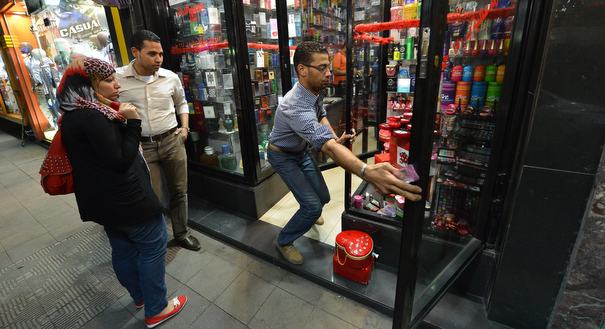
The relative political openness brought about by the Arab Spring in some countries provides an opportunity for the emergence of political and social forces that reflect the reality and aspirations of the middle class.
Source: Al-Hayat

There are those who argue, without evidence, that the middle class has vanished, joining the category of low-income earners. Given the political changes that have taken place in Arab countries over the past few years and the emergence of new political and social forces, it is now necessary to reconsider the middle class and examine where it fits in among new social forces, particularly Islamic ones.
Opinions differ about what exactly is meant by “middle class.” Is it the middle section of a ten-rung ladder, progressing from poorest to richest, based on income and consumption? This definition is commonly used in the United States to determine the size of the middle class through consumption patterns, taking imputed income, education, and skills into consideration.Another way to define the middle class is derived from Marxist socialism. This measure takes cultural and educational factors into account, together with the level of engagement in political, cultural, and social activities, but generally disregards consumption patterns.
Most studies of the middle class undertaken in Arab countries during the last ten years have focused on political behavior over consumption patterns. Prominent examples include economist Galal Amin’s study on the changing political affiliations and activities of Egyptians over long periods of time. Numerous studies have also been conducted in Palestine, Lebanon, and Jordan.
Perhaps the major reason for resorting to a focus on political behavior is the absence of the information necessary to analyze consumption patterns over the long term. In addition, there is weak confidence among researchers and analysts in the data published by official statistical offices in a number of countries due to the assumption that these offices try to conceal unflattering realities.
The Arab Spring and the relative political openness that it has engendered in some countries provided an opportunity for the emergence of political and social forces that reflect the reality and aspirations of the middle class, regardless of how it is defined. This specificity of interest was not visible prior to the Arab Spring, due to the restricted political arena and the singular focus on achieving emancipation from authoritarian regimes. This coincided with the emergence of social movements that were not equipped to grapple with day-to-day issues or fight political battles.
The middle class in many Arab countries is loosely comprised of two broad categories: public sector employees and employees of security institutions. These groups are among the most educated and influential; however, they have experienced a decline in their standard of living as governments scale back their spending, particularly in the area of education. As a result, the middle class has lost many of the incentives and privileges it used to enjoy.
Higher-level public sector and security employees found that the only way to maintain or increase their gains was through forging new ties to the financial sector and emerging groups of businessmen; however, members of the traditional middle class tended to be left out of such alliances.
This situation has resulted in the emergence of new alliances between upper-level state employees and businessmen, especially in those Arab countries that implemented economic reform programs under the supervision of international institutions. It has also led to the decline of the traditional middle class in favor of emerging classes that are fractured in their income sources, political views, and economic aspirations.
At the same time, the emerging middle class suffers from divisions based on divergent religious and educational backgrounds. While these emerging forces may agree on the concepts of liberal economics and the free market, they differ drastically in their political and social visions. This is clearly the case in Egypt and Tunisia, as well as in Morocco to a lesser extent.
The traditional middle class, dominated by employees of the public and security sectors, is organized; its members own a number of media outlets that are leveraged to express their concerns and reach out to people. Meanwhile, the emerging middle class has begun to gain prominence but remains divided.
This means that new alliances will be established between the traditional classes, which are currently in decline, and the emerging ones, based on their common social interests. The alliance between businessmen and the emerging middle class will also continue, so as to protect the interests of these groups and their economic gains, accumulated during the period of economic transformation that began in the early 1990s.
The dynamics that will shape the relationship between these groups and social classes will be determined by elected political institutions. Those bodies should accommodate these changes and support new alliances that will include the formerly prominent middle class. It is a process that will require patience while stability and mutual confidence is established between different classes and groups that are cooperating closely for the first time.
This article was originally published in Al-Hayat in Arabic.
Former Senior Associate, Middle East Center
Saif is an economist specializing in the political economy of the Middle East. His research focuses on international trade and structural adjustment programs in developing countries, with emphasis on Jordan and the Middle East.
Recent Work
Ibrahim Saif, Ahmed Ghoneim
Ibrahim Saif, Muhammad Abu Rumman

When the U.S.-Iran memorandum of understanding was announced, the UK, France, Germany, and Italy declared their readiness to help demine the Strait of Hormuz and lift nuclear sanctions on Tehran. But does Europe need new tools to recover a diplomatic role?

Rym Momtaz, ed.

As geopolitical rivalry weaponizes global supply chains, the EU’s true vulnerability lies in emerging-risk imports. For these goods, suppliers are growing more concentrated, substitution more difficult, and political risk is looming.

Sinan Ülgen

The EU is putting together a new security strategy to meet today’s myriad challenges. But for any proposal to be effective, the union needs to grapple with its identity and ambitions.

Pierre Vimont
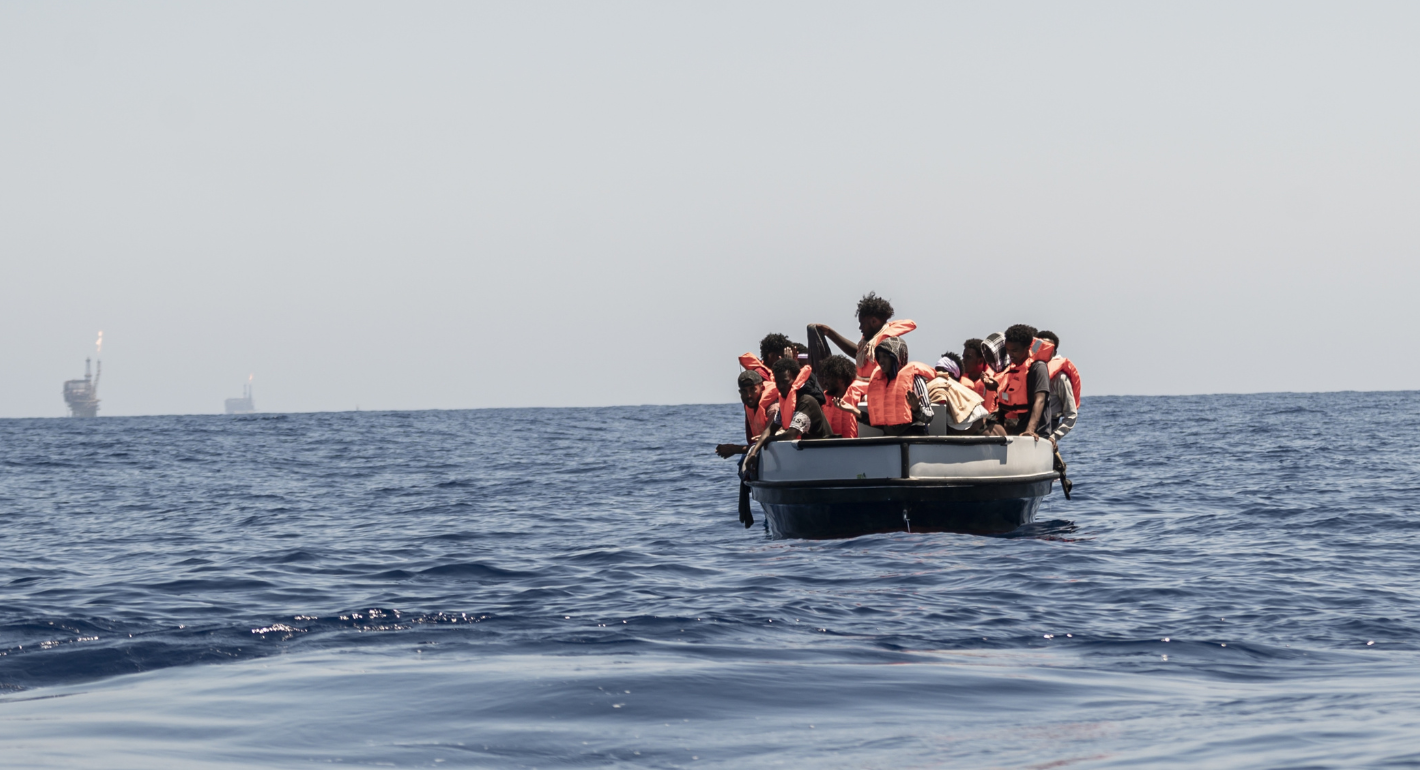
The EU’s new migration policy is not suited to today’s realities. With climate change increasingly becoming a driver of displacement, Europe needs to rethink its deterrence-focused approach.

Shana Tabak
Between the United States’ market-driven approach and China's state-led industrial strategy, Europe is reckoning with how it can remain competitive in the global economy. But is Europe in danger of becoming a U.S. or China colony?
Noah Barkin, Anu Bradford