

Article
Deborah Gordon, Stephen D. Ziman
{
  "authors": [
    "Deborah Gordon"
  ],
  "type": "legacyinthemedia",
  "centerAffiliationAll": "dc",
  "centers": [
    "Carnegie Endowment for International Peace"
  ],
  "collections": [],
  "englishNewsletterAll": "ctw",
  "nonEnglishNewsletterAll": "",
  "primaryCenter": "Carnegie Endowment for International Peace",
  "programAffiliation": "SCP",
  "programs": [
    "Sustainability, Climate, and Geopolitics"
  ],
  "projects": [
    "Carnegie Oil Initiative"
  ],
  "regions": [
    "North America",
    "United States"
  ],
  "topics": [
    "Climate Change"
  ]
}
Source: Getty
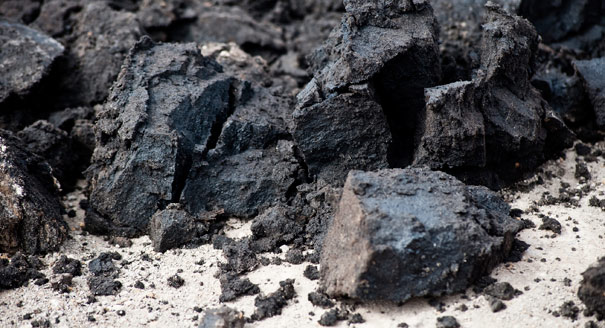
Given the fundamental differences between new liquid hydrocarbons—technologically, economically, geographically, and environmentally—it will become increasingly important to parse out the differing climate impacts between oils and choose wisely.
Source: Scientific American

The expansion of U.S. oil resources is not just growing the total available capacity; it is also significantly diversifying sources of that oil capacity. The assumptions associated with the relatively homogenous oils of the past can no longer be taken for granted. Some of these new oils originate from resources that are not oil at all, instead resembling gas or coal. This will spur paradigm shifts throughout the oil value chain, especially for climate change.
In the 2012 World Energy Outlook, the International Energy Agency predicts that the United States, with its massive oil and gas reserves, is positioned to redraw the global energy map. As such, America could overtake Saudi Arabia and Russia to become the world’s largest global oil producer within five years.This is an amazing reversal of fortune for the world’s largest oil consumer. But America’s rags to riches story is more complicated than it appears. Although for the first time in a long time, the lament is not about shortages and peak oil. Instead, seemingly limitless oil (and gas) at home is being celebrated. In a world chalked full of resource restrictions, this is an enviable position—one that is too important to squander or use toward destructive ends. There are serious risks that need to be managed, however. As such, America has important decisions to make.
While President Obama’s vision of ensuring security of supply is through an “all-of-the-above” approach to tapping diverse sources of energy, when it comes to different oils, all-of-the-above could be an expensive lose-lose proposition. Given the fundamental differences between new liquid hydrocarbons—technologically, economically, geographically, and environmentally—it will become increasingly important to parse out the differing climate impacts between oils and choose wisely. Subsidizing, taxing, or regulating oils as if they are a single commodity does not provide a long-term vision. America needs an oil policy that prioritizes which oils to develop and which to leave in the ground.
Economically, the oils that remain in the ground are a resource savings plan that may, or may not, be spent in the future. Environmentally, the carbon that remains locked in the ground is nature’s carbon capture and sequestration (CCS) plan—far cheaper and less precarious than any such man-made CCS scheme currently under consideration.
New oil supplies could be utilized to feed ever-increasing appetites, especially abroad, as the U.S. moves to export petroleum products, and perhaps even unrefined oil itself. A new policy playbook is needed for oil in an era that has suddenly been transformed—after what has been a previously steady evolution since the tipping point of the 1901 Spindletop gusher in Texas. U.S. policymakers have a steep learning curve before them with the vastly expanded oil menu—Canadian bitumen oil sands, Arctic oils, Bakken and Eagle Ford shale oils, Gulf ultra-deep oils, Brazilian pre-salt oils, and Rocky Mountain kerogen oil shales. Taking proper account of what is known—and probing what is not—about these disparate oils and their implications will require new policies to guide their use.
The most effective way to decide which oils to produce, which to leave in the ground, as well as what petroleum products to avoid burning and how to continue to cut oil demands would be to adopt a system of carbon pricing.
Every oil resource has its own carbon potential. Generally, the heavier the oil, the higher its carbon content, the more laborious its extraction, the greater its energy and other resource input requirements, and the greater the share of high-carbon marketable products. Given their inherent properties, some oils are just easier to manage than others. The good news provided by new oil opportunities therefore comes with a responsibility to ensure sound decisionmaking is adopted now to protect for the future.
Amid persistent droughts through the nation’s entire midsection from the Dakotas to Texas, Hurricane Sandy was yet another wake up call. Global temperatures are already on the rise and unlocking massive further stores of carbon contained in new unconventional oils is a risk that cannot afford to be taken.
A full bore oil strategy to develop any and all resource plays may seem like the easy way out—but to pursue this course would be economically and environmentally unsustainable. Rather than lock-in a plethora of oil infrastructure and drive up carbon concentrations use of different oils needs to be prioritized to plan for tomorrow. Oil markets are shaping up for a chess game of opportunistic moves in which the most important thing to have is options. With so many dynamic changes playing out on a global scale, now is the time to devise the oil end game.
This article was originally published in Scientific American.

Former Director and Senior Fellow, Energy and Climate Program
Gordon was director of Carnegie’s Energy and Climate Program, where her research focuses on oil and climate change issues in North America and globally.
Recent Work
Deborah Gordon, Stephen D. Ziman
Deborah Gordon, Smriti Kumble, David Livingston
Carnegie does not take institutional positions on public policy issues; the views represented herein are those of the author(s) and do not necessarily reflect the views of Carnegie, its staff, or its trustees.

The EU can impose sanctions but struggles to enforce them without the United States. With Washington increasingly disinterested in backing European interests, the bloc must now fend for itself.


Nicu Popescu, Tiago Antunes

Ahead of a tough winter for Ukraine, Donald Trump’s swing back toward Russia bodes ill. But instead of panicking, Kyiv’s European allies are focusing on action.

Rym Momtaz

While the EU and European governments are embracing the much-lauded middle-power moment, this entails three difficult conundrums.

Richard Youngs

Europe is facing rising populism internally as well as external pressures from Russia, China, Turkey, and the United States.

Dimitar Bechev

European NATO countries are wrestling with the possibility of U.S. disengagement from the alliance. With the continent’s security increasingly uncertain, governments must restore the credibility of their collective defense.



Hans-Dieter Lucas, Adam Thomson, Pierre Vimont