

Commentary
Uri Dadush
{
  "authors": [
    "Uri Dadush"
  ],
  "type": "legacyinthemedia",
  "centerAffiliationAll": "",
  "centers": [
    "Carnegie Endowment for International Peace",
    "Carnegie Europe"
  ],
  "collections": [],
  "englishNewsletterAll": "",
  "nonEnglishNewsletterAll": "",
  "primaryCenter": "Carnegie Endowment for International Peace",
  "programAffiliation": "",
  "programs": [],
  "projects": [],
  "regions": [
    "Western Europe",
    "Europe",
    "North America"
  ],
  "topics": [
    "Economy",
    "EU"
  ]
}
Source: Getty
If growth does not return to Europe in the next two years, the political situation will become more difficult.
Source: CRI English
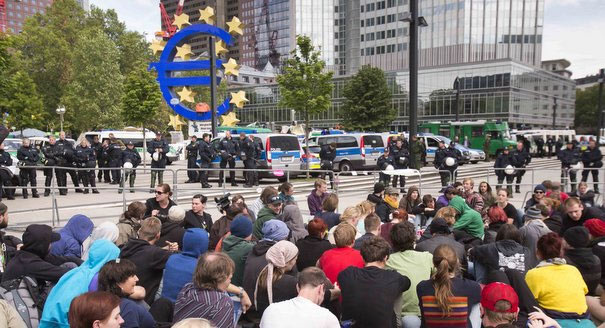
The European economy has exhibited dire trends, explained Carnegie's Uri Dadush on CRI English. Greece continues to cut state positions, Spain has observed its highest unemployment rate ever at 27 percent, the UK's economic growth remains sluggish, and Italy is only now forming a new government. Dadush argued that more can be done by Germany and the center of Europe to reflate the economy and allow wages to rise. Moreover, he stated that the European Central Bank could probably be more aggressive with its quantitative easing. Dadush stressed that it is difficult for countries like Italy and Spain to implement any policies other than austerity, as markets will not lend them the money and governments are unable to finance their budget deficits. Spain and Italy need to regain the confidences in the markets. Only once markets improve significantly and confidence returns, Dadush stated, can they practice more expansionary policies. If growth does not return in the next two years, the political situation will become more difficult, and all bets will be off.
Former Senior Associate, International Economics Program
Dadush was a senior associate at the Carnegie Endowment for International Peace. He focuses on trends in the global economy and is currently tracking developments in the eurozone crisis.
Recent Work
Uri Dadush
Uri Dadush
Carnegie does not take institutional positions on public policy issues; the views represented herein are those of the author(s) and do not necessarily reflect the views of Carnegie, its staff, or its trustees.

The European Commissioner for Trade is headed to China. But after President Xi’s bridge-building visit to Washington, can a more isolated EU overcome Beijing’s stranglehold on critical raw materials? Who will blink first?

Rym Momtaz, ed.
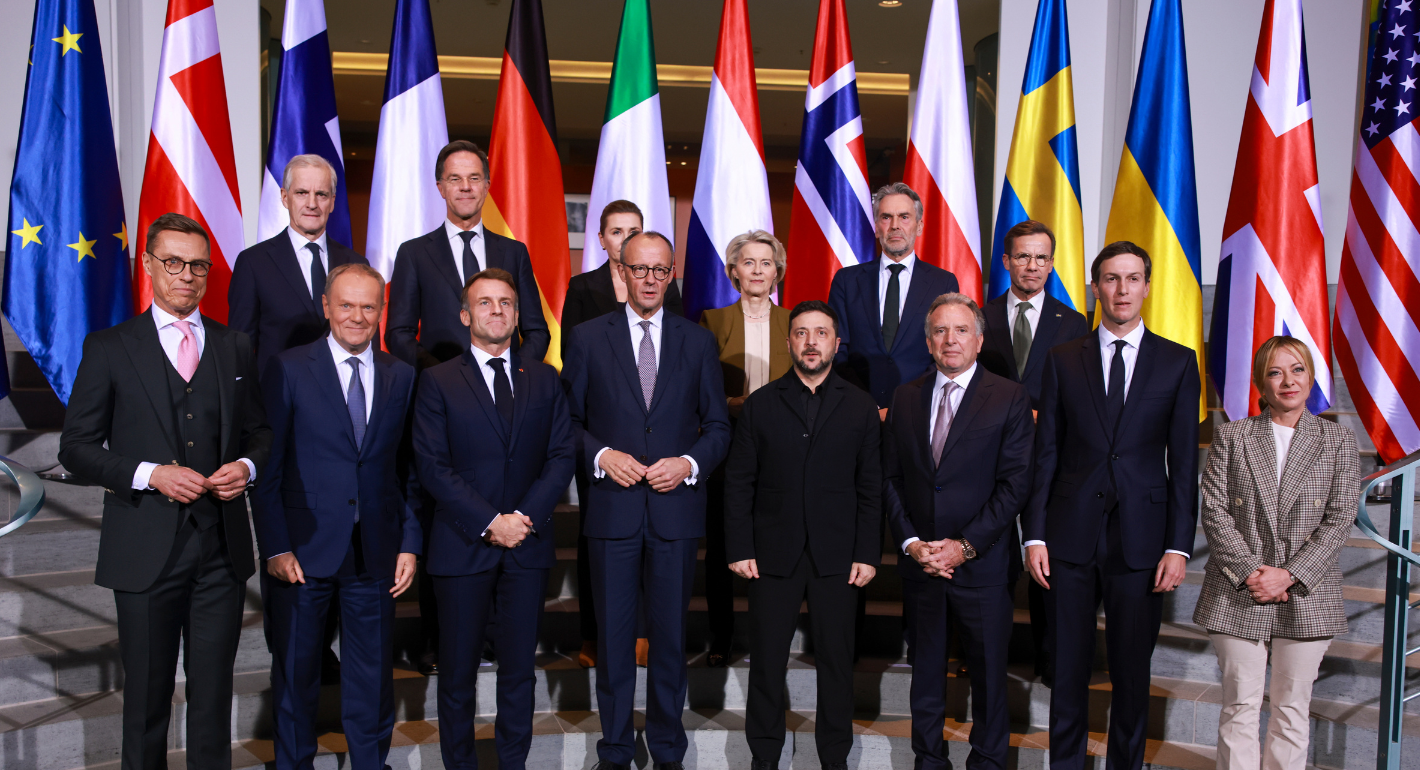
European NATO countries are wrestling with the possibility of U.S. disengagement from the alliance. With the continent’s security increasingly uncertain, governments must restore the credibility of their collective defense.


Hans-Dieter Lucas, Adam Thomson, Pierre Vimont

The domestic impacts of how long it is taking to end the war in Ukraine have pushed the French electorate to the political extremes and compromised the country’s diplomatic capacity.
Rym Momtaz

Before the next wave of EU enlargement takes place, the union needs to grapple with thorny questions of how power is distributed among its members.


Emil Sondaj Hansen, Ditte Brasso Sørensen

The new U.S.–Denmark–Greenland agreement will help Washington exert political, economic, and financial dominance under the guise of security. Yet, it acknowledged Copenhagen’s and Nuuk’s sovereignty on the island.

Marc Pierini