

In The Media
David Rothkopf
{
  "authors": [
    "David Rothkopf"
  ],
  "type": "legacyinthemedia",
  "centerAffiliationAll": "",
  "centers": [
    "Carnegie Endowment for International Peace",
    "Carnegie China"
  ],
  "collections": [
    "China’s Foreign Relations",
    "U.S.-China Relations"
  ],
  "englishNewsletterAll": "",
  "nonEnglishNewsletterAll": "",
  "primaryCenter": "Carnegie Endowment for International Peace",
  "programAffiliation": "",
  "programs": [],
  "projects": [],
  "regions": [
    "North America",
    "United States"
  ],
  "topics": [
    "Security",
    "Foreign Policy"
  ]
}
Source: Getty
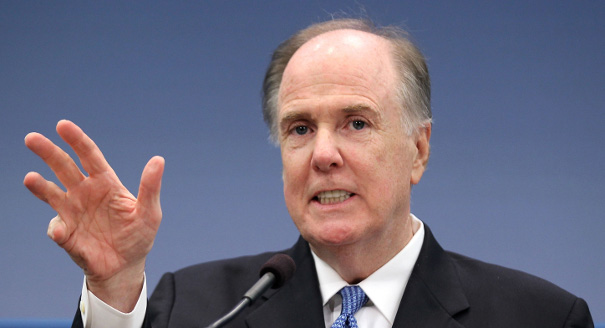
As national security adviser, Donilon has played a low-key but thoughtful, strategic, and activist role.
Source: Foreign Policy
Later today, President Obama will announce that National Security Advisor Thomas Donilon will step down from that post in July and be replaced by current U.N. ambassador Susan Rice. While much of the coverage of the announcement will no doubt focus on Rice's controversial associations with the Benghazi debacle of Sept. 11, 2012, the real story is likely to be whether and how Rice can assume the central and effective role Donilon has played since becoming national security advisor in October 2010.
Donilon has very deliberately pursued his tenure by embracing the style of his most successful predecessor in the job, Brent Scowcroft, who is the only man to have served twice in the post, first for President Gerald Ford and then later for President George H.W. Bush. Like Scowcroft, Donilon has played a low-key but thoughtful, strategic, and activist role. He approached the job studiously, bringing with it perspectives from his time as a top aide to former Secretary of State Warren Christopher, as a campaign and transition advisor to President Obama, and from the first two years of this administration as deputy national security advisor serving under Gen. James Jones. But he also read voraciously and spoke regularly with many of his predecessors in the post, actively seeking out historical models. In a recent conversation with him, he cited Scowcroft as well as the Eisenhower era as an inspiration, with an equal emphasis on providing sound advice to the president and managing the process of developing policy options for the president and then ensuring that they are implemented appropriately by all the relevant agencies of the executive branch.
Donilon has consciously sought to play, as did Scowcroft, the role of honest broker among the many senior national security voices clamoring for the president's ear. And, much as Scowcroft did not shy away from engaging himself in international travel and direct exchanges with officials of other governments, Donilon has played an absolutely central role in relations with a number of key governments worldwide. Notably, he has effectively been the Obama team's lead interlocutor on many issues with China, most recently visiting that country in preparation for Obama's upcoming California meetings with Chinese President Xi Jinping. He has also engaged personally at the head-of-state or government level with Russia, Israel, and the Gulf states as part of his core portfolio.The trick that Donilon achieved that may be a challenge for Rice is that he did so while carefully remaining in the background whenever possible. While he sat directly at Obama's side in National Security Council meetings, he never sought cabinet rank -- as have some of his predecessors -- explaining that he felt it would be easier to do his job if he were not seen as a rival by other top national security policymakers. He also instituted regular weekly meetings with the secretaries of State and Defense and with the leadership of the intelligence community, including the heads and deputies from the CIA, the Directorate of National Intelligence, and the Defense Intelligence Agency. And he consulted not only with them: His policy process included, I'm told, more than 1,000 deputies committee meetings, at which key policy choices were debated by senior officials in preparation for meetings of the NSC principals. Those policy processes were rigorous as were the processes within meetings chaired by Donilon, which often began with him enumerating the handful of key administration objectives that needed to be served.
Under Donilon not only did the influence of the NSC grow, so too did its size. Today, according to its own estimate, the National Security Staff is over 370, its biggest in history. Donilon is unapologetic about the growth, arguing that the staff needs to be that big to support the needs of the president.
Ultimately, however, the true measure of a national security advisor is not the size of the National Security Staff or the number of meetings or even the level of his or her active interaction with foreign leaders, it is the nature and success of the policies initiated. It is by this measure that in my estimation as a historian of the NSC Donilon will be ranked as one of the most successful individuals to have served in that capacity. Because under Donilon -- and during the period of his very considerable influence as the principal deputy to Jones -- there took place a very deliberate and sweeping strategic shift unlike many seen in recent history.
Indeed, Donilon's greatest contribution was his strategic mindset, leading to a conscious shift away from the issues that preoccupied the NSC under George W. Bush in Iraq, Afghanistan, and the broader post-9/11 "Global War on Terror" to one that centered on next generation issues: China, cyber issues, the strategic consequences of America's energy revolution, introducing new economic initiatives in the Atlantic and Pacific that have broad geopolitical consequences, moving to a next generation Mideast strategy focused on regional stability, along with new partnerships with regional and global players and addressing emerging threats in places like Africa. Donilon's term for the renewed interest in Asia is "strategic rebalancing" -- not the "pivot" to Asia first used by Secretary of State Hillary Clinton -- but what has really happened on his watch is a restoration of balance to the U.S. national security agenda, a move away from the conflict-dominated view of the years right after 9/11 to one that is more global and has room to consider opportunities, new alliances, and new challenges more effectively. He has had his share of fights and detractors, periodically frosty relations with the military, and overseas outcomes have been a mixed bag, to be sure. But there is no denying the broadened focus is a great step forward from the perspective of the first years of this century.
For Rice, it is going to be a tough act to follow. She has some very obvious strengths that play in her favor. For one, she is close to the president. In fact, it was Rice who was national security passenger number one on the Obama campaign bandwagon, who was the organizing force behind the 2008 campaign's national security team and later behind the transition. She has the single most essential attribute seen in all successful national security advisors -- the trust of her boss. Indeed, given what she has been through since Benghazi, it is safe to say she has more than his trust: She has his loyalty.
But closeness has its drawbacks too: Remember that Condoleezza Rice was extremely close to President Bush, and while this helped her during her time as Bush's second-term secretary of state, it may have been an impediment when she was his first-term national security advisor. She literally was drawn too close to him, become so engaged in staffing him personally, spending as much as 6 or 7 hours with him on many days, that she was unable to address the management and governance functions of the job -- a task made tougher by the inclination of Vice President Dick Cheney and Secretary of Defense Donald Rumsfeld to backdoor the process altogether.
The secret to managing the process, as Donilon found, is winning the trust of the other principals. It is already fair to say that while Susan Rice is widely respected for her intellect and drive, some of her potential counterparts (according to senior officials at State and DoD especially) are wary that her personality and strong views will lead her to want to play an out-front role that may soon make her a rival unable to be seen as an honest broker. This problem is easy enough to address. Both Scowcroft and Donilon went directly to their counterparts and said from the get-go that they knew their role was in the background, that the secretary of state was the administration's principal spokesperson, and that they would not get out in front of the message or the messengers from Foggy Bottom or in the Pentagon.
Rice also has another advantage in that process -- Donilon's former deputy and now White House Chief of Staff Denis McDonough. McDonough is one of the architects of the successful processes and approaches embraced by Donilon and, knowing Rice as well as he does, can be a very useful guide to help ensuring that the new national security advisor lives up to and ideally builds upon the achievements of her predecessor.
That said, of course, the greatest challenges that Rice and the Obama national security team will face emanate not from within the bureaucracy but from beyond our borders. For all the successes of Obama and Donilon policy management -- including the not inconsiderable feats of managing two major withdrawals of troops and materiel from two theaters of war, the Osama bin Laden raid and other anti-terror wins, and the return to the strategic view outlined above -- many open questions and complex challenges remain. The Middle East is arguably more complex and dangerous than at any time in recent memory, it is unclear whether our efforts to stop Iran's nuclear program will be successful, Russia is more difficult than ever to deal with, the climate is more at risk than ever, our allies are fragile and often irresolute, and the Pakistans, North Koreas, Malis and Nigerias of this world are posed to flare up at any moment. Donilon therefore may well be viewed as a successful steward of the policy process but it will be up to Rice and the rest of the new U.S. national security team to actually determine what the lasting legacy of the Obama administration's foreign policy will be.
Former Visiting Scholar
David Rothkopf was a visiting scholar at the Carnegie Endowment as well as the former CEO and editor in chief of the FP Group.
Recent Work
David Rothkopf
David Rothkopf
Carnegie does not take institutional positions on public policy issues; the views represented herein are those of the author(s) and do not necessarily reflect the views of Carnegie, its staff, or its trustees.
Following Ursula von der Leyen’s gaffe equating Turkey to Russia and China, relations with Ankara risk deteriorating even further. Without better, more consistent diplomatic messaging, how can the EU pretend to be a geopolitical power?

Sinan Ülgen
Closer EU-UK ties could help address urgent European concerns. But is the EU ready for rapprochement with the United Kingdom?

Rym Momtaz, ed.
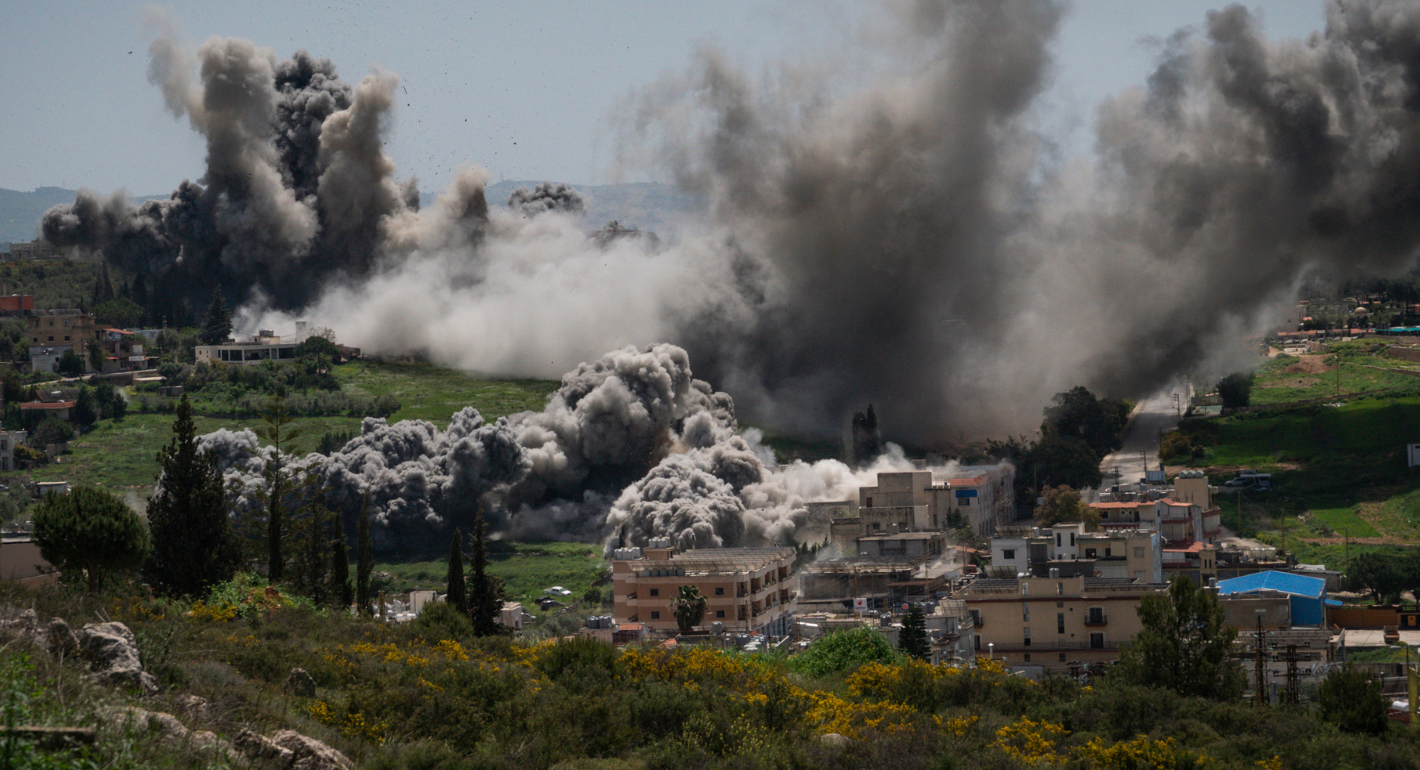
Europe has been standing by while its Southern neighborhood is being redrawn by force. To establish a path to peace between Israel and Lebanon, it’s time for Europeans to get involved with hard power.
Rym Momtaz

In Ukraine, Gaza, and Iran, AI warfare has come to dominate, with barely any oversight or accountability. Europe must lead the charge on the responsible use of new military technologies.

Raluca Csernatoni
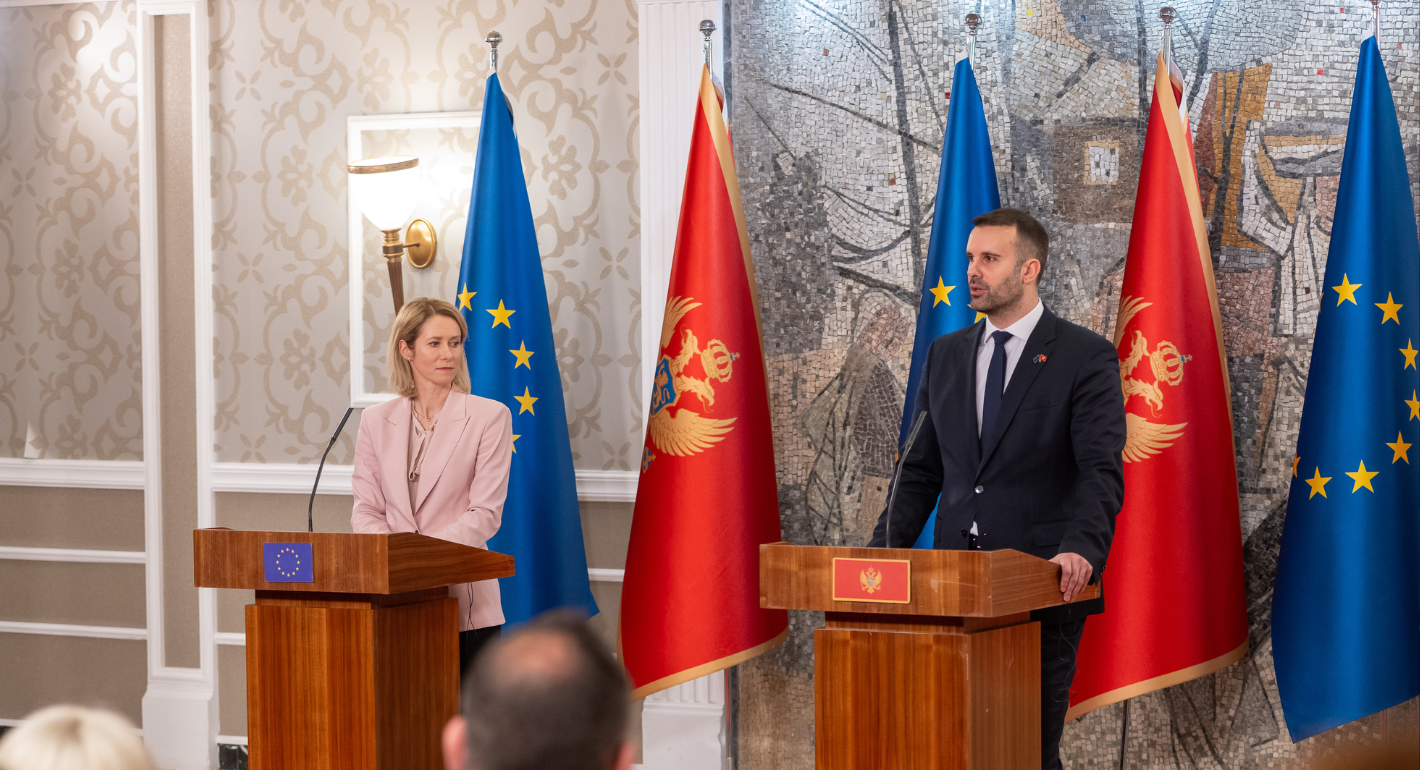
Montenegro and Albania are frontrunners for EU enlargement in the Western Balkans, but they can’t just sit back and wait. To meet their 2030 accession ambitions, they must make a strong positive case.


Dimitar Bechev, Iliriana Gjoni