

Paper
Renée DiResta, Rachel Kleinfeld, Margot Treadwell
{
  "authors": [
    "Rachel Kleinfeld"
  ],
  "type": "legacyinthemedia",
  "centerAffiliationAll": "dc",
  "centers": [
    "Carnegie Endowment for International Peace"
  ],
  "collections": [],
  "englishNewsletterAll": "democracy",
  "nonEnglishNewsletterAll": "",
  "primaryCenter": "Carnegie Endowment for International Peace",
  "programAffiliation": "DCG",
  "programs": [
    "Democracy, Conflict, and Governance"
  ],
  "projects": [],
  "regions": [
    "Middle East",
    "Israel",
    "Palestine"
  ],
  "topics": [
    "Democracy",
    "Security"
  ]
}
Source: Getty
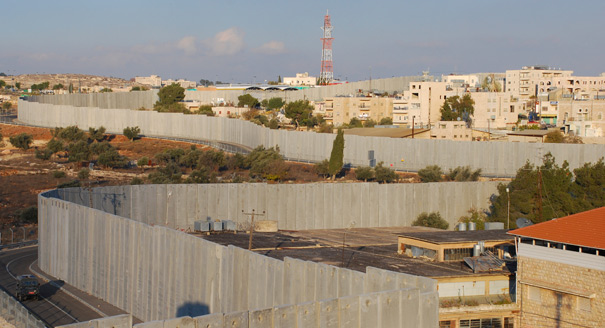
The defacto annexation of the West Bank through settlements, along with declining secular Jewish births and the size of the non-Jewish population, means that Israel is en route to becoming a non-majority Jewish country.
Source: Chicago Sun-Times
I was in Israel on a State Department-sponsored speaking tour, but every time I mentioned the peace process, I got eye rolls.From generals in Tel Aviv to college kids in Jerusalem, the response was the same: “We want peace, sure. But it won’t happen. You Americans are naive to even try.”
As Americans who love Israel, we need to change this thinking — fast.
Israel is sitting on a demographic time bomb. The defacto annexation of the West Bank through settlements, along with declining secular Jewish births and the size of the non-Jewish population, means that Israel is en route to becoming a non-majority Jewish country. Without a decision to divide into two states, Israel can’t be both a democracy and a Jewish homeland for long.
Israelis are hoping the problem disappears. With no solution, they sip espresso in Tel Aviv or surf off Haifa in a state of collective denial. Polling shows that they know this is escapism. But the nearly 70 percent of the population who say they want two states don’t believe it will happen, so are stuck in a state of frozen animation.
I first fell in love with Israel at the age of 16, and kept returning. In the second intifada, the school where I had studied Hebrew, the bus I took there, my coffee shop and the Mahene Yehuda market I visited daily were all hit by suicide bombs. Israel’s existence is not a given. Security threats are real. So what do we do?
First, we need to stop talking about the peace process. Not the concept — but the words, which strike Israelis as naive. Neutral terms like “negotiated agreement” resonate more than “peace” or “solution.”
Second, we need to prod both sides to seize the moment with urgency. Helping Israelis understand that America expects Israel to help itself is the best way to ensure an Israeli state for the next 65 years. That means, yes, stopping settlement building, while asking Europeans to pressure Palestinians to drop prisoner exchanges as preconditions for talks.
Third, we need to help younger Israelis and Palestinians feel that conflict can be solved. Palestinian groups are preventing young Jews and Arabs from attending joint activities — something European pressure might help stop. As long as anti-normalization continues, meetings with Northern Irish youth could show each side that intractable conflict can end.
Finally, negotiators need to talk with Palestinians who wield power — not just with those we like. That means engaging with Khaled Meshaal, Gaza’s prime minister, who has denounced negotiation. Such a stance means we must continue assisting Israel with security, like its Iron Dome system that has stopped 80 percent of incoming rockets.
Mid-week, I drove from Tel Aviv to Jerusalem on the controversial highway 443, which follows the wall. “Look,” said my driver. “That’s the wall the world makes such a fuss about.” She pointed to a fence that at times could have been guarding a south Chicago self-storage site. At other times, the fence was 20 feet high, covered with barbed concertina wire.
When I mentioned taking the road, many Israelis said they didn’t know they were driving along the West Bank or that the construction they saw was for settlements.
The blindness has consequences. One journalist explained, “We don’t see the Palestinians. They are behind their wall. They don’t affect all this,” he gestured around a lively Tel Aviv restaurant. “We’ll see them again if they launch another intifada.”
That is not the incentive system anyone wants. Israel has a chance, now, for a different future. Americans can catalyze change. But only the leaders of both peoples can seize it.
This article was originally published in the Chicago Sun-Times.

Senior Fellow, Democracy, Conflict, and Governance Program
Rachel Kleinfeld is a senior fellow in Carnegie’s Democracy, Conflict, and Governance Program, where she focuses on issues of rule of law, security, and governance in democracies experiencing polarization, violence, and other governance problems.
Recent Work
Renée DiResta, Rachel Kleinfeld, Margot Treadwell
Political Violence Researchers, Rachel Kleinfeld, ed., Dalya Berkowitz, ed.
Carnegie does not take institutional positions on public policy issues; the views represented herein are those of the author(s) and do not necessarily reflect the views of Carnegie, its staff, or its trustees.

An overwhelming victory by a far-right-wing party in a small state in eastern Germany will have major repercussions for Chancellor Friedrich Merz’s coalition.

Judy Dempsey

European states control several Overseas Countries and Territories around the world that carry strategic, economic, and environmental weight. As great powers challenge the rules-based order, defending them is a geopolitical imperative for Europe.

Marc Pierini

In supporting Europe’s far-right, MAGA and Russia both want the same thing: a weaker EU. Europe must defend itself without abandoning the openness these forces exploit.

Armida van Rij

The hybrid warfare landscape is evolving rapidly, leaving policymakers without clear strategies. To better inform their work in addressing emerging challenges, governments must dig deeper into the underlying dynamics at play.


Raluca Csernatoni, Alicia Wanless

Mounting economic strain and battlefield losses will not necessarily make the Kremlin less dangerous. They could instead push Moscow toward a more aggressive hybrid campaign designed to test NATO’s Eastern flank, exploit allied hesitation, and fracture European resolve.

Maksym Beznosiuk