

Article
Thomas Carothers
{
  "authors": [
    "Thomas Carothers"
  ],
  "type": "legacyinthemedia",
  "centerAffiliationAll": "dc",
  "centers": [
    "Carnegie Endowment for International Peace",
    "Malcolm H. Kerr Carnegie Middle East Center"
  ],
  "collections": [
    "Arab Awakening"
  ],
  "englishNewsletterAll": "democracy",
  "nonEnglishNewsletterAll": "",
  "primaryCenter": "Carnegie Endowment for International Peace",
  "programAffiliation": "DCG",
  "programs": [
    "Democracy, Conflict, and Governance"
  ],
  "projects": [],
  "regions": [
    "Middle East",
    "Syria",
    "Russia",
    "Levant"
  ],
  "topics": [
    "Security",
    "Foreign Policy"
  ]
}
Source: Getty
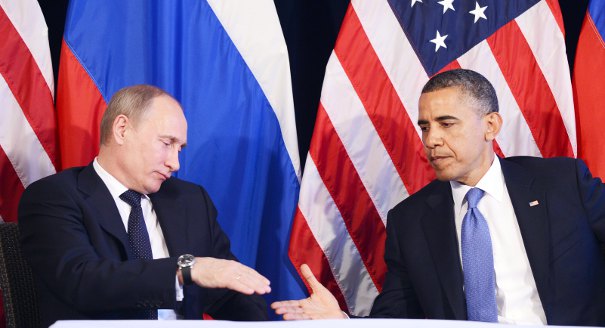
A Russia-brokered deal, which seeks to eliminate Syria’s chemical weapons, provides the Obama administration with breathing room but fails to solve the fundamental issues driving the Syrian conflict.
Source: CBC
Speaking to CBC News, Ahmed Rashid and Carnegie's Thomas Carothers discussed the prospect of a deal to secure and remove Syria's chemical weapons stockpiles. Carothers argued that the deal, brokered by Russia, provided the Obama administration with some breathing room but fails to solve the fundamental issues driving the conflict in Syria. Turning to Russian intentions in negotiating the deal, Carothers and Rashid contended that Russia hopes to solidify the Syrian position. Carothers suggested that the best-case outcome is that with international officials on the ground, the Syrian government will be more wary of perpetrating atrocities, and some potential exists to move toward a ceasefire. The interviewees also discussed Vladimir Putin's New York Times op-ed, which Rashid believed will be favorably interpreted in Russia, and which Carothers viewed, despite some spurious statements, as a potentially successful appeal to Americans for international stability and order.

Harvey V. Fineberg Chair for Democracy Studies; Senior Fellow, Democracy, Conflict, and Governance Program
Thomas Carothers, a senior fellow in the Carnegie Endowment for International Peace’s Democracy, Conflict, and Governance Program, is a leading expert on comparative democratization and international support for democracy.
Recent Work
Thomas Carothers
Thomas Carothers
Carnegie does not take institutional positions on public policy issues; the views represented herein are those of the author(s) and do not necessarily reflect the views of Carnegie, its staff, or its trustees.

Are Germany’s economic, industrial, and political struggles becoming a liability for the EU’s ability to rise to the geopolitical moment?

Rym Momtaz, ed.

European Commission President Ursula von der Leyen is about to give her annual address on the state of the EU. Here’s what she won’t—but should—say.
Rym Momtaz

The aftermath of the Ceuta crisis shows Europe has drawn the wrong lessons. Rather than doubling down on failed migration policies, the EU needs to address the underlying roots of such episodes.

Richard Youngs

Canadian Prime Minister Mark Carney has twice inspired praise for standing up to U.S. President Donald Trump: at the 2026 World Economic Forum in Davos and on Canada-U.S. trade negotiations. Is Carney showing a third way better than the EU has in dealing with the Trump administration?
Rym Momtaz, ed.

The EU’s responses to two recent incidents expose the gulf between European perceptions and capabilities. Unless the union can bridge that gap, it will never become a real geostrategic power.
Rym Momtaz