

Article
C. Raja Mohan, Darshana M. Baruah
{
  "authors": [
    "C. Raja Mohan"
  ],
  "type": "legacyinthemedia",
  "centerAffiliationAll": "dc",
  "centers": [
    "Carnegie Endowment for International Peace",
    "Carnegie India"
  ],
  "collections": [],
  "englishNewsletterAll": "ctw",
  "nonEnglishNewsletterAll": "",
  "primaryCenter": "Carnegie India",
  "programAffiliation": "SAP",
  "programs": [
    "South Asia"
  ],
  "projects": [],
  "regions": [
    "South Asia",
    "India",
    "Southeast Asia"
  ],
  "topics": [
    "Foreign Policy"
  ]
}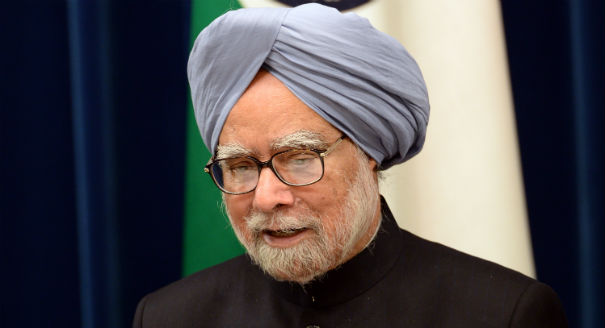
Source: Getty
A strong alignment between India and Indonesia holds the key to Delhi’s much-vaunted “strategic autonomy” and Jakarta’s quest for a “dynamic equilibrium” in Asia.
Source: Indian Express
As he heads to Brunei and Indonesia this week, Manmohan Singh has reasons to pat himself on the back for significantly advancing India's Look East policy through his near decade-long tenure as prime minister. When outlined by P.V. Narasimha Rao in the early 1990s, India's Look East policy was merely aspirational. Under Atal Bihari Vajpayee, it had become a comprehensive engagement with the Association of Southeast Asian Nations (ASEAN). Thanks to this bipartisan effort by three different administrations in Delhi, the Look East policy has become one of India's most successful foreign policy initiatives ever.
Singh's contribution to the Look East policy has been three-fold. The first was to ensure India's economic integration with Asia. Despite doubts in the Congress party, expressed at the highest level, Singh finalised a free trade agreement with the ASEAN. He followed up with two comprehensive economic partnership agreements with Japan and South Korea. He has also committed India to negotiate a Regional Comprehensive Economic Partnership with the ASEAN and its major partners. Thanks to these initiatives, India has become an integral part of Asia's economic future.Second, on the political front, India is now part of all the ASEAN-led institutions that emerged during the last decade, including the East Asia Summit and the expanded consultations among the region's defence ministers. At the commemorative summit in Delhi last December to mark the 20th anniversary of India's engagement with the ASEAN, the two sides unveiled a comprehensive strategic partnership. The ASEAN now is seeking a more active Indian contribution to the security and stability of East Asia. Third, Singh has expanded the geographic scope of India's Look East policy to include Japan, South Korea and Australia. The growing engagement with these countries has added considerable depth to India's Asian outreach.
Singh's journey to the east includes a bilateral visit to Indonesia, the largest nation in the ASEAN and a rising power in its own right. If the East Asia Summit in Brunei is about India's new multilateral engagement with the region, the PM's visit to Indonesia highlights India's urgent bilateral imperative in East Asia. In the last two decades, Asian regionalism and multilateral institutions have taken strong roots. Yet, the rapid changes in Asia's strategic environment have compelled most Asian nations to strengthen bilateral ties, especially in the security domain.
The growing tensions between China and the United States, and the intensifying maritime territorial disputes between Beijing and its Asian neighbours, have brought forth great political uncertainties. While the Indian debate has focused on the implications of rapidly expanding Chinese military power and the US rebalance to Asia in response, it has not paid adequate attention to the urgency of strengthening bilateral strategic partnerships. If the unfolding Sino-American rivalry in Asia has generated new ideas on reinventing "non-alignment", the real option for Delhi lies in building a "solid alignment" with key regional powers like Indonesia.
After their independence nearly seven decades ago, Delhi and Jakarta together lent legitimacy to the concept of non-alignment as the Cold War between the US and the Soviet Union enveloped Asia. Today, Asia is caught in the cleft stick of a dynamic relationship between Beijing and Washington. Many of Asia's leading nations, including India and Indonesia, are coming to terms with one important fact: that their room for manoeuvre will shrink whether the US and China confront each other, or collude to shape the Asian political order. One way to reduce Asian vulnerability to the uncertain dynamic in the US-China relationship is to develop stronger security partnerships between key regional powers. Delhi and Jakarta can now show the way forward much in the manner they did in the middle of the last century.
Contrary to current interpretations of non-alignment, which reduce it to a mantra without meaning, the originators of the idea saw it as an active attempt to shape their external environment. Criticising the Cold War was only one part of it. The other was strong bilateral security cooperation. Even as they campaigned for Asian solidarity, Nehru and Sukarno — the founding fathers of India and Indonesia — signed a friendship treaty in March 1951, which opened the door for active defence cooperation. This was followed by three agreements in the 1950s for intensive exchanges between their air forces, navies and armies. Nehru extended support to Indonesia's counter-insurgency campaign at home, and the two held their first joint naval exercise in 1960.
Delhi and Jakarta drifted apart from the mid-1960s on. But as India and Indonesia have drawn closer in the last decade, defence cooperation has once again come on top of the agenda. Still, the unfortunate reality is that despite the proclamation of a strategic partnership and the signing of an MoU on defence cooperation, progress has been rather limited. At the heart of the problem is India's ministry of defence, which has neither the strategic imagination nor the political commitment to build effective international cooperation. As a result, the MoD has long been the weak link in the Look East policy. Despite the growing demands in the region for greater military cooperation with India, the MoD has failed to respond effectively at either the bilateral or multilateral level.
Nehru and Sukarno had the vision to embark upon defence cooperation, but did not have all the means to advance it to the logical conclusion. Their successors today in Delhi and Jakarta have the financial resources — they are the ninth and 16th largest economies in the world. What Delhi and Jakarta now need is the political will.
Injecting some real content into the strategic partnership and finding a way to boost defence cooperation with Indonesia must be on top of Singh's agenda in Jakarta. A strong alignment between India and Indonesia holds the key to Delhi's much-vaunted "strategic autonomy" and Jakarta's quest for a "dynamic equilibrium" in Asia. It will also set the template for India's security cooperation with other regional powers in Asia.
This article was originally published in the Indian Express.
Former Nonresident Senior Fellow, Carnegie India
A leading analyst of India’s foreign policy, Mohan is also an expert on South Asian security, great-power relations in Asia, and arms control.
Recent Work

C. Raja Mohan, Darshana M. Baruah


Alexander Gabuev, Paul Haenle, C. Raja Mohan, …
Carnegie does not take institutional positions on public policy issues; the views represented herein are those of the author(s) and do not necessarily reflect the views of Carnegie, its staff, or its trustees.

As we close out another season of Strategic Europe, it is worth taking stock of the deep shifts underway.

Rym Momtaz
The EU had to compromise to adopt a twenty-first sanctions package against Russia, exposing growing cracks in the union’s resolve. Is this latest, weaker round worth it to keep pressure on Moscow?
Rym Momtaz, ed.

Trump is distracted and Ukraine wants Europe to step up. The continent’s leaders must find their voice and assert it in talks with Russia.

Alissa de Carbonnel

Mounting economic strain and battlefield losses will not necessarily make the Kremlin less dangerous. They could instead push Moscow toward a more aggressive hybrid campaign designed to test NATO’s Eastern flank, exploit allied hesitation, and fracture European resolve.

Maksym Beznosiuk

Over the past ten years, NATO has held almost as many summits as it did during the entirety of the Cold War. Are they still useful, or is it time to stop holding annual meetings?
Rym Momtaz, ed.