

Article
C. Raja Mohan, Darshana M. Baruah
{
  "authors": [
    "C. Raja Mohan"
  ],
  "type": "legacyinthemedia",
  "centerAffiliationAll": "dc",
  "centers": [
    "Carnegie Endowment for International Peace",
    "Carnegie India"
  ],
  "collections": [],
  "englishNewsletterAll": "ctw",
  "nonEnglishNewsletterAll": "",
  "primaryCenter": "Carnegie India",
  "programAffiliation": "SAP",
  "programs": [
    "South Asia"
  ],
  "projects": [],
  "regions": [
    "South Asia",
    "India"
  ],
  "topics": [
    "Political Reform",
    "Foreign Policy"
  ]
}
Source: Getty
Domestic political considerations continue to undermine several aspects of India’s foreign policy.
Source: Eurasia Review
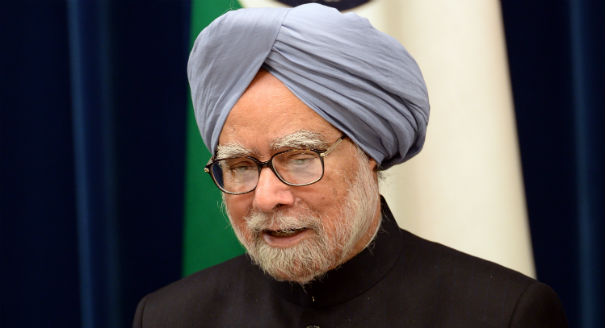
When a government yields to every pressure group at home, its capacity to pursue national interests abroad inevitably erodes. The UPA government’s diplomacy in the final months of its decade-long tenure is a good example of the costs of violating this canon. The failure to clinch a commercial agreement on the purchase of two additional reactors from Russia for the Kudankulam nuclear power station in Tamil Nadu during Prime Minister Manmohan Singh’s visit to Moscow is not a reflection on India’s diplomatic skills.
No amount of diplomatic genius can overcome bad policies at home. The plain fact is that the nuclear liability act passed by Parliament in 2010 is a serious problem for nuclear suppliers at home and abroad. No one will accept its undue burdens and participate in the expansion of India’s civil nuclear programme.Hustled by an opportunistic BJP, an ideological Left and sundry anti-nuclear activists into passing a self-defeating legislation, the government has struggled to negotiate commercial nuclear agreements with its partners – including Russia, France and America. Instead of acknowledging that the legislation is a bad one, Delhi has postured that the law of the land must prevail. At the same time, it has tried some overly clever ways to circumvent it in practice. This has not worked, not until now at least.
At the heart of this awful outcome was the political leadership’s excessive deference to the department of atomic energy, which was given the lead in drafting the legislation. On top of it, there was no due diligence in New Delhi on the draft legislation that was not in conformity with current international norms. Making matters worse, the attempts at finessing the draft when it was being debated in Parliament backfired.
The nuclear episode is a mere reflection of the “new departmentalism” under the UPA’s rule. Under the current dispensation, different government agencies are allowed to craft their own policies. The political leadership abandons any pretence of being in charge. If the DAE was allowed to dominate India’s nuclear diplomacy, something similar is happening on the Line of Control in Kashmir, where a decade-long ceasefire with Pakistan has begun to unravel. The defence minister, A.K. Antony, proudly proclaims he has given a free hand to the army in responding to the Pakistani provocations on the LoC.
Antony has perhaps not heard that war is too important to be left to the generals. Nor has he learnt anything from the Vajpayee government, which tightly controlled military policy. Use of force, including the terms of military engagement with an adversary, are political decisions. In a democracy, it is the civilian leadership that must make these decisions and take responsibility for the consequences. The UPA government is ready to do neither.
The government’s abdication is possibly driven by the Congress party’s fears of looking weak on Pakistan in the electoral season. The PM, who has devoted much energy towards changing the Pakistan relationship, now watches his investment go up in smoke.
The administrative anarchy that has been let loose by the UPA has resulted in some big diplomatic setbacks. In its reluctance to upset West Bengal Chief Minister Mamata Banerjee, who is likely to be kingmaker in the next Parliament, the UPA is unwilling to press for the ratification of the historic land boundary agreement with Bangladesh.
More recently, Delhi decided to defer the visa liberalisation agreement with China that was to be signed during the PM’s visit to Beijing this week. News reports say the move was a response to China’s policy of issuing stapled visas to Indian citizens from Arunachal Pradesh. As it postures before domestic audiences, the UPA government has made a habit of shooting itself in the foot. Holding back on visa liberalisation will not change Beijing’s territorial claims on Arunachal. There are other ways of putting pressure on Beijing on territorial issues. But Delhi has chosen to constrain India’s much-needed engagement with Chinese businessmen.
That the Congress party’s domestic political considerations have undermined India’s foreign policy has also been evident elsewhere. If the PM skips the Commonwealth summit in Colombo next month, he would only confirm that the UPA has outsourced the Lanka policy to Chennai. With apologies to Yeats, Delhi lacks conviction and every passionate intensity in the nation has acquired a veto over foreign policy.
This article was originally published in the Eurasia Review.
Former Nonresident Senior Fellow, Carnegie India
A leading analyst of India’s foreign policy, Mohan is also an expert on South Asian security, great-power relations in Asia, and arms control.
Recent Work

C. Raja Mohan, Darshana M. Baruah


Alexander Gabuev, Paul Haenle, C. Raja Mohan, …
Carnegie does not take institutional positions on public policy issues; the views represented herein are those of the author(s) and do not necessarily reflect the views of Carnegie, its staff, or its trustees.
As we close out another season of Strategic Europe, it is worth taking stock of the deep shifts underway.

Rym Momtaz
The EU had to compromise to adopt a twenty-first sanctions package against Russia, exposing growing cracks in the union’s resolve. Is this latest, weaker round worth it to keep pressure on Moscow?
Rym Momtaz, ed.
Trump is distracted and Ukraine wants Europe to step up. The continent’s leaders must find their voice and assert it in talks with Russia.

Alissa de Carbonnel

Mounting economic strain and battlefield losses will not necessarily make the Kremlin less dangerous. They could instead push Moscow toward a more aggressive hybrid campaign designed to test NATO’s Eastern flank, exploit allied hesitation, and fracture European resolve.

Maksym Beznosiuk
Over the past ten years, NATO has held almost as many summits as it did during the entirety of the Cold War. Are they still useful, or is it time to stop holding annual meetings?
Rym Momtaz, ed.