

Article
Thomas de Waal
{
  "authors": [
    "Thomas de Waal"
  ],
  "type": "commentary",
  "centerAffiliationAll": "",
  "centers": [
    "Carnegie Endowment for International Peace",
    "Carnegie Europe",
    "Carnegie Russia Eurasia Center"
  ],
  "collections": [],
  "englishNewsletterAll": "",
  "nonEnglishNewsletterAll": "",
  "primaryCenter": "Carnegie Europe",
  "programAffiliation": "",
  "programs": [],
  "projects": [],
  "regions": [
    "Caucasus",
    "Georgia"
  ],
  "topics": [
    "Political Reform",
    "Economy"
  ]
}
Source: Getty
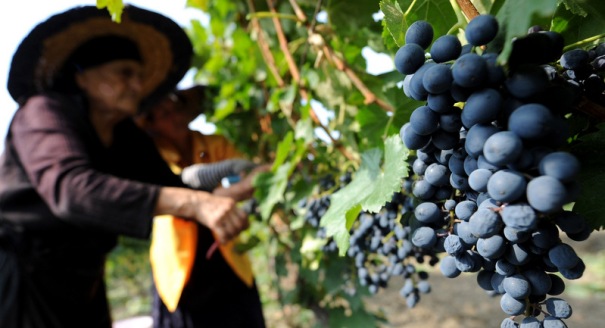
Now Tbilisi should concentrate on the main issue that preoccupies most Georgians: how to get the economy back on track.
In Georgia, the motto this week is "back to business." For the last twelve months, the country has been distracted by the continuation of an acrimonious political contest between the new government led by billionaire Prime Minister Bidzina Ivanishvili and President Mikheil Saakashvili, serving out his last year in office.
It was great fun for political journalists, but did not offer much for ordinary Georgians.
Now those two colossi have both stepped down, the Georgian Dream coalition has full authority and they have no excuse but to concentrate on the main issue that preoccupies most Georgians: how to get the economy back on track.
Growth figures in Georgia for the first nine months of the year were a disappointing 1.7 percent, well below the forecast 6 percent. Unemployment—a major reason why Saakashvili lost power—remains stubbornly high.
Government and the United National Movement (UNM) opposition have clashed as to why this is so.
The UNM says the figures display the lack of economic competence on the part of the new team. The government position is that much of the high tax revenues achieved by its predecessor were the result of the "extortion" of businesses. Their milder approach has left revenues lower but businesses happier, they say. They also argue that the fall in growth was caused by the cutting of "white elephant" infrastructure projects, like the projected new city of Lazika, which the country did not need. And that a drop in foreign investment was partly a result of a negative PR campaign waged by the UNM.
Foreign perception is definitely key. Georgia produces and exports little of importance to the outside world. Its chief economic value is in its ability to be a hub and entrepot for the wider Caucasus and Black Sea neighborhood.
Indeed, as an erudite and entertaining recent blog post from Tbilisi argues, this economic policy was first advanced by the merchant-friendly King David the Builder in the 12th century.
It was certainly no coincidence that a big delegation of the American Chamber of Commerce in Georgia chose last week to visit Washington D.C. The message I heard from them was two-fold. On the one hand, a cautious vote of approval for the new government and especially improvements in the court system and parliamentary process. On the other, a plea for both Georgia's Western friends and the government to work on a new business-friendly agenda—and by implication not to seek any more prosecutions of former officials, beginning with Saakashvili himself.
In other words, some kind of truce is required so that Georgians can talk more about economics and less about politics.

Senior Fellow, Carnegie Europe
Thomas de Waal is a senior fellow at Carnegie Europe, specializing in Eastern Europe and the Caucasus.
Recent Work
Thomas de Waal
Thomas de Waal
Carnegie does not take institutional positions on public policy issues; the views represented herein are those of the author(s) and do not necessarily reflect the views of Carnegie, its staff, or its trustees.

As the EU confronts profound challenges, several leaders have called for fundamental reform to the union’s model—but only modest, superficial changes have resulted. What if Europe really could be reimagined from zero today: What should such a redesigned European order look like?

Richard Youngs, ed.

As geopolitical rivalry weaponizes global supply chains, the EU’s true vulnerability lies in emerging-risk imports. For these goods, suppliers are growing more concentrated, substitution more difficult, and political risk is looming.

Sinan Ülgen
The EU is putting together a new security strategy to meet today’s myriad challenges. But for any proposal to be effective, the union needs to grapple with its identity and ambitions.

Pierre Vimont
Between the United States’ market-driven approach and China's state-led industrial strategy, Europe is reckoning with how it can remain competitive in the global economy. But is Europe in danger of becoming a U.S. or China colony?
Noah Barkin, Anu Bradford
Preparing candidate countries for EU membership is no longer enough. As the enlargement process becomes a reality, the union must also prepare its own societies.

Iliriana Gjoni