

Commentary
The EU had to compromise to adopt a twenty-first sanctions package against Russia, exposing growing cracks in the union’s resolve. Is this latest, weaker round worth it to keep pressure on Moscow?
Rym Momtaz, ed.
{
  "authors": [
    "Julie Leighton"
  ],
  "type": "commentary",
  "centerAffiliationAll": "",
  "centers": [
    "Carnegie Endowment for International Peace",
    "Carnegie Russia Eurasia Center"
  ],
  "collections": [],
  "englishNewsletterAll": "",
  "nonEnglishNewsletterAll": "",
  "primaryCenter": "Carnegie Endowment for International Peace",
  "programAffiliation": "",
  "programs": [],
  "projects": [],
  "regions": [
    "North America",
    "United States"
  ],
  "topics": [
    "Economy",
    "Foreign Policy",
    "Global Governance"
  ]
}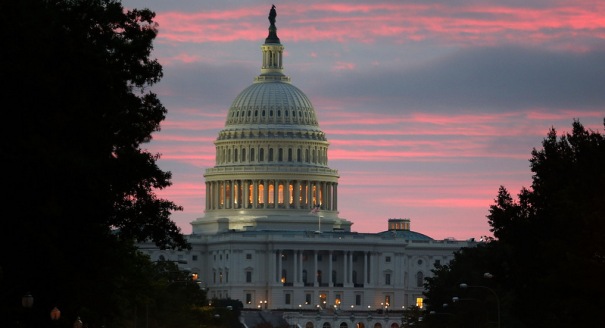
Source: Getty
Title VIII, also known as the Program for Research and Training on Eastern Europe and Eurasia did not receive funding for the 2013 fiscal year. It has been a proven success in the past. If given the proper funding, Title VIII may continue to be so in the future.
Title VIII, also known as the Program for Research and Training on Eastern Europe and Eurasia, is a State Department initiative that provides American scholars with grants for language training and research opportunities within either Eastern European or Eurasian area concentrations. It did not receive funding for the 2013 fiscal year. Many programs, including those hosted by the Wilson Center, the American Council of Learned Societies, the Social Science Research Council, and the National Council for Eurasian and East European Research, have been either downsized or canceled.
Why is this significant? Title VIII, and the various institutions that support its grant recipients, work to ensure that scholars have sufficient conceptual and strategic knowledge of the former Soviet space. The idea being that these experts will eventually shape America’s foreign policy within the region and should be trained accordingly. That premise is sound: former grant recipients include Michael McFaul, Condoleezza Rice, and Madeleine Albright.
At a time of mass American budgetary constriction, eliminating programs and cutting funding is to be expected. However, the value of Title VIII’s appropriations in 2012 was roughly 3.5 million dollars. A drop in the bucket.
Budgetary debates aside, from a geopolitical standpoint discontinuing this program seems shortsighted. The state of contemporary American-Russian relations leaves much to be desired. With no signs of improvement in the immediate future, is it logical to cancel a program that boasts so many successful Russia experts as its alumni? Given the tensions between the two countries, should not its continuation be an absolute priority?
Title VIII has been a proven success in the past. If given the proper funding, it may continue to be so in the future. And surely even the slightest possibility of improved relations between the two countries justifies the expenditure.
Julie Leighton is an independent Russian researcher. She was a research assistant at Russia and Eurasia Program at the Carnegie Endowment for International Peace.
Julie Leighton
Former Research Assistant, Russia and Eurasia Program
Carnegie does not take institutional positions on public policy issues; the views represented herein are those of the author(s) and do not necessarily reflect the views of Carnegie, its staff, or its trustees.
The EU had to compromise to adopt a twenty-first sanctions package against Russia, exposing growing cracks in the union’s resolve. Is this latest, weaker round worth it to keep pressure on Moscow?

Rym Momtaz, ed.

Trump is distracted and Ukraine wants Europe to step up. The continent’s leaders must find their voice and assert it in talks with Russia.

Alissa de Carbonnel

Mounting economic strain and battlefield losses will not necessarily make the Kremlin less dangerous. They could instead push Moscow toward a more aggressive hybrid campaign designed to test NATO’s Eastern flank, exploit allied hesitation, and fracture European resolve.

Maksym Beznosiuk

Over the past ten years, NATO has held almost as many summits as it did during the entirety of the Cold War. Are they still useful, or is it time to stop holding annual meetings?
Rym Momtaz, ed.
Nearly a year and a half after Europeans leaned into sucking up to Trump, the strategy has produced some benefits when it comes to Ukraine.
Rym Momtaz