

Commentary
Nathalie Tocci, Jan Techau
{
  "authors": [
    "Jan Techau"
  ],
  "type": "legacyinthemedia",
  "centerAffiliationAll": "",
  "centers": [
    "Carnegie Endowment for International Peace",
    "Carnegie Europe"
  ],
  "collections": [
    "EU Integration and Enlargement"
  ],
  "englishNewsletterAll": "",
  "nonEnglishNewsletterAll": "",
  "primaryCenter": "Carnegie Europe",
  "programAffiliation": "",
  "programs": [],
  "projects": [],
  "regions": [
    "Europe",
    "Western Europe"
  ],
  "topics": [
    "EU"
  ]
}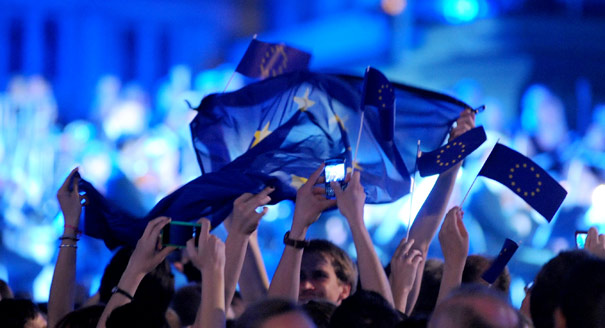
Source: Getty
Since the Berlin Wall fell, Europe has been battling to keep the twentieth-century continent alive in the twenty-first. In years to come, the EU will have to make some big decisions.
Source: EU Watcher
Jan Techau is the director of Carnegie Europe, a think-tank in Brussels that focuses on Europe’s foreign policy. I had a fascinating interview with him, because the discussion focused on precisely the right issues of my book The Next Europe. This interview is number 3 of the 15-20 in total, which form the journalistic basis of the book.
When Jan Techau was a seventeen year-old, the Wall came down – 24 years before the interview. And he wasn’t in Germany. ‘We traveled to London on a ferry for a school trip’, he explains. ‘The next morning we arrived in the British harbour and found out in a newspaper what had happened. The next week I got on a train to Berlin and chiseled out my own piece of the Wall which I still have.’If you read Techau’s blog, you may get pessimistic about Europe’s future. There are huge problems which can hardly be overcome, and the focus of the EU is too much on the short-term, argues the researcher. ‘Look at the current situation in Europe, we are in a bind, we have an economic model that requires a political framework but there is little appetite for that. Neither amongst the political elites nor with the people on the street, to integrate further. Europeans see the EU and globalisation as a root cause for all their problems.’
Techau is very critical of the current state of Europe. ‘We are not the most dynamic zone in the world because we have created a very encrusted system. Our economies can’t really breathe the way they should breathe. We don’t have intelligent immigration schemes. With demographics looking bad we need people coming in, at pretty grand scale to sustain our systems. And our education system is ruined.’
The biggest risk for the EU, despite all these challenges, is a lack of legitimacy. Jan Techau wants dramatic changes in the European democracy to save the system. ‘We need real participation of European citizens in this project. No political system can survive without people participation. The European Parliament in its current composition is a disaster.’
His solution: create real political competition. How to do this? ‘You need a political prize to win, to create an incentive to get people interested in European power, and get some emotional attachment. Why not elect the European Council president? Why not change the way we elect the EP so the result actually means something. Once you have that prize and you put it on the board, parties, elites and citizens will organize themselves in a European way.’
‘We are not going to lose the race with the BRICS.’ Jan Techau is very clear about this. ‘We are completely overestimating what’s going on in these countries. The economic part of the rise is undisputed. It is the political rise that is very much in doubt.’ The researcher names several arguments: a lack of democracy, not enough interest in the world, governance challenges and bad demographies. Whether it is China, Brazil, Russia or India, each of these countries has huge stumbling blocks ahead. And they do not seem likely to act as a responsible actor on the global stage.
What can happen, warns Techau, is that ‘we can lose the race against ourselves.’ ‘If we decide not to reform, to realize what to do to win the future… We will lose or win our future at home. This also implies that we need to convince people that Europe needs to be a foreign policy player in the world, because we want western standards and liberal open societies to prevail.’
‘And then you have globalisation and the rise of China and the relative weakness of the US, which makes people very uncomfortable about globalisation. They see the economic integration of Europe in the world as a source of instability and potentially a menace. People are profoundly wrong about it. Europe lives at peace and is politically stable unlike in its history. If the Europeans play it well, and if we bring our strong position – politically stable, relatively good education, open and innovative societies – to the world, then there is lots that we can gain.’
Techau focuses his analysis on the big context rather than overcoming the (euro)crisis. ‘Since the Wall came down we are in an enormous adjustment battle to get the 20th century continent to survive in the 21st. We have lost order and it will get lost further. Therefore we will have to take some pretty decisive decisions over the next five to seven years.
‘We had fifty years of enormous stability after the Second World War. A completely gravity-free zone where almost nothing moved. Time was frozen. All of our political elites got socialized in that enormous period of stability. Now we want to go back to those endless, stable and quiet evenings in the eighties where nothing happened.’
‘But that time will never come back. We are no longer the coolest dudes on the planet. There are other cool dudes on the block. Adaptation to this new world will continue, for as long as we all live.’
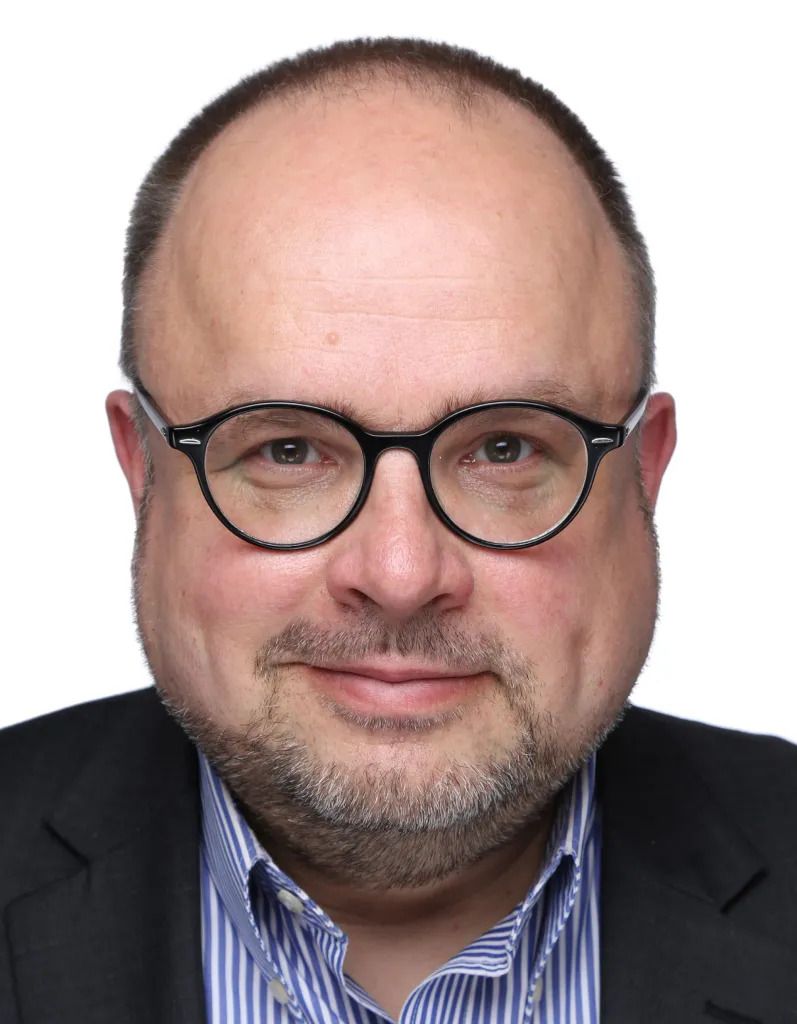
Director, Europe Team, Eurasia Group
Techau is director with Eurasia Group's Europe team, covering Germany and European security from Berlin. Previously, he was director of Carnegie Europe.
Recent Work
Nathalie Tocci, Jan Techau
Jan Techau
Carnegie does not take institutional positions on public policy issues; the views represented herein are those of the author(s) and do not necessarily reflect the views of Carnegie, its staff, or its trustees.

Trump is distracted and Ukraine wants Europe to step up. The continent’s leaders must find their voice and assert it in talks with Russia.

Alissa de Carbonnel

Mounting economic strain and battlefield losses will not necessarily make the Kremlin less dangerous. They could instead push Moscow toward a more aggressive hybrid campaign designed to test NATO’s Eastern flank, exploit allied hesitation, and fracture European resolve.

Maksym Beznosiuk

Over the past ten years, NATO has held almost as many summits as it did during the entirety of the Cold War. Are they still useful, or is it time to stop holding annual meetings?

Rym Momtaz, ed.

As the EU confronts profound challenges, several leaders have called for fundamental reform to the union’s model—but only modest, superficial changes have resulted. What if Europe really could be reimagined from zero today: What should such a redesigned European order look like?

Richard Youngs, ed.
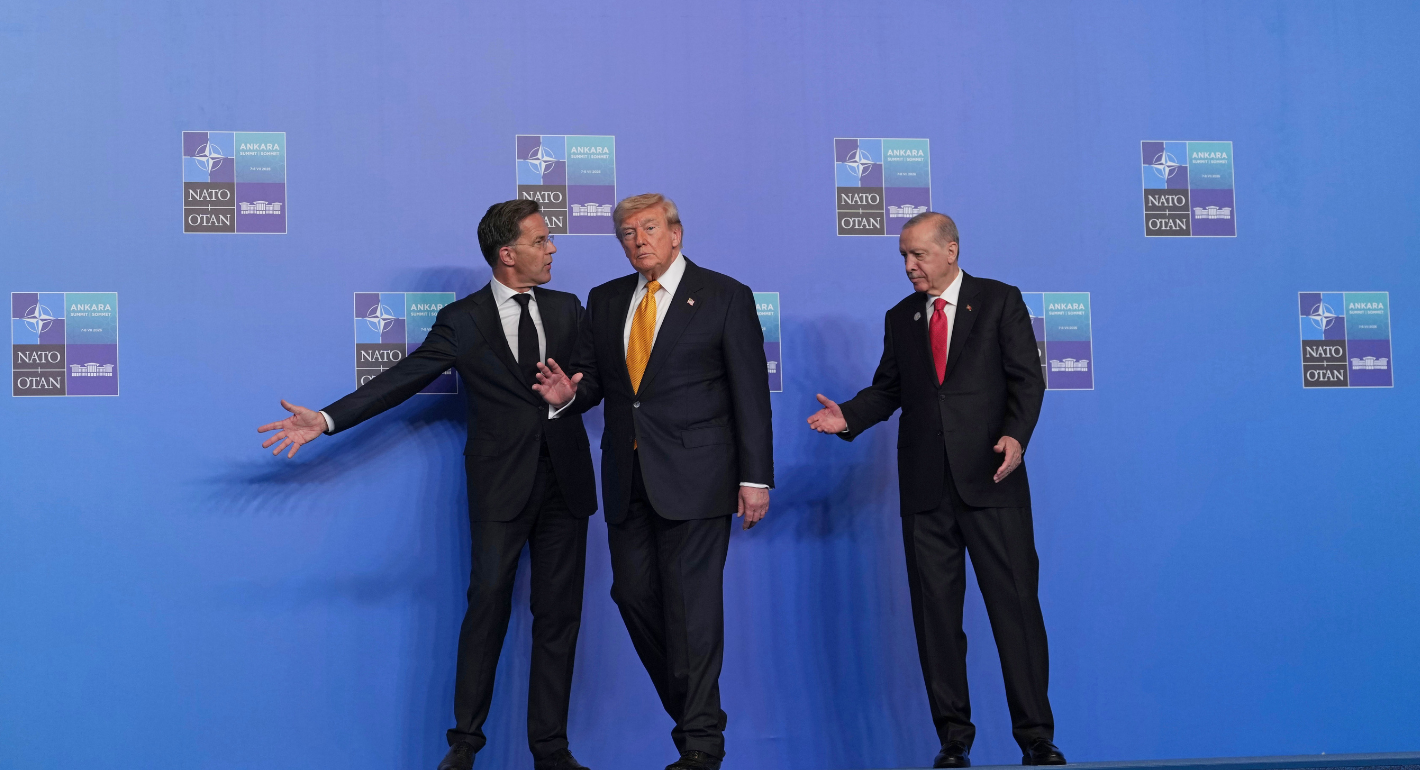
Nearly a year and a half after Europeans leaned into sucking up to Trump, the strategy has produced some benefits when it comes to Ukraine.
Rym Momtaz