

Commentary
Before the next wave of EU enlargement takes place, the union needs to grapple with thorny questions of how power is distributed among its members.
Emil Sondaj Hansen, Ditte Brasso Sørensen
{
  "authors": [
    "Akio Kawato"
  ],
  "type": "commentary",
  "centerAffiliationAll": "",
  "centers": [
    "Carnegie Endowment for International Peace",
    "Carnegie Russia Eurasia Center"
  ],
  "collections": [],
  "englishNewsletterAll": "",
  "nonEnglishNewsletterAll": "",
  "primaryCenter": "Carnegie Russia Eurasia Center",
  "programAffiliation": "",
  "programs": [],
  "projects": [],
  "regions": [
    "Russia",
    "Eastern Europe",
    "Ukraine",
    "Western Europe"
  ],
  "topics": [
    "Economy",
    "Foreign Policy",
    "Global Governance"
  ]
}
Source: Getty
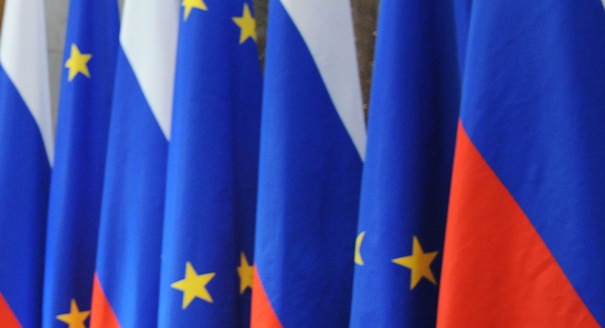
The Eurasian Economic Union had start negotiations with the EU on specific ways to liberalize mutual economic transactions without compromising its statehood. The forthcoming EU-Russia Summit is an opportune venue to launch such an idea.
The coming EU-Russia Summit is hyped in a wrong way, as if it were the final battle ground for the row about Ukraine. But even for an ignorant Japanese it is obvious that the Ukraine issue is not a real drama. Ukraine itself is divided in half on the “Association Agreement” with the EU. And most of the EU members have not been enthusiastic about having to pay for Ukraine. When both Ukraine and the EU realized that they would not get enough from each other, they balked, leaving Russia with the lion’s share of the burden.
So, the Ukraine case is closed for now, and the impending EU-Russia Summit may well end up with another wishy-washy good-will meeting with the EU wishing all the best for the Sochi Olympic and with Russia promising to welcome foreign visitors of any sexual orientation… But, methinks, Russia and the EU may well be on a threshold now to usher in a wholly new way of collaboration: the EU economy, after all, is finally recovering after five years of recession. The anxiety about the financial health of the “PIGS” countries is dissipating and their official bonds are selling well.
Russia is now intent on establishing a “Eurasian Economic Union” with some of ex-Soviet republics. If those republics are willing to follow, and if it does not go against Russia’s obligation to the WTO, there is no reason to oppose it. But—the new union should be open to outsiders. In the east, China is extending its economic reach toward Europe, and in the west, Germany is making forays into Asia. Today German cars are the best-seller in China, and the Germans boast of the largest trade surplus in the world. This reminds me of the 13th century, when Russia was encroached upon by the Mongols from the east and by the German knights from the west.
However, today’s world differs from the times of the Russian Prince Alexander Nevsky, who fought the Germans and the Swedes while accepting the Mongol tutelage, in one important respect; the powerful actors now do not struggle to conquer territory, they only compete for a larger market share. For example, China opened itself up for foreign investment in the early 1990s, and was able to rapidly develop its economy using foreign capital and technology, while never losing ownership of its landmass. What is more, there are other economic actors besides Germany and China: France, Great Britain, Italy, Japan, South Korea, Taiwan, and the United States. Russia can choose the best partner among them for each concrete project.
Therefore, it would be anachronistic to close up the Eurasian market in order to guard the parochial interest of local enterprises. The Eurasian Economic Union had better start negotiations with the EU on specific ways to liberalize mutual economic transactions without compromising its statehood. The forthcoming EU-Russia Summit is an opportune venue to launch such an idea, for example by means of an equally-footed “Mutual Association Agreement” between the EU and the new Eurasian Union—instead of the miscarried version of unequal association for Ukraine.
Akio Kawato
Writer
Akio Kawato is a former Japanese diplomat and blogger.
Carnegie does not take institutional positions on public policy issues; the views represented herein are those of the author(s) and do not necessarily reflect the views of Carnegie, its staff, or its trustees.

Before the next wave of EU enlargement takes place, the union needs to grapple with thorny questions of how power is distributed among its members.


Emil Sondaj Hansen, Ditte Brasso Sørensen

The new U.S.–Denmark–Greenland agreement will help Washington exert political, economic, and financial dominance under the guise of security. Yet, it acknowledged Copenhagen’s and Nuuk’s sovereignty on the island.

Marc Pierini

A summer of escalation in the Black Sea has hurt Ukraine economically and is exacerbating world food security. A truce is needed—as is a broader reframing of Europe’s Ukraine strategy.

Thomas de Waal

Are Germany’s economic, industrial, and political struggles becoming a liability for the EU’s ability to rise to the geopolitical moment?

Rym Momtaz, ed.

European Commission President Ursula von der Leyen is about to give her annual address on the state of the EU. Here’s what she won’t—but should—say.
Rym Momtaz