

In The Media
Lahcen Achy
{
  "authors": [
    "Lahcen Achy"
  ],
  "type": "legacyinthemedia",
  "centerAffiliationAll": "dc",
  "centers": [
    "Carnegie Endowment for International Peace",
    "Malcolm H. Kerr Carnegie Middle East Center"
  ],
  "collections": [],
  "englishNewsletterAll": "menaTransitions",
  "nonEnglishNewsletterAll": "",
  "primaryCenter": "Malcolm H. Kerr Carnegie Middle East Center",
  "programAffiliation": "MEP",
  "programs": [
    "Middle East"
  ],
  "projects": [],
  "regions": [
    "Egypt",
    "Gulf",
    "Levant",
    "Maghreb",
    "Middle East",
    "North Africa"
  ],
  "topics": [
    "Economy"
  ]
}
Source: Getty
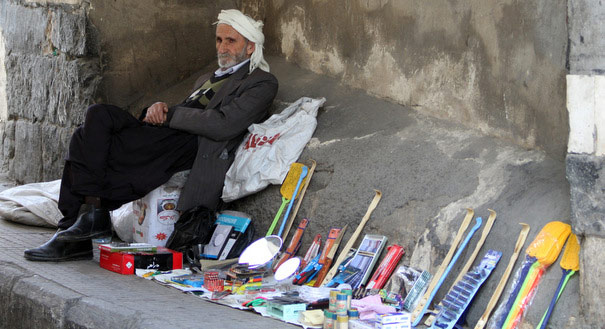
The International Monetary Fund expects the average economic growth in the Arab countries to be lower than 4 percent in 2014, a modest figure that is not enough to reduce the high unemployment rates.
Source: Al-Hayat
The short-term economic prospects in Arab countries are suffering due to difficult political transitions, increasing regional doubts intensified by the Syrian war and its repercussions on Lebanon and Jordan, as well as security developments in Iraq, Libya, Yemen, Egypt and Tunisia. The International Monetary Fund (IMF) expects the average economic growth in the Arab countries to be lower than four percent in 2014. Given the challenges that the region is facing, this modest figure will not be enough to reduce high unemployment rates, especially among the youth, or to improve the low standards of living, particularly in oil-importing countries.
The gross domestic product (GDP) growth was lower than two percent in 2013. In oil-exporting countries however, the GDP is expected to reach four percent in 2014. Oil prices have been fluctuating due to two conflicting factors. First, the delicate security situation in Libya, Iraq and Yemen and the repetitive disruption of oil supply routes to these countries have stirred up regional geopolitical doubts and pushed prices up. On the other hand, global oil demand has slackened due to slow economic growth, and unconventional energy sources have been on the rise, thus pushing oil prices down.
The overall surplus of governmental budgets of oil-exporting countries, which constituted 4.25 percent of the GDP in 2013, stands in sharp contrast with the indicators of some Arab countries. Thus, the various parts of the Arab world are faced with different potential risks.Since the outbreak of the Arab uprisings, and as a result of growing local social pressures and regional tensions, governments have increased the salaries of governmental employees and raised the budget allocated for subsidies and various welfare transfers. Increasingly, these governments are relying rely on oil revenues to maintain their ability to finance budgets.
Although oil prices have risen in unprecedented ways ($70 a barrel and well above) since the beginning of the 21st century, countries like Algeria, Bahrain, Iraq and Libya still have not been able to balance between their spending and revenues, given current global oil prices. Moreover, the foreign accounts surplus of oil countries are dwindling as oil production declines on the one hand, and local consumption quickly increases. Also, most countries have limited tools to counter unexpected shocks and ensure permanent spending levels for future generations.
The analysis of the economic prospects suggests that decision-makers in oil states should lay down the foundations for controlling spending inflation by rationalizing their revenues and engaging in serious infrastructure reforms. This would foster the growth of a wide and diverse base in the private sector, provide more job opportunities and attenuate regional and social differences alike.
It is worth mentioning here that the employment policies based on providing citizens with stable high-income jobs in the governmental sector distort the labor market and impede efforts to develop the private sector and diversify the economy.
The economic prospects appear blurrier in oil-importing Arab countries, especially in Syria, Egypt and Tunisia, where security concerns are crippling the general investment environment and hampering economic activity. Moreover, slow economic growth exacerbates social anger and breeds more strikes and protests that delay economic recovery. As a result, efforts to achieve political transition are further stalled and countries like Tunisia, Egypt and Yemen fall into a vicious cycle that effectively threatens the trust of the people in the future.
Geopolitical tensions might lead to a drastic increase in oil prices, thus disrupting economic growth and exacerbating internal and external deficit. The countries of the Arab Maghreb especially are suffering from the persistent slowdown of growth in the European Union, their main economic partner. The negative effects of the European setback could extend to the sectors of tourism, export and foreign remittances.
The foreign cash reserves of oil-importing countries are dwindling, the deficit of their current accounts is increasing and public debt is growing. All this makes these more sensitive to external blows. Despite positive developments in the current accounts of Egypt, Jordan, Morocco and Tunisia thanks to international issued bonds and foreign grants and aids received, these countries still rely heavily on local banks to meet their funding needs. As a result, the bank credit available to the private sector in those countries has also decreased.
Arab oil-importing countries are under increasing foreign pressure to control the deficit of their governmental budgets. These states fear possible social tumults that could be sparked by any austerity policies under such delicate political circumstances.
Basically, the pressures draw the light on the need to reallocate a budget for fuel subsidies for two reasons. First, this is important in order to revive economic activity through governmental investments that enhance growth and create job opportunities. Second, it aims at reforming the system of comprehensive support for fuel prices, by granting governmental aids to targeted categories that are most in need. The governments of Jordan, Morocco and Egypt have taken various measures to boycott the comprehensive support system. The coming months will be decisive in evaluating the success of their initiative.
In most Arab countries, the work environment is fragile and lacks transparency, especially in middle-sized and small companies. Moreover, the labor market is not integrated due to the size of governmental employment, the expanding informal sector and the strict bylaws that regulate recruitment in the formal private sector. As a result, human capital distribution has become distorted. These combined factors weaken productivity and drain the competitiveness of enterprises in the absence of deep structural reforms. If present, such reforms could limit the fluctuation of economic growth and foster the economy’s ability to create good job opportunities that improve the standards of living.
Former Nonresident Senior Associate, Middle East Center
Achy is an economist with expertise in development, institutional economics, trade, and labor and a focus on the Middle East and North Africa.
Recent Work
Lahcen Achy
Lahcen Achy
Carnegie does not take institutional positions on public policy issues; the views represented herein are those of the author(s) and do not necessarily reflect the views of Carnegie, its staff, or its trustees.

When the U.S.-Iran memorandum of understanding was announced, the UK, France, Germany, and Italy declared their readiness to help demine the Strait of Hormuz and lift nuclear sanctions on Tehran. But does Europe need new tools to recover a diplomatic role?

Rym Momtaz, ed.
As geopolitical rivalry weaponizes global supply chains, the EU’s true vulnerability lies in emerging-risk imports. For these goods, suppliers are growing more concentrated, substitution more difficult, and political risk is looming.

Sinan Ülgen
The EU is putting together a new security strategy to meet today’s myriad challenges. But for any proposal to be effective, the union needs to grapple with its identity and ambitions.

Pierre Vimont

The EU’s new migration policy is not suited to today’s realities. With climate change increasingly becoming a driver of displacement, Europe needs to rethink its deterrence-focused approach.

Shana Tabak
Europe seems to have accepted its sidelining in the Middle East. The EU must reassert its support for the international rules-based order and step up engagement.
Rym Momtaz