

Commentary
Thomas de Waal
{
  "authors": [
    "Thomas de Waal"
  ],
  "type": "commentary",
  "centerAffiliationAll": "",
  "centers": [
    "Carnegie Endowment for International Peace",
    "Carnegie Europe",
    "Carnegie Russia Eurasia Center"
  ],
  "collections": [],
  "englishNewsletterAll": "",
  "nonEnglishNewsletterAll": "",
  "primaryCenter": "Carnegie Europe",
  "programAffiliation": "",
  "programs": [],
  "projects": [
    "Eurasia in Transition"
  ],
  "regions": [
    "Middle East",
    "Türkiye",
    "Caucasus",
    "Russia",
    "Azerbaijan",
    "Armenia",
    "Georgia",
    "Eastern Europe",
    "Ukraine"
  ],
  "topics": [
    "Political Reform",
    "Foreign Policy"
  ]
}
Source: Getty
The Black Sea region could do with some Turkish soft power, but it looks as though this is not a priority for Prime Minister Erdogan.
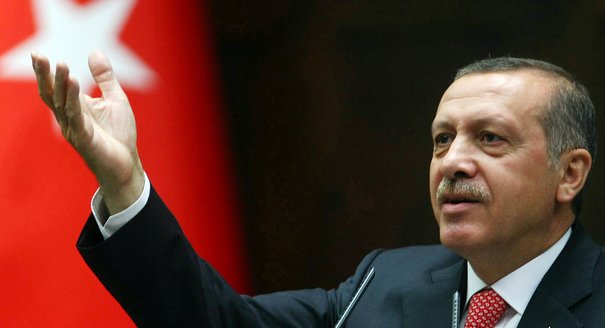
Following yet another crushing election triumph in Turkey's municipal elections on Sunday, Prime Minister Recep Tayyip Erdoğan made an aggressive victory speech from the balcony of his party headquarters in Ankara.
What the prime minister did not say was as interesting as what he did say. This was a speech about going after his internal enemies—even hitting them with an "Ottoman slap"—with special reference to "Pennsylvania," the home of émigré Islamic thinker Fethullah Gülen.
The impression is that Turkish foreign policy across the Black Sea is adrift. Having forged a strong economic relationship with President Vladimir Putin, Erdoğan finds himself in a bind on the Ukraine crisis and has been quiet about Crimea—to the disappointment of the Tatars.
The South Caucasus should be a classic example of Turkey's capacity to project itself as a "trading state" in Kemal Kirişci's famous formulation.
Turkey is the biggest trading partner of both Georgia and Azerbaijan and even has substantial trade with Armenia via Georgia, despite the closed border between them. In theory it should be a driver of change, economic growth and a gateway for Europe for all three countries.
Yet, each of the three South Caucasus states continue to drive their own local agendas and show little interest in letting Turkey transform its economic power into political influence in the region.
Turkey has a strong interest in resolution of the Nagorny Karabakh conflict. But it is tied in a knot. Armenia makes it clear it will not countenance any Turkish role in the conflict, until Turkey normalizes relations—this was the message foreign minister Davutoğlu received when he took some Turkish ideas to Yerevan last December. But Azerbaijan does everything in its power to ensure the opposite: that there is no Armenia-Turkey normalization unless there is progress on Karabakh.
The Black Sea region could do with some Turkish soft power—and there is no shortage of ideas in the foreign ministry about what to in this part of the neighborhood. But to break this logjam will take some leadership from the top—and it looks as though this is not a priority for the newly victorious prime minister.

Senior Fellow, Carnegie Europe
Thomas de Waal is a senior fellow at Carnegie Europe, specializing in Eastern Europe and the Caucasus.
Recent Work
Thomas de Waal
Thomas de Waal
Carnegie does not take institutional positions on public policy issues; the views represented herein are those of the author(s) and do not necessarily reflect the views of Carnegie, its staff, or its trustees.

A summer of escalation in the Black Sea has hurt Ukraine economically and is exacerbating world food security. A truce is needed—as is a broader reframing of Europe’s Ukraine strategy.
Thomas de Waal

Are Germany’s economic, industrial, and political struggles becoming a liability for the EU’s ability to rise to the geopolitical moment?

Rym Momtaz, ed.

European Commission President Ursula von der Leyen is about to give her annual address on the state of the EU. Here’s what she won’t—but should—say.
Rym Momtaz

The aftermath of the Ceuta crisis shows Europe has drawn the wrong lessons. Rather than doubling down on failed migration policies, the EU needs to address the underlying roots of such episodes.

Richard Youngs

Canadian Prime Minister Mark Carney has twice inspired praise for standing up to U.S. President Donald Trump: at the 2026 World Economic Forum in Davos and on Canada-U.S. trade negotiations. Is Carney showing a third way better than the EU has in dealing with the Trump administration?
Rym Momtaz, ed.