

Commentary
Bayram Balci
{
  "authors": [
    "Bayram Balci"
  ],
  "type": "commentary",
  "centerAffiliationAll": "",
  "centers": [
    "Carnegie Endowment for International Peace",
    "Carnegie Russia Eurasia Center"
  ],
  "collections": [],
  "englishNewsletterAll": "",
  "nonEnglishNewsletterAll": "",
  "primaryCenter": "Carnegie Endowment for International Peace",
  "programAffiliation": "",
  "programs": [],
  "projects": [
    "Eurasia in Transition"
  ],
  "regions": [
    "Middle East",
    "Türkiye",
    "Caucasus",
    "Azerbaijan"
  ],
  "topics": [
    "Political Reform",
    "Civil Society",
    "Religion",
    "Foreign Policy"
  ]
}
Source: Getty
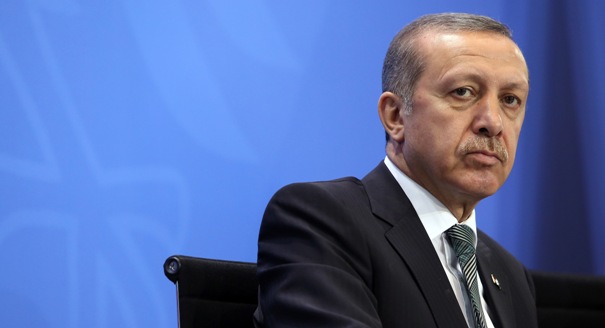
Turkish Prime Minister Erdogan takes the battle against the Gülen movement beyond the national borders, and it seems that his visit to Azerbaijan, to a large extent, was motivated by the omnipresence of Gülen followers whose activities in Azerbaijan are massive and successful.
Because of the political turmoil in which Turkey finds itself and because of the general defiance against Prime Minister Recep Tayyip Erdoğan and his government, last week’s local elections turned into a plebiscite vote for Erdoğan. Less than a week after the vote, he paid a visit to Azerbaijan. Whether scheduled or not, it underlines the importance of the Turkish-Azeri relations especially in terms of political, economic and security issues.
Azerbaijan is more than a neighbor to Turkey, but geography and oil contracts make a big part of the bilateral relations. Azerbaijan and Turkey are linked by three major pipelines: Baku-Tbilisi-Ceyhan (BTC), Baku-Tbilisi-Erzurum (BTE), and in the soon-to-be TANAP & TAP, which have become key routes for the transportation of Caspian energies to Europe. Moreover, the two countries share a similar vision of regional security. Last but not least, Azerbaijan is the most cooperative supporter of Turkey’s initiative to create a “Turkic Union” with all the Turkic republics of the former Soviet Union.
Azerbaijan has always had a tremendous importance for the Gülen movement, partly because that is where they started to expand and where they met success. Further development throughout the Caucasus and post-Soviet Central Asia helped them become one of the most powerful and influential transnational Islamic movement present in more than 130 countries. Still, Azerbaijan is the one place outside Turkey where the movement is the most involved. Indeed, numerous businesses and educational companies managed by Gülen’s disciples and sympathizers operate here. Among them are the highly visible international Qafqaz University, a network of 15 high schools and more than 20 Araz prep schools spread around the country. Besides, some major media, like the newspapers Zaman Azerbaijan, the radio station Burç and a TV channel, are close to the Gülen movement.
Most importantly, however, the proximity between Azerbaijan and Turkey, the intermingled Azerbaijani and Turkish societies have engendered the emergence of a transnational Turkish-Azeri Gülen community that plays an important role in the bilateral relationship. Last but not least, after more than 20 years of dynamic and successful educational activities in Azerbaijan, Gülen schools have educated thousands and shaped new elites that are active and in charge in various sectors of society and in the different bodies of the state. Thus, the Turkish-Azeri relations are even more special than they have been credited with.
Azerbaijan authorities have always been very supportive of the educational activities of the Gülen movement, although the latter deny any official or organic link to Gülen and prefer to refer to it as more of an inspiration source. However, Baku has in some cases voiced its concern about this movement, especially when it comes to its ambiguity and to a large extent its secretive aspect. Moreover, Azerbaijan like other countries has been concerned by the excessive solidarity between Gülen and Erdoğan when the AKP came to power in 2002. For many post-Soviet elites, this alliance was susceptible to encourage the rise of political Islam in their own country, which they refused. It is certainly the reason why some Gülen schools were closed in the Russian Federation and in Turkmenistan and put under tight control in Azerbaijan.
The break-up between Gülen and Erdoğan opens a new chapter and jeopardizes Gülen schools’ survival in Azerbaijan, across the former Soviet Union, and probably in all the other countries where the movement is active. The movement benefited for a long time from the good relations between Erdoğan and Gülen. Turkish diplomacy had granted them its protection until last December, when Erdoğan made it very clear that he would continue to fight against this “parallel state” everywhere. His visit to Azerbaijan is to a large extent to put the threat into action. In Erdoğan and Azerbaijani President Ilham Aliyev press conference, most of the questions related to the Gülen issue. The question of Gülen movement’s ban from Azerbaijan was posed and the answers from both presidents were ambiguous. But they made it very clear that the golden age of the movement in Azerbaijan might come to an end. However, political will might not be sufficient to eradicate the Gülenists and stop their activities. Even so, it would bring infringements of human rights and more unwanted political collateral damages.
Baku’s first measures to limit the influence of Gülenists in Azerbaijan included the subjection of the international Qafqaz University to SOCAR, the national oil company, and the dismissal of an important figure in the presidential apparatus and supposedly member of the Gülen movement, Elnur Aslanov. It is now clear that other Gülen establishments will be closed or put under firm state control, although the risk is thousands of people who receive or have received an education there might react negatively and retaliate.
The stakes are high that closing Gülen schools or “nationalizing” them could deteriorate the quality of education. Considering how corrupt and dysfunctional the state educational system of Azerbaijan is, it would very harmful to get rid of such a successful and efficient parallel system that has already brought a new elite generation. The witch hunt against all Gülenist activities in education, business and media would impair the whole Azerbaijani society. Marginalizing the new Gülen sympathizing elites is a dangerous move because they are now everywhere in the society and polarizing groups could lead to social instability.
Last but not least, Erdoğan’s determination to eradicate the Gülen movement in Turkey and abroad could create a climate of suspicion everywhere where Gülenists have developed activities. Consequently, genuinely innocent people who have been working for them for years, sympathizing with their ideas or not, could suffer and be endangered as a result of the ongoing witch hunt.
The outcome could be just as bad in Turkey. Despite the hidden political ambitions that Gülen and his close followers could have nurtured at the top of the movement’s hierarchy, the majority grassroots Gülenists have always been motivated by higher spiritual and moral ambitions such us serving their faith and their country, making business and contributing to the improvement of education in Azerbaijan and elsewhere. When it comes to Turkish national interests, the Gülen movement has always been exemplary in developing Turkey’s soft power, which facilitated its good relations with the Turkish government and diplomacy. The end of the AKP-Gülen alliance already affects Turkey’s soft power and prestige abroad. And though Erdoğan is very conscious of it, his top priority is to consolidate his power and his political career.
The very vindictive Erdoğan went to Azerbaijan to warn his homologues against the potentially harmful activities of the Gülen movement and the threat it poses as a “parallel state” to Azerbaijan’s power and sovereignty. However, although they have been active in Azerbaijan for a long time, the Gülenists are weaker there than they are in Turkey. It explains easily as long as they could count on a strong ally in the person of Recep Tayyip Erdoğan at the top political level to favor their access to key positions in the police and the judiciary. They never reached such power in Azerbaijan or elsewhere and their influence is often exaggerated. Yet, it is undeniable that in Azerbaijan and as well as in the other countries, Gülenists outstepped the bound of philanthropic and educational activities building bridges between Turkey and he rest of the world. Influence and power are at the heart of their philosophy and action. Humanitarian and religious motivations for peace and interreligious dialogue in the world contributed to them endorsing the role of Turkey’s best ambassadors abroad and ensuring their position and influence. But it seems they slipped on the politicization path, harmed their image, raised suspicion and opposition and impaired their very own survival. The lesson learned should teach them to refocus on their initial core so as to become again the transnational social power of change they once were.
Former Nonresident Scholar, Russia and Eurasia Program
Balci was a nonresident scholar in Carnegie’s Russia and Eurasia Program, where his research focuses on Turkey and Turkish foreign policy in Central Asia and the Caucasus.
Recent Work
Bayram Balci
Bayram Balci, Daniyar Kosnazarov
Carnegie does not take institutional positions on public policy issues; the views represented herein are those of the author(s) and do not necessarily reflect the views of Carnegie, its staff, or its trustees.

Before the next wave of EU enlargement takes place, the union needs to grapple with thorny questions of how power is distributed among its members.


Emil Sondaj Hansen, Ditte Brasso Sørensen

The new U.S.–Denmark–Greenland agreement will help Washington exert political, economic, and financial dominance under the guise of security. Yet, it acknowledged Copenhagen’s and Nuuk’s sovereignty on the island.

Marc Pierini

A summer of escalation in the Black Sea has hurt Ukraine economically and is exacerbating world food security. A truce is needed—as is a broader reframing of Europe’s Ukraine strategy.

Thomas de Waal

Are Germany’s economic, industrial, and political struggles becoming a liability for the EU’s ability to rise to the geopolitical moment?

Rym Momtaz, ed.

European Commission President Ursula von der Leyen is about to give her annual address on the state of the EU. Here’s what she won’t—but should—say.
Rym Momtaz