

Commentary
Trump is distracted and Ukraine wants Europe to step up. The continent’s leaders must find their voice and assert it in talks with Russia.
Alissa de Carbonnel
{
  "authors": [],
  "type": "pressRelease",
  "centerAffiliationAll": "",
  "centers": [
    "Carnegie Endowment for International Peace",
    "Carnegie Europe"
  ],
  "collections": [
    "Europe’s Eastern Neighborhood"
  ],
  "englishNewsletterAll": "",
  "nonEnglishNewsletterAll": "",
  "primaryCenter": "Carnegie Endowment for International Peace",
  "programAffiliation": "",
  "programs": [],
  "projects": [],
  "regions": [
    "Europe"
  ],
  "topics": [
    "Foreign Policy"
  ]
}
REQUIRED IMAGE
On May 12, 2014, Polish Minister of Foreign Affairs Radoslaw Sikorski discussed “EU Security Amid Crisis in Ukraine” in a public Q&A discussion organized by Carnegie Europe.
BRUSSELS—Polish Foreign Minister Radosław Sikorski said on Monday that it was time for Europeans to get serious about their own security and that Russian President Vladimir Putin’s actions in Ukraine had “given NATO a new lease of life.”
Speaking at a Carnegie Europe event organized in partnership with the Polish Permanent Representation to the European Union, Sikorski said the EU could no longer enjoy free riding at the expense of the United States.
“NATO needs to get back to basics,” he argued. “We were in the business of handing out security guarantees like insurance policies in the confidence that they would not be called upon. We can now be sure that security guarantees that are not made credible will be tested.”
Sikorski said the EU had radically overestimated its soft power and economic attractiveness to its neighbors.
“We thought we could still go on in that old-fashioned way of negotiating for years these free trade agreements, irrespective of political developments in the countries concerned, irrespective of the actions of third parties impacting on the result,” he explained. “This is far too timid and far too slow.”
Sikorski said that since the Ukraine crisis began, and especially since the annexation of Crimea, he sensed a new era emerging in Europe with regard to relations with Russia, “because whereas [before] you could treat the Chechen wars and the Georgia war as exceptions, now it’s a trend.”
On Western sanctions against Russia, Sikorski said the EU “could do more that is intelligent, useful, and effective within stage two,” noting that third-stage measures would have to be conceived with caution. “We have to be very careful not to hurt ourselves more than the other side.”
In addition, Sikorski affirmed that Poland had presented ambitious proposals for strengthening Europe’s energy security. These will be discussed in detail at next month’s EU summit.
The transcript and audio of the event are available on the Carnegie Europe website.
Press Contact: Christine Lynch | +32 2 209 29 93 | clynch@ceip.org
Carnegie Europe is the Brussels-based center of the Carnegie Endowment for International Peace. Through publications, articles, seminars, and private consultations, Carnegie Europe aims to foster new thinking on the daunting international challenges shaping Europe’s role in the world.
Carnegie does not take institutional positions on public policy issues; the views represented herein are those of the author(s) and do not necessarily reflect the views of Carnegie, its staff, or its trustees.

Trump is distracted and Ukraine wants Europe to step up. The continent’s leaders must find their voice and assert it in talks with Russia.

Alissa de Carbonnel

Mounting economic strain and battlefield losses will not necessarily make the Kremlin less dangerous. They could instead push Moscow toward a more aggressive hybrid campaign designed to test NATO’s Eastern flank, exploit allied hesitation, and fracture European resolve.

Maksym Beznosiuk
Over the past ten years, NATO has held almost as many summits as it did during the entirety of the Cold War. Are they still useful, or is it time to stop holding annual meetings?

Rym Momtaz, ed.

As the EU confronts profound challenges, several leaders have called for fundamental reform to the union’s model—but only modest, superficial changes have resulted. What if Europe really could be reimagined from zero today: What should such a redesigned European order look like?

Richard Youngs, ed.
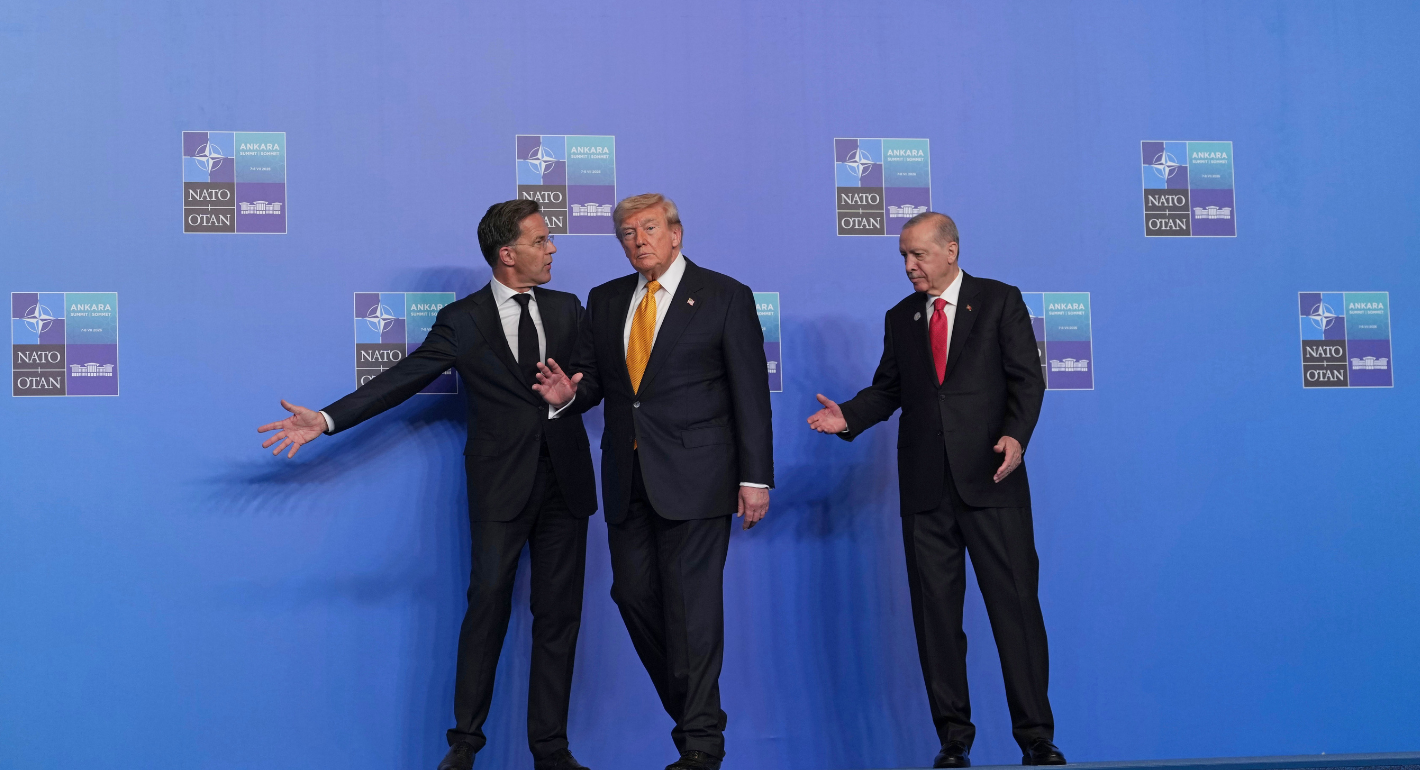
Nearly a year and a half after Europeans leaned into sucking up to Trump, the strategy has produced some benefits when it comes to Ukraine.
Rym Momtaz