

Commentary
Dmitri Trenin
{
  "authors": [
    "Dmitri Trenin"
  ],
  "type": "commentary",
  "centerAffiliationAll": "",
  "centers": [
    "Carnegie Endowment for International Peace",
    "Carnegie Russia Eurasia Center"
  ],
  "collections": [],
  "englishNewsletterAll": "",
  "nonEnglishNewsletterAll": "",
  "primaryCenter": "Carnegie Russia Eurasia Center",
  "programAffiliation": "",
  "programs": [],
  "projects": [],
  "regions": [
    "North America",
    "United States",
    "Russia",
    "Eastern Europe",
    "Ukraine"
  ],
  "topics": [
    "Foreign Policy"
  ]
}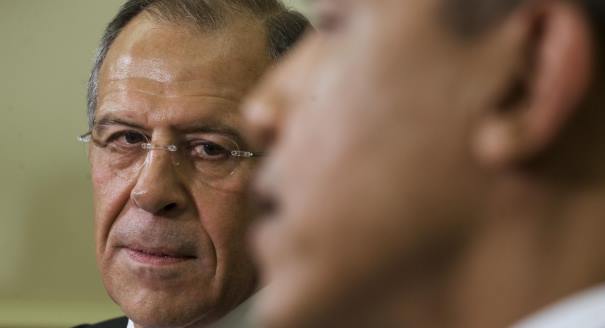
Source: Getty
The 25-year-long quest for Russia's integration with the West is off. A new normalcy is setting between Russia and the West resembles the Russo-British Great Game of the 19th century—this time between America and Russia.
In my discussions about Russia and the West in London last week, a sense of the end of an era was palpable. The 25-year-long quest for Russia's integration with the West is off, at least for the foreseeable future, everyone agreed. Russia is pivoting to itself, to its partners in Eurasia, and to Asia. Ukraine symbolizes the new period of intense rivalry between Russia and the West.
Interestingly, this conclusion is accompanied by some regret, but not too much alarm. While "Mr. Putin's motives and strategies" are often believed to be a mystery, there is no fear of an impending armed conflict involving Russia and the West. Ukraine is seen as remaining unstable for some time. Vladimir Putin has certainly won no friends in Western Europe, but a new cold war is not believed to be on the cards unless Russia goes on to destabilize the Baltics, which everyone, except the Balts themselves, thinks is a very long shot.
Appetite for Ukraine, Georgia and Moldova drawing closer to the EU is very light. The disappointment which followed the 2004 Orange revolution has made people more cautious. There is particularly little willingness to foot Ukraine's bills. And there is absolutely no support for Ukraine's NATO membership. The business community is concerned about the effect of the sanctions, but it also tends to be pragmatic. It is now time to buy, while the Russian stock is low.
Russia and Ukraine no longer dominate the foreign policy debate. Other issues have come to the fore, such as the rise of extremists in Iraq and Syria, and most recently Britain's relations with the European Union. This does not suggest that things will get back to where they were between Russia and the West, but rather that a new normalcy is setting in, which will probably resemble the Russo-British Great Game of the 19th century—this time between America and Russia, and under conditions of globalization—than the 20th century Cold War between communism and capitalism.
Former Director, Carnegie Moscow Center
Trenin was director of the Carnegie Moscow Center from 2008 to early 2022.
Recent Work
Dmitri Trenin
Dmitri Trenin
Carnegie does not take institutional positions on public policy issues; the views represented herein are those of the author(s) and do not necessarily reflect the views of Carnegie, its staff, or its trustees.

The European Commissioner for Trade is headed to China. But after President Xi’s bridge-building visit to Washington, can a more isolated EU overcome Beijing’s stranglehold on critical raw materials? Who will blink first?

Rym Momtaz, ed.

European NATO countries are wrestling with the possibility of U.S. disengagement from the alliance. With the continent’s security increasingly uncertain, governments must restore the credibility of their collective defense.



Hans-Dieter Lucas, Adam Thomson, Pierre Vimont

The domestic impacts of how long it is taking to end the war in Ukraine have pushed the French electorate to the political extremes and compromised the country’s diplomatic capacity.
Rym Momtaz

Before the next wave of EU enlargement takes place, the union needs to grapple with thorny questions of how power is distributed among its members.


Emil Sondaj Hansen, Ditte Brasso Sørensen

The new U.S.–Denmark–Greenland agreement will help Washington exert political, economic, and financial dominance under the guise of security. Yet, it acknowledged Copenhagen’s and Nuuk’s sovereignty on the island.

Marc Pierini