

In The Media
John Judis
{
  "authors": [
    "John Judis"
  ],
  "type": "legacyinthemedia",
  "centerAffiliationAll": "",
  "centers": [
    "Carnegie Endowment for International Peace",
    "Malcolm H. Kerr Carnegie Middle East Center"
  ],
  "collections": [],
  "englishNewsletterAll": "",
  "nonEnglishNewsletterAll": "",
  "primaryCenter": "Carnegie Endowment for International Peace",
  "programAffiliation": "",
  "programs": [],
  "projects": [],
  "regions": [
    "North America",
    "United States",
    "Middle East",
    "Israel",
    "Palestine",
    "Levant"
  ],
  "topics": [
    "Political Reform",
    "Foreign Policy"
  ]
}
Source: Getty
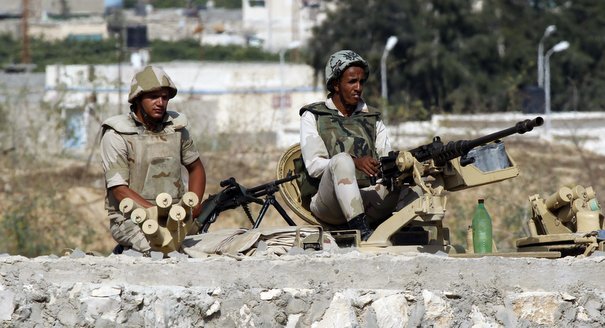
Political changes in the Middle East have reduced the importance to the Obama administration, and perhaps to future American administrations, of resolving the Israeli-Palestinian conflict.
Source: New Republic
Since the breakdown of negotiations between the Israelis and Palestinians at the end of March, the Obama administration has become openly critical of Israeli Prime Minister Benjamin Netanyahu’s government and more inclined to mediate between the parties rather than siding with one party against another. That has continued through the war in Gaza and the various calls for a ceasefire.
But as the here-and-gone-and-back-again ceasefire makes abundantly clear, the administration’s new stance has had little impact on the Israelis or the Palestinians or on the war, because it has not come as part of a concerted effort or a discernible strategy. That partly reflects administration disillusionment with the peace process, but it also reflects overall political changes in the Middle East. These changes have reduced the importance to the Obama administration, and perhaps to future American administrations, of resolving the Israeli-Palestinian conflict.The first clear sign that the administration was displeased with Netanyahu came in Ynet reporter Nahum Barnea’s interviews in early May with senior American officials who blamed Netanyahu for the breakdown of the negotiations. Later that month, the Obama administration indicated that it would defy the Israelis by recognizing and working with the new unity government created by Fatah and Hamas. That was a complete reversal from the administration’s stance three years ago when it joined Israel in denouncing a similar unity pact between Fatah and Hamas.
After Hamas rejected the first Egyptian-Israeli ceasefire proposal (which would have ended Israeli airstrikes and Hamas rocket attacks, allowed Israeli ground forces to destroy tunnels, and said nothing about the blockade of Gaza), Kerry worked out with Qatar and Turkey, which were representing Hamas’s interests, a new ceasefire plan that didn’t allow the Israelis to stay and that committed the two sides to renewing negotiations, originally promised in the December 2012 ceasefire, to ease the blockade, and to address "all security issues." The Israelis angrily rejected the proposal.
On August 6, as ceasefire talks began in Cairo, Obama endorsed Hamas’s central demand. He told a press conference that he wanted the negotiations to address the removal of the blockade. The Palestinians in Gaza, he said, needed to see "some prospects for an opening of Gaza so that they do not feel walled off and incapable of pursuing basic prosperity." In each of these measures, the administration distanced itself from Netanyahu and the Israelis and attempted, by taking the Palestinians more into account, to play the role of honest broker between the warring parties.
None of these efforts have, however, had any effect. Obama concluded the August 6 press conference by saying that “the U.S. goal right now is to make sure the ceasefire holds,” but two days later hostilities have recommenced. The United States may, perhaps, have been unable to do anything, but it made failure almost certain by not following up any of its initiatives or by undertaking them in a surprisingly slapdash manner. After announcing in May it would recognize the new unity government, and advising it on its membership, the administration sat by while the Netanyahu government used the kidnapping and murder of three Israeli teenagers to round up Hamas’s leadership and supporters in the West Bank. The move was clearly aimed at undermining the unity government.
When the war between Israel and Hamas broke out in July, Kerry was in China. Instead of cutting short his visit and attempting to secure a ceasefire, as Secretary of State Hillary Clinton had done in November 2012 when fighting erupted in Israel and Gaza during her visit to Cambodia, Kerry allowed Egyptian President Abdel Fattah el-Sisi, a sworn enemy of the Muslim Brotherhood, of which Hamas is a wing, to work out a cease-fire agreement with Netanyahu that Hamas was bound to reject.
When Kerry finally swung into action after Hamas rejected the cease-fire proposal, he worked out a proposal with Qatar and Turkey without consulting Egypt, the Israelis, or Mahmoud Abbas and the Palestinian Authority. Kerry’s proposal—and the way he had gone about framing it—was criticized not just by the Israelis but by the Palestinian Authority and Egyptians. Ha’aretz diplomatic correspondent Barak Ravid, no fan of Netanyahu’s, wrote that Kerry’s “conduct in recent days over the Gaza ceasefire raises serious doubts over his judgment and perception of regional events. It’s as if he isn’t the foreign minister of the world’s most powerful nation, but an alien, who just disembarked his spaceship in the Middle East.”
Sadly, the story doesn’t end there. After having played little role in the recent 72-hour cease fire proposal, Kerry declined to participate personally in the Cairo talks, leaving a senior aide to represent the United States. The obvious contrast, of course, was with former Secretary of State Henry Kissinger who in similar circumstances might have been shuttling frantically among all the interested parties, but Kerry’s and the Obama administration’s conduct in Gaza even contrasts with that of Obama and former Secretary of State Hillary Clinton in November and December of 2012. It’s not as if Kerry and Obama were space aliens, but that the events in Gaza seemed to appear to them as happening on another planet and requiring only intermittent attention. What has happened?
One obvious reason for Obama and Kerry’s growing indifference is their failure to spur negotiations between Netanyahu and Abbas. Obama gave up in May 2011. He allowed Kerry to try his luck during the last twelve months, but he didn’t participate actively himself. Obama doesn’t like to take initiatives that might fail. And he and Kerry now appear to regard the Israeli-Palestinian conflict as irredeemable and irresolvable. But there are also broader geopolitical factors in play.
In the past, when American presidents and secretaries of state lent their time and prestige to resolve the Israeli-Palestinian conflict, it was because they were concerned about American relations with Israel’s neighbors. Earlier, it was also because of the U.S.-Soviet rivalry in the Middle East. Henry Kissinger’s shuttle diplomacy was motivated by preventing another Saudi-led oil boycott (which was originally provoked by American aid to Israel during the 1973 Yom Kippur War). Kissinger also wanted to keep Egypt in the American Cold War camp. George H.W. Bush initiated the Madrid conference on the conflict in 1991 as part of a pledge to Arab countries whose support he solicited in the first Persian Gulf War.
Similarly, George W. Bush participated in the Quartet and endorsed a two-state solution as part of the effort to solidify Tony Blair’s support and Saudi acquiescence in invading Iraq. And Bush and Obama during his first term were concerned that the continuation of the Israeli-Palestinian conflict was recruiting followers to Al Qaeda and its allied groups in the Middle East and North Africa. In addition, Obama was under pressure to intervene in November 2012 from Egyptian President Mohamed Morsi, who was sympathetic to Hamas as a branch of the Muslim Brotherhood. There were strong regional and even global reasons for intervening in each of these cases. But these factors are not so much in play anymore.
The pressure from surrounding Arab states to resolve the conflict has eased, particularly in the wake of the failure of the Arab Spring. Lebanon, Syria, and Iraq are preoccupied with their own internal problems. Egypt’s el-Sisi is more sympathetic to Netanyahu than to Hamas’s Khalid Mishal. The Saudis are still committed to their own initiative for resolving the conflict, but like el-Sisi, have no affection for Hamas. And the threat of terrorism in the region—typified by Islamic State in Iraq and Syria—is no longer so clearly tied to the continuation of the Israeli-Palestinian conflict. So while the surrounding Arab states are always under public pressure to end Israeli attacks against Palestinians, Arab leaders have not displayed the same urgency.
The pressure that existed in 1975 or even 2005 doesn’t exist. As a result, Obama and Kerry do not feel the same urgency to act. In Iraq—where the world’s oil supply is threatened—they might feel urgency, but not in Israel and Gaza, no matter how dreadful the war’s humanitarian consequences. In the language of diplomacy, ending the Israeli-Palestinian conflict is no longer a vital interest for America.

Former Visiting Scholar
As a visiting scholar at Carnegie, Judis wrote The Folly of Empire: What George W. Bush Could Learn from Theodore Roosevelt and Woodrow Wilson.
Recent Work
John Judis
John Judis
Carnegie does not take institutional positions on public policy issues; the views represented herein are those of the author(s) and do not necessarily reflect the views of Carnegie, its staff, or its trustees.
The wars in Ukraine and the Middle East are existential threats to Europe as a peace project. Leaders and citizens alike must reaffirm their solidarity to face up to today’s multifaceted challenges.

Marc Pierini
The U.S.-sponsored TRIPP deal is driving the Armenia-Azerbaijan peace process forward. But foreign and domestic hurdles remain before connectivity and economic interdependence can open up the South Caucasus.



Thomas de Waal, Areg Kochinyan, Zaur Shiriyev
Donald Trump has demanded that European allies send ships to the Strait of Hormuz while his war of choice in Iran rages on. He has constantly berated NATO while the alliance’s secretary-general has emphatically supported him.

Rym Momtaz, ed.
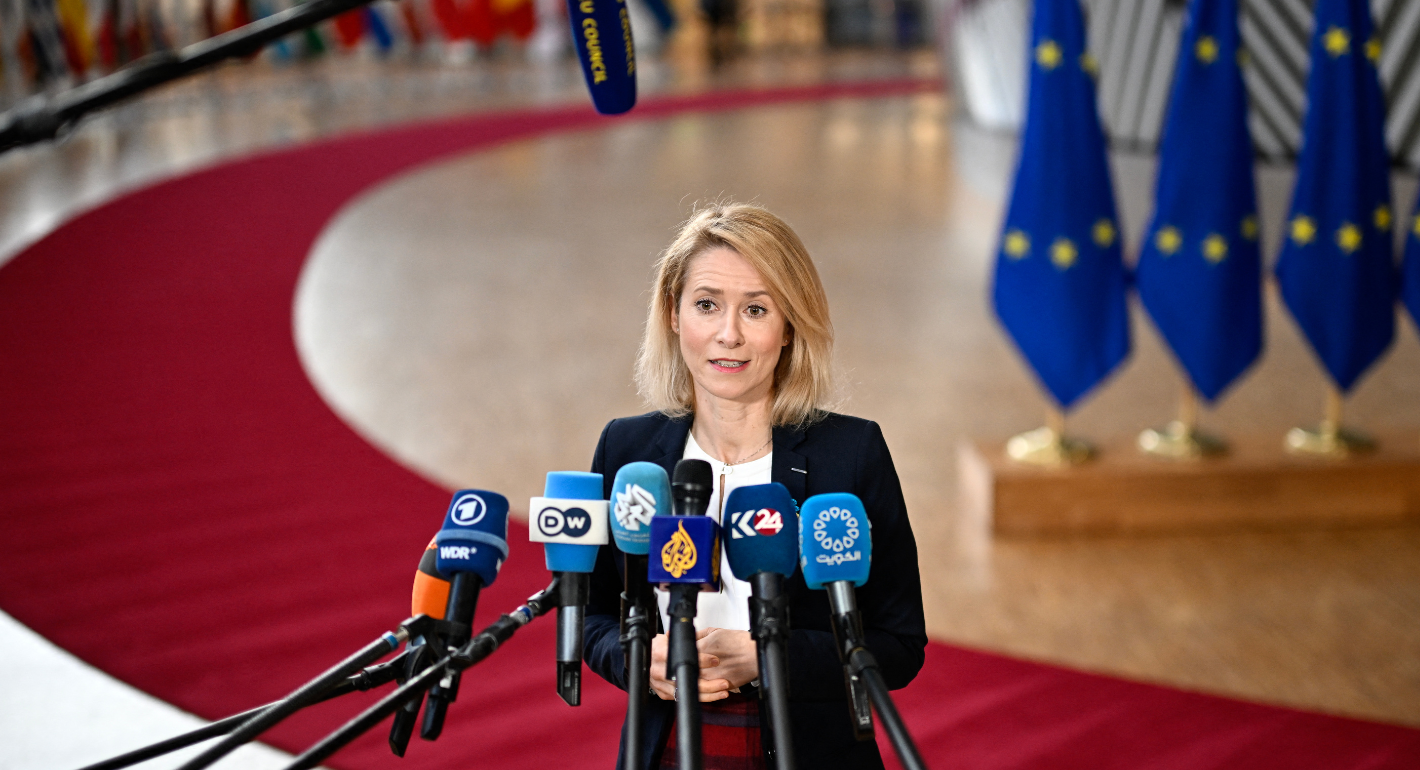
The EU is structurally incapable of reacting to today’s foreign policy crises. The union must fold the EEAS into the European Commission and create a security council better prepared to take action on the global stage.

Stefan Lehne
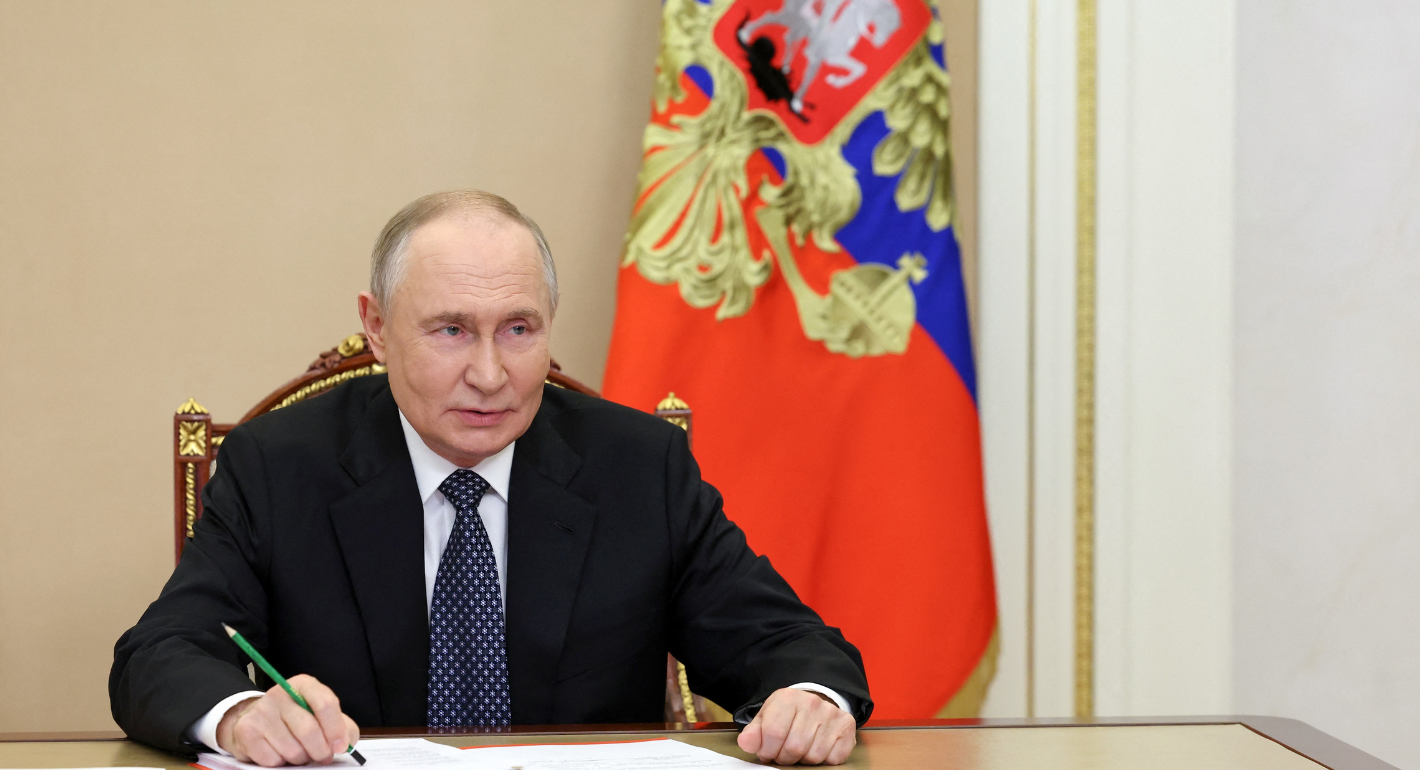
The war in Ukraine is costing Russia its leverage overseas. Across the South Caucasus and Middle East, this presents an opportunity for Europe to pick up the pieces and claim its own sphere of influence.


William Dixon, Maksym Beznosiuk