

Q&A
Dara Massicot, Aaron David Miller, Andrew S. Weiss
{
  "authors": [
    "Andrew S. Weiss"
  ],
  "type": "legacyinthemedia",
  "centerAffiliationAll": "dc",
  "centers": [
    "Carnegie Endowment for International Peace"
  ],
  "collections": [],
  "englishNewsletterAll": "ctw",
  "nonEnglishNewsletterAll": "",
  "primaryCenter": "Carnegie Endowment for International Peace",
  "programAffiliation": "russia",
  "programs": [
    "Russia and Eurasia"
  ],
  "projects": [],
  "regions": [
    "Russia",
    "Eastern Europe",
    "Ukraine"
  ],
  "topics": [
    "Security",
    "Global Governance",
    "Foreign Policy"
  ]
}
Source: Getty
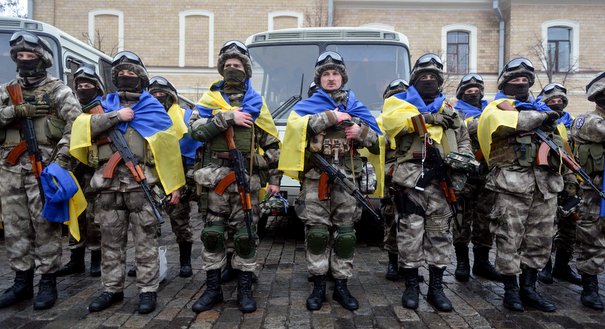
As the armed conflict escalates in the Donbas, the West finds that it has run out of ideas on how to help settle the Ukraine crisis.
Source: WBEZ Worldview
Speaking on WBEZ Worldview, Carnegie’s Andrew S. Weiss explained that there is little expectation that the Ukraine crisis will be settled soon. Meaningful, honest conversation with the Russia has broken down, the EU is struggling to find internal consensus on dealing with the situation, and the conversation in Washington is increasingly dominated by discussions of military aid. Given Ukraine’s legacy of not implementing IMF programs, there is also a growing fear that the Ukrainian government, despite all of its promises, will underdeliver on much needed reforms, he added.
James Family Chair, Vice President for Studies
Andrew S. Weiss is the James Family Chair and vice president for studies at the Carnegie Endowment for International Peace, where he oversees research on Russia, Ukraine, and Eurasia. His graphic novel biography of Vladimir Putin, Accidental Czar: the Life and Lies of Vladimir Putin, was published by First Second/Macmillan in 2022.
Recent Work

Dara Massicot, Aaron David Miller, Andrew S. Weiss

Frances Z. Brown, Nate Reynolds, Priyal Singh, …
Carnegie does not take institutional positions on public policy issues; the views represented herein are those of the author(s) and do not necessarily reflect the views of Carnegie, its staff, or its trustees.
As we close out another season of Strategic Europe, it is worth taking stock of the deep shifts underway.

Rym Momtaz
The hybrid warfare landscape is evolving rapidly, leaving policymakers without clear strategies. To better inform their work in addressing emerging challenges, governments must dig deeper into the underlying dynamics at play.

Raluca Csernatoni, Alicia Wanless
The EU had to compromise to adopt a twenty-first sanctions package against Russia, exposing growing cracks in the union’s resolve. Is this latest, weaker round worth it to keep pressure on Moscow?
Rym Momtaz, ed.

Trump is distracted and Ukraine wants Europe to step up. The continent’s leaders must find their voice and assert it in talks with Russia.

Alissa de Carbonnel

Mounting economic strain and battlefield losses will not necessarily make the Kremlin less dangerous. They could instead push Moscow toward a more aggressive hybrid campaign designed to test NATO’s Eastern flank, exploit allied hesitation, and fracture European resolve.

Maksym Beznosiuk