

Commentary
Joseph Bahout
{
  "authors": [
    "Joseph Bahout"
  ],
  "type": "legacyinthemedia",
  "centerAffiliationAll": "dc",
  "centers": [
    "Carnegie Endowment for International Peace",
    "Malcolm H. Kerr Carnegie Middle East Center"
  ],
  "collections": [
    "Arab Awakening"
  ],
  "englishNewsletterAll": "menaTransitions",
  "nonEnglishNewsletterAll": "",
  "primaryCenter": "Carnegie Endowment for International Peace",
  "programAffiliation": "MEP",
  "programs": [
    "Middle East"
  ],
  "projects": [],
  "regions": [
    "Middle East",
    "Saudi Arabia",
    "Western Europe",
    "France",
    "Gulf"
  ],
  "topics": [
    "Political Reform",
    "Foreign Policy"
  ]
}
Source: Getty
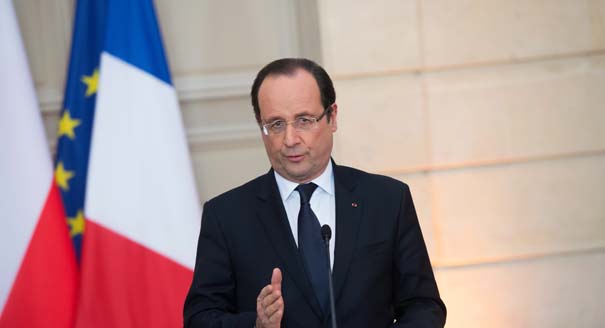
France and Saudi Arabia have agreements on a number of issues, such as Iran’s nuclear program, but France has several concerns about the way Saudi Arabia is positioning itself toward the Arab Spring.
Source: Radio France International
Speaking on Radio France International, Carnegie’s Joseph Bahout explained that historically, France’s relationship with Saudi Arabia has been strong on economic grounds. France and Saudi Arabia have agreements on a number of issues, such as Iran’s nuclear program and the departure of Syrian President Bashar al-Assad from power, Bahout said. However, France has several concerns about the way Saudi Arabia is positioning itself toward the Arab Spring in general, he argued, and with Islamist movements in particular.
This interview originally aired on Radio France International.
Former Nonresident Fellow, Middle East Program
Joseph Bahout was a nonresident fellow in Carnegie’s Middle East Program. His research focuses on political developments in Lebanon and Syria, regional spillover from the Syrian crisis, and identity politics across the region.
Recent Work
Joseph Bahout
Joseph Bahout
Carnegie does not take institutional positions on public policy issues; the views represented herein are those of the author(s) and do not necessarily reflect the views of Carnegie, its staff, or its trustees.

Ahead of a tough winter for Ukraine, Donald Trump’s swing back toward Russia bodes ill. But instead of panicking, Kyiv’s European allies are focusing on action.

Rym Momtaz

Funding Ukraine remains a priority for European leaders. As Russia’s war of aggression heads into another winter, two feasible options to mobilize support for Kyiv should be fast-tracked.


Vladyslav Rashkovan, Gregory P. Wilson

While the EU and European governments are embracing the much-lauded middle-power moment, this entails three difficult conundrums.

Richard Youngs

A notable degree of participative democracy has firmly arrived in Europe. But to have more far-reaching impact, democratic deliberation needs to move into a radically new phase.
Richard Youngs

Much has been said of the changes Brussels is trying to make to the EU enlargement process. Here’s why gradual integration might—or might not—be the answer.

Dimitar Bechev