

Article
Frederic Grare
{
  "authors": [
    "Frederic Grare"
  ],
  "type": "other",
  "centerAffiliationAll": "dc",
  "centers": [
    "Carnegie Endowment for International Peace"
  ],
  "collections": [],
  "englishNewsletterAll": "ctw",
  "nonEnglishNewsletterAll": "",
  "primaryCenter": "Carnegie Endowment for International Peace",
  "programAffiliation": "SAP",
  "programs": [
    "South Asia"
  ],
  "projects": [],
  "regions": [
    "South Asia",
    "India",
    "Pakistan"
  ],
  "topics": [
    "Security",
    "Foreign Policy"
  ]
}
Source: Getty
The evolution of the India-Pakistan bilateral relationship is unlikely to depend primarily on New Delhi.
Source: Washington Quarterly
As the new Indian government has settled in, what will happen to its relations with Pakistan? While some take comfort in the idea that the strong nationalist credentials of the new Prime Minister could facilitate a peace agreement with Pakistan, others argue that the risk of communal violence created by the Hindutva ideology1 of the new government could be a potential impediment to better India–Pakistan relations. But the evolution of the bilateral relationship is unlikely to depend on either of these considerations; it is also unlikely to depend primarily on New Delhi.
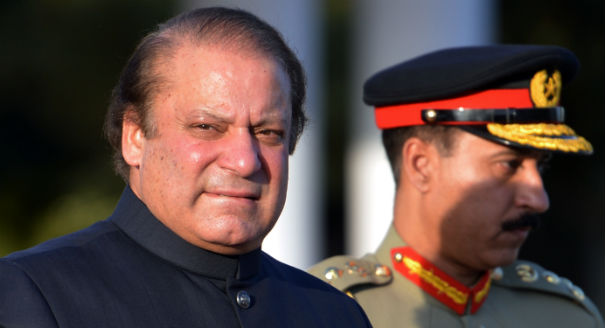
Narendra Modi's decision to invite his Pakistani counterpart, Nawaz Sharif, to his May 26, 2014, swearing-in ceremony, along with all the other heads of state or government from the South Asian Association for Regional Cooperation (SAARC), was considered a positive gesture on both sides of the border. The meeting between the two Prime Ministers was cordial and frank but—to no one's surprise—not groundbreaking. However, the two countries have already interpreted this early meeting differently.The Indian side viewed it as a signal that New Delhi was open to resetting relations, but on its own terms, most of which have to do with preventing terrorist attacks from originating in Pakistan or with Pakistani support. By inviting the leaders of all South Asian countries to his swearing-in ceremony, Modi undoubtedly seized the initiative. There is, however, little he can or is probably willing to do unless Pakistan clarifies its own position on the terrorism issue. Substantive progress will thus demand much more than friendly political statements.
The Pakistani side welcomed the invitation, but both Islamabad's initial hesitation and the comments on the visit from personalities close to the security establishment soon demonstrated that, although Pakistan officially and sincerely favors better relations with India, its security establishment and parts of the political establishment remain divided on the issue of normalizing relations with its neighbor. Islamabad can no longer hide its inaction behind the electoral campaign in India or the alleged inability of Indian decision makers to deliver on their own potential commitments. Although it cannot coerce India toward any specific outcome, the actual decision to normalize relations will primarily be Pakistan's.
Even among Sharif's own constituency, there is no consensus on if, when, or how to move forward with normalization. A large part of the problem lies in the difficult civilian-military relationship within Pakistan. Pakistan has known four military coups and been under military leadership for most of its existence. Even when civilians have held power, the military has pulled the strings from behind the scene in order to retain control over domains they considered to be theirs, like foreign policy. It is doubtful that the Pakistani military entertains the idea of better relations with India for reasons beyond the narrowly tactical. The Pakistani military is currently busy on its Western front, fighting insurgent groups and terrorism, and is unwilling and incapable to confront India. It therefore needs the civilian government to appease India.
The Pakistani prime minister therefore has a diplomatic opportunity, but it remains to be seen whether he will have the capacity to translate it into a substantial rapprochement with India. Nawaz Sharif and the Pakistani military are caught in a zero-sum game of sorts: Sharif is trying to turn a tactical rapprochement with India into a more permanent arrangement (the nature of which still needs to be defined), but the military is trying desperately to prevent any reset with India from affecting any of Pakistan's territorial claims, i.e. Kashmir.
Because of Pakistan's dysfunctional civil-military relations, and therefore uncertain political future, India is left in an essentially reactive role. The election of a new government may have elevated India's resolve to punish Pakistan in case of terrorist attack—Narendra Modi made several statements during the electoral campaign to indicate he would not remain passive in the case of a Pakistan-supported terrorist attack and could not afford politically to look weak should that occur. However, this has not increased India's capacity to coerce its neighbor into any specific outcome. India, recognizing that the ball is squarely in Pakistan's court, is therefore likely to adopt a “wait and see” attitude. But New Delhi will have to walk a fine line between ignoring Pakistan (which it cannot really afford to do) and keeping the door to better relations open wide enough to provide a real incentive for Islamabad to adopt meaningful new policies—all without making unilateral concessions to Pakistan.
Three main issues will prove particularly meaningful for the trajectory of bilateral relations in the coming years: Pakistan's potential extension of Most Favored Nation (MFN) status to India, the Kashmir dispute, and Afghanistan. All of these issues are important in their own respect; none will be decisive. But each provides a barometer for Pakistan's domestic political scene and for India–Pakistan relations in general. What is at stake is not only regional stability and prosperity, but the consolidation of democracy in Pakistan...
Read the full text of this article in the Washington Quarterly.
Former Nonresident Senior Fellow, South Asia Program
Frédéric Grare was a nonresident senior fellow at the Carnegie Endowment for International Peace, where his research focuses on Indo-Pacific dynamics, the search for a security architecture, and South Asia Security issues.
Recent Work
Frederic Grare
Frederic Grare
Carnegie does not take institutional positions on public policy issues; the views represented herein are those of the author(s) and do not necessarily reflect the views of Carnegie, its staff, or its trustees.

The European Commissioner for Trade is headed to China. But after President Xi’s bridge-building visit to Washington, can a more isolated EU overcome Beijing’s stranglehold on critical raw materials? Who will blink first?

Rym Momtaz, ed.

European NATO countries are wrestling with the possibility of U.S. disengagement from the alliance. With the continent’s security increasingly uncertain, governments must restore the credibility of their collective defense.



Hans-Dieter Lucas, Adam Thomson, Pierre Vimont

The new U.S.–Denmark–Greenland agreement will help Washington exert political, economic, and financial dominance under the guise of security. Yet, it acknowledged Copenhagen’s and Nuuk’s sovereignty on the island.

Marc Pierini

A summer of escalation in the Black Sea has hurt Ukraine economically and is exacerbating world food security. A truce is needed—as is a broader reframing of Europe’s Ukraine strategy.

Thomas de Waal

Are Germany’s economic, industrial, and political struggles becoming a liability for the EU’s ability to rise to the geopolitical moment?
Rym Momtaz, ed.