

Article
C. Raja Mohan, Darshana M. Baruah
{
  "authors": [
    "C. Raja Mohan"
  ],
  "type": "legacyinthemedia",
  "centerAffiliationAll": "dc",
  "centers": [
    "Carnegie Endowment for International Peace",
    "Carnegie India",
    "Malcolm H. Kerr Carnegie Middle East Center"
  ],
  "collections": [],
  "englishNewsletterAll": "ctw",
  "nonEnglishNewsletterAll": "",
  "primaryCenter": "Carnegie India",
  "programAffiliation": "SAP",
  "programs": [
    "South Asia"
  ],
  "projects": [],
  "regions": [
    "South Asia",
    "India",
    "Gulf",
    "Middle East",
    "Yemen"
  ],
  "topics": [
    "Foreign Policy",
    "Security"
  ]
}
Source: Getty
India can’t secure its multiple interests in the Middle East without a much greater political engagement with all of the contending forces in the region.
Source: Indian Express
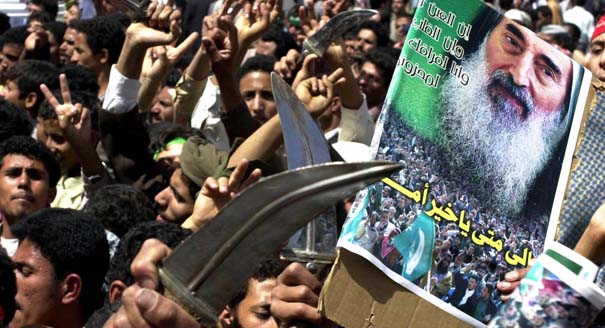
As yet another crisis unfolds in the Middle East, India is scrambling to evacuate its citizens from the war zone. This time in Yemen, where the war between the Iran-backed Houthi rebels and the Saudi-supported government has escalated in the last few days.
Delhi’s immediate focus is naturally on evacuating its citizens in the Middle East. But there is little debate in India on the need to create more effective mechanisms to deal with what has become a recurring challenge in the region. Worse still, there is no effort in Delhi to develop a more strategic approach to the region where the old political order is breaking down.
India has begun to mobilise naval and air resources to rescue the nearly 3700 citizens said to be living in Yemen. Over the last decade, amidst the deepening turmoil in the region, Delhi had to embark on frequent military operations to evacuate Indian citizens, including in Lebanon (2006) and Libya (2011). Last year, Delhi spent considerable diplomatic energy in securing the release of Indians trapped in the war between Baghdad and the ISIS in Iraq.Delhi must expect the conditions to deteriorate as conflict spreads across the Middle East. Among the countries already affected are Syria, Iraq, Libya and now Yemen. The sectarian dimension of these conflicts suggests that the current round of blood letting in the region could be a prolonged one.
The Sunni-Shia dynamic finds a more political expression in the rivalry between Saudi Arabia and Iran that are backing competing groups in the various civil wars. If Tehran has lent support to the Bashar al Assad regime in Syria, Riyadh is arming various rebel groups trying to overthrow the government in Damascus.
Pro-Iranian militia groups are at the forefront of the war to reverse the occupation of the Sunni heartland in Iraq by the ISIS. Saudi Arabia has watched with dismay as Baghdad moved steadily closer to Tehran and has been reluctant to accommodate the interests of the Sunni minority in Iraq.
In Bahrain, the situation is the opposite, where the monarchy representing the Sunni minority has sought to repress the Shia majority. Saudi Arabia has accused Iran of fomenting trouble in Bahrain and sent in a military force into the kingdom in to shore up the government in March 2011.
Saudi air strikes against the Houthi rebels in the last few days, like the military action in Bahrain, is rooted in deep fears about Iran’s growing power in the region. The political and military challenge in Yemen is much tougher than the one that Saudi Arabia faced four years ago in Bahrain.
Saudi Arabia has mobilised a number of fellow Arab governments in including those in Bahrain, Egypt, Jordan, Kuwait, Morocco, Qatar, Sudan and the United Arab Emirates. Riyadh is also pressing Pakistan to join the Sunni intervention in Yemen.
Whatever the immediate outcome in Yemen’s civil war, the sectarian tensions in the region and the proxy wars between Saudi Arabia and Iran are likely to become more intense in the coming years. But India has shown little sensitivity to the changing political dynamic in the Middle East.
Delhi continues to view the region from the perspective of the Arab-Israeli conflict that no longer is the primary contradiction in the Middle East. India can’t secure its multiple interests in the region–including energy and the safety of its migrant workers–without a much greater political engagement of all the contending forces in the Middle East.
This article was originally published in the Indian Express.
Former Nonresident Senior Fellow, Carnegie India
A leading analyst of India’s foreign policy, Mohan is also an expert on South Asian security, great-power relations in Asia, and arms control.
Recent Work

C. Raja Mohan, Darshana M. Baruah


Alexander Gabuev, Paul Haenle, C. Raja Mohan, …
Carnegie does not take institutional positions on public policy issues; the views represented herein are those of the author(s) and do not necessarily reflect the views of Carnegie, its staff, or its trustees.

European Commission President Ursula von der Leyen is about to give her annual address on the state of the EU. Here’s what she won’t—but should—say.

Rym Momtaz

The aftermath of the Ceuta crisis shows Europe has drawn the wrong lessons. Rather than doubling down on failed migration policies, the EU needs to address the underlying roots of such episodes.

Richard Youngs

Canadian Prime Minister Mark Carney has twice inspired praise for standing up to U.S. President Donald Trump: at the 2026 World Economic Forum in Davos and on Canada-U.S. trade negotiations. Is Carney showing a third way better than the EU has in dealing with the Trump administration?
Rym Momtaz, ed.

The EU’s responses to two recent incidents expose the gulf between European perceptions and capabilities. Unless the union can bridge that gap, it will never become a real geostrategic power.
Rym Momtaz

European states control several Overseas Countries and Territories around the world that carry strategic, economic, and environmental weight. As great powers challenge the rules-based order, defending them is a geopolitical imperative for Europe.

Marc Pierini