

Article
C. Raja Mohan, Darshana M. Baruah
{
  "authors": [
    "C. Raja Mohan"
  ],
  "type": "legacyinthemedia",
  "centerAffiliationAll": "dc",
  "centers": [
    "Carnegie Endowment for International Peace",
    "Carnegie India"
  ],
  "collections": [],
  "englishNewsletterAll": "ctw",
  "nonEnglishNewsletterAll": "",
  "primaryCenter": "Carnegie India",
  "programAffiliation": "SAP",
  "programs": [
    "South Asia"
  ],
  "projects": [],
  "regions": [
    "Asia",
    "South Asia",
    "India"
  ],
  "topics": [
    "Domestic Politics",
    "Foreign Policy",
    "Political Reform"
  ]
}
Source: Getty
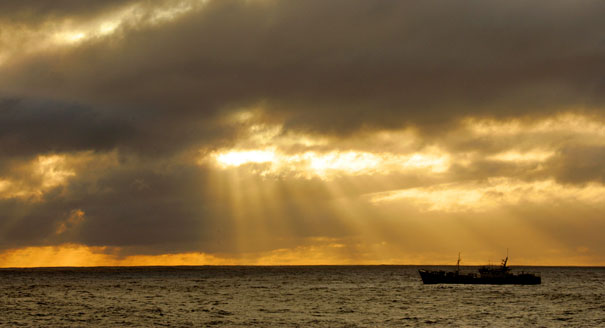
As he travels across the Indian Ocean this week, Prime Minister Narendra Modi’s biggest challenge is not countering China. His real problem is in Delhi, afflicted by a condition called continentalism, which has proved rather difficult to overcome.
Source: Indian Express
As he swings across the Indian Ocean this week, Prime Minister Narendra Modi’s biggest challenge is not about countering China. After all, Beijing is far away and India is right in the middle of the Indian Ocean. In the near term, the tyranny of geography will limit the scope and intensity of Chinese presence in the Indian Ocean. Modi’s real problem is in Delhi, afflicted by a condition called continentalism, which has proved rather difficult to overcome.
Continentalism, marked by an obsession with land frontiers and a sea blindness, has deep roots in Delhi’s political history. A number of factors made independent India even more vulnerable to the affliction. Partition created new boundaries within the subcontinent and turned Delhi’s political energies inward. The emergence of a strong China to the north and the contestation with it along the Indo-Tibetan border has long drained most of India’s strategic attention.
Despite a massive coastline and geographic primacy in the Indian Ocean, India had little time for its vast maritime frontiers. Its continentalist mindset was reinforced by Delhi’s inward economic orientation in the 1950s. If India’s economic footprint spread all across the Indian Ocean under the British Raj, it steadily diminished thanks to the policies of self-reliance and import substitution in the first decades after Independence.
In the realm of security, Delhi’s focus was on turning the Indian Ocean into a “zone of peace”, whatever that meant. As Great Britain chose to withdraw from the east of Suez in the late 1960s after two centuries of dominating the Indian Ocean, Delhi believed the UN would help replace British primacy with a system of collective security. While many littoral countries sought a major Indian security role, Delhi was a reluctant partner and declared quite cheerily that talk of a power vacuum was outdated in a post-colonial world.
Delhi’s approach began to change in the 1990s. As India embarked on globalisation and trade, economic connectivity with the Indian Ocean littoral began to come back on Delhi’s agenda. India also inched away from the military isolationism of the non-aligned era. After decades of hectoring the great powers to get out of the Indian Ocean, Delhi began to engage all of them, including the United States. At the multilateral level, it started to de-emphasise the UN and focused on regional institutions. Over the last few years, Delhi has sought to revive the moribund Indian Ocean Rim Association, set up in the late 1990s to promote regional cooperation.
Delhi has expanded bilateral and multilateral naval exercises with many of its neighbours in the Indian Ocean. It launched the Indian Ocean Naval Symposium, which brings together the chiefs of the navies every two years to discuss naval cooperation. India has also set up a joint mechanism with Sri Lanka and the Maldives for shared maritime domain awareness. The Indian navy has also focused on maritime capacity building, especially in the island states that occupy critical locations in the Indian Ocean.
The problem for Modi is that the change in Delhi’s Indian Ocean policy has been too limited and incremental to cope with the maritime challenges staring at India. Delhi has not been good at tying different, new policy strands into a coherent strategy for the Indian Ocean. Worse still, its political leadership has not had the will or energy to shake the bureaucratic establishment of its continentalist mindset.
To realise India’s full strategic potential in the Indian Ocean, Modi will need to focus on three things. One is to boost India’s own civilian maritime infrastructure, which has become terribly creaky and utterly inadequate for a country so dependent on the seas for its economic life.
Second, India needs to ramp up its capabilities to take up major maritime projects in other countries. China has stolen a march over India in this area simply because Delhi had gone to sleep. Beijing’s projects in the neighbourhood have given India a wake-up call, but Delhi does not have the capacity or a policy framework to bid for and execute major infrastructure projects in the Indian Ocean littoral.
Third, India needs to lend some vigour to its defence diplomacy in the region. Although Delhi talks the talk on being a “net security provider”, the ministry of defence is not ready to walk the walk. The MoD is a long way from developing the capabilities, systems and attitudes to make India a productive security partner for the countries of the region.
Finally, Delhi is aware of the need for a big idea to frame the government’s plans for a more purposeful maritime engagement in the Indian Ocean. Some have toyed with “Project Mausam” to promote India’s soft power in the littoral. Others have proposed the idea of a “spice route” to capture India’s interest in restoring its historic linkages in the littoral. The prime minister might want to settle on a simple idea that is already a part of Delhi’s lexicon — the “Sagar Mala”. The concept was first unveiled by the Atal Bihari Vajpayee government in 2003, with the objective of rapid modernisation and expansion of India’s maritime sector. Modi has sought to revitalise that idea. It can easily be extended to promote India’s connectivity in the Indian Ocean, in both economic and security domains.
Whatever we may call it, the first step is to get Delhi’s internal act on the Indian Ocean together. China’s Silk Road initiatives, for example, did not emerge from some clever foreign policy strategy; they are an extension of Beijing’s domestic initiatives on infrastructure development.
This article was originally published in the Indian Express.
Former Nonresident Senior Fellow, Carnegie India
A leading analyst of India’s foreign policy, Mohan is also an expert on South Asian security, great-power relations in Asia, and arms control.
Recent Work

C. Raja Mohan, Darshana M. Baruah


Alexander Gabuev, Paul Haenle, C. Raja Mohan, …
Carnegie does not take institutional positions on public policy issues; the views represented herein are those of the author(s) and do not necessarily reflect the views of Carnegie, its staff, or its trustees.

Trump is distracted and Ukraine wants Europe to step up. The continent’s leaders must find their voice and assert it in talks with Russia.

Alissa de Carbonnel

Mounting economic strain and battlefield losses will not necessarily make the Kremlin less dangerous. They could instead push Moscow toward a more aggressive hybrid campaign designed to test NATO’s Eastern flank, exploit allied hesitation, and fracture European resolve.

Maksym Beznosiuk

Over the past ten years, NATO has held almost as many summits as it did during the entirety of the Cold War. Are they still useful, or is it time to stop holding annual meetings?

Rym Momtaz, ed.

As the EU confronts profound challenges, several leaders have called for fundamental reform to the union’s model—but only modest, superficial changes have resulted. What if Europe really could be reimagined from zero today: What should such a redesigned European order look like?

Richard Youngs, ed.
Nearly a year and a half after Europeans leaned into sucking up to Trump, the strategy has produced some benefits when it comes to Ukraine.
Rym Momtaz