

Article
Thomas de Waal, Areg Kochinyan, Zaur Shiriyev
{
  "authors": [
    "Thomas de Waal"
  ],
  "type": "commentary",
  "centerAffiliationAll": "",
  "centers": [
    "Carnegie Endowment for International Peace",
    "Carnegie Europe",
    "Carnegie Russia Eurasia Center"
  ],
  "collections": [],
  "englishNewsletterAll": "",
  "nonEnglishNewsletterAll": "",
  "primaryCenter": "Carnegie Europe",
  "programAffiliation": "",
  "programs": [],
  "projects": [
    "Eurasia in Transition"
  ],
  "regions": [
    "North America",
    "United States",
    "Middle East",
    "Türkiye",
    "Caucasus",
    "Armenia"
  ],
  "topics": [
    "Foreign Policy"
  ]
}
Source: Getty
The solemn day of April 24 is approaching, when Armenians will mark the centenary of the tragedy that befell their nation in 1915, known as the Armenian Genocide.
The solemn day of April 24 is approaching, when Armenians will mark the centenary of the tragedy that befell their nation in 1915, known as the Armenian Genocide.
The media and politicians are mainly obsessed with one approach to the centenary—the use or non-use of the term genocide, as if this one word defines everything about the Armenian experience of 1915 and Armenian-Turkish relations.
On April 22, Armenian-American political leaders reported with anger and disappointment that they had been briefed that President Obama will not use the word genocide in his April 24 statement.
And thankfully there are multiple other imaginative commemorations by different Armenians that will inform the general public about this black historical episode. They are a reminder that there is no monolithic “Armenian diaspora,” but more than six million Armenians descended from the Ottoman Armenians of 1915, each with their own family history.
These are people who call what happened to their grandparents and great-grandparents the Armenian Genocide but who are less exercised by the politics of it.
The centenary is the occasion for the publication of a wave of memoirs telling the terrible vivid stories of Armenian survivors. One, Fragments of a Lost Homeland tells the story of an entire family, the Didilians. Two more, Four Years in the Mountains of Kurdistan and Goodbye Antoura are moving childhood memoirs of Armenian survivors of 1915. These human stories are worth a hundred press-releases by lobbying groups.
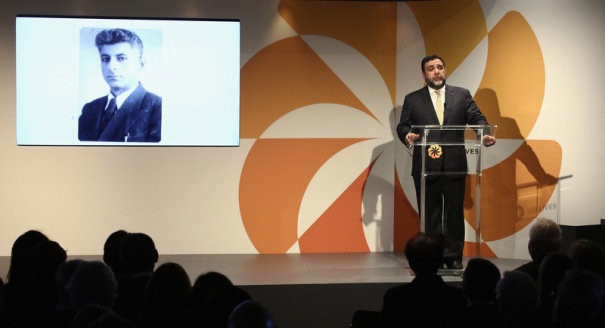
A more technologically advanced example of the same phenomenon is the 100 Lives project, a website of films and stories launched by the two Armenian entrepreneurs Ruben Vardanian and Noubar Afeyan. The Armenians who are recorded here are less defined by victimhood than celebrated for how they survived and what they have achieved. The website even has, Buzzfeed-style, an item on “24 unusual ways to commemorate the genocide centennial.”
In the same spirit, the intrepid Armenian photographer Scout Tufankjian, formerly Barack Obama’s campaign photographer, is producing a book about the Armenian diaspora from Argentina to Ethiopia.
Armenians are also commemorating the tragedy in the lands where it actually happened in what is now eastern Turkey. Ara Sarafian from the London-based Gomidas Institute led a tour across eastern Turkey. In the town of Bitlis he has helped win approval for a new William Saroyan Street, named after the American-Armenian writer whose family came from the town.
In the Kurdish-majority city of Diyarbakir, where the Kurdish HDP political party has gone further than any other force in Turkey in reaching out to the Armenians, the Istanbul-born Armenian pianist Raffi Bedrosyan will play a concert on April 24 in the restored Armenian church.
In Istanbul itself there will be a commemoration event on the evening of April 24 in the center of the city in Taksim Square. The Turkish government, having soured the atmosphere by scheduling competing commemorations for the Battle of Gallipoli on the same day, is somewhat correcting its mistake by helping to hold a ceremony at the Armenian Patriarchate.
It adds up to a diverse commemoration of this awful historical event that highlights Armenian creativity even as it mourns the dead of 1915.

Senior Fellow, Carnegie Europe
De Waal is a senior fellow at Carnegie Europe, specializing in Eastern Europe and the Caucasus.
Recent Work

Thomas de Waal, Areg Kochinyan, Zaur Shiriyev
Thomas de Waal
Carnegie does not take institutional positions on public policy issues; the views represented herein are those of the author(s) and do not necessarily reflect the views of Carnegie, its staff, or its trustees.
The U.S.-sponsored TRIPP deal is driving the Armenia-Azerbaijan peace process forward. But foreign and domestic hurdles remain before connectivity and economic interdependence can open up the South Caucasus.
Thomas de Waal, Areg Kochinyan, Zaur Shiriyev
Donald Trump has demanded that European allies send ships to the Strait of Hormuz while his war of choice in Iran rages on. He has constantly berated NATO while the alliance’s secretary-general has emphatically supported him.

Rym Momtaz, ed.
The EU is structurally incapable of reacting to today’s foreign policy crises. The union must fold the EEAS into the European Commission and create a security council better prepared to take action on the global stage.

Stefan Lehne
The war in Ukraine is costing Russia its leverage overseas. Across the South Caucasus and Middle East, this presents an opportunity for Europe to pick up the pieces and claim its own sphere of influence.

William Dixon, Maksym Beznosiuk

Amid increased polarization and the influence of disinformation, radical-right parties are once again gaining traction across Europe. With landmark elections on the horizon in several countries, are the EU’s geostrategic vision and fundamental values under existential threat?
Catherine Fieschi, Cas Mudde