

Article
- +1
Toby Dalton, Mark Hibbs, Nicole Grajewski, …
{
  "authors": [
    "Mark Hibbs"
  ],
  "type": "legacyinthemedia",
  "centerAffiliationAll": "dc",
  "centers": [
    "Carnegie Endowment for International Peace",
    "Malcolm H. Kerr Carnegie Middle East Center"
  ],
  "collections": [],
  "englishNewsletterAll": "ctw",
  "nonEnglishNewsletterAll": "",
  "primaryCenter": "Carnegie Endowment for International Peace",
  "programAffiliation": "NPP",
  "programs": [
    "Nuclear Policy"
  ],
  "projects": [],
  "regions": [
    "Middle East",
    "Türkiye"
  ],
  "topics": [
    "Political Reform",
    "Security",
    "Nuclear Policy",
    "Arms Control"
  ]
}
Source: Getty
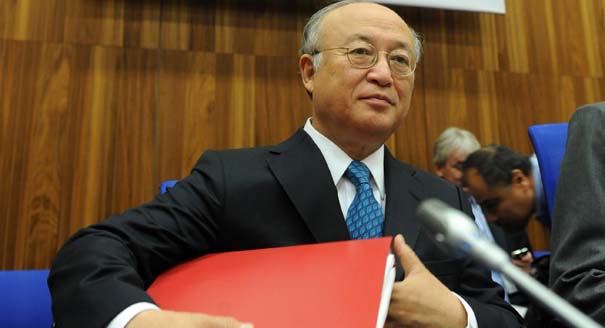
After ten years of thorough investigation, the IAEA found no evidence of any undeclared or clandestine nuclear activities in Turkey.
Source: Arms Control Wonk
Not for the first time, when Barack Obama declared April 2 that the greater Middle East has no real alternative to a nuclear accommodation with Iran, advocates of the “cascade of proliferation” theory warned us that Turkey’s future would be nuclear-armed.
In fact, kibitzers on both sides of the Iran divide routinely include Turkey in their quiver of arrows on the basis of a common assumption. Neocons claim that Turkey would “not be far behind” Saudi Arabia in a Middle East nuclear arms race if there’s an Iran deal. Some who instead favor diplomacy likewise fret that, without a deal, Saudi Arabia will get nuclear weapons first, and then will come Egypt and Turkey. Not only in Israel, where the proliferation domino theory is mainstream, has the view become commonplace that Turkey is heading toward nuclear latency.Away from the op-ed pages, during the 2015 Carnegie Nuclear Policy Conference last month I had conversations in which serious people with government intelligence backgrounds asserted that Turkey’s military is all about keeping open or even exercising an option to make nuclear weapons. During a track-1.5 meeting in Moscow three months before, someone who has been in and out of the United States government also put Turkey on the short list of usual suspects.
In 2004, Leon Fuerth’s chapter in The Nuclear Tipping Point suggested that Turkey could go nuclear if certain things happened. Today many or even most of the items he mentioned are, at least to some extent, realities: Turkish doubts about NATO’s resolve; failure to prevent a nuclear-armed North Korea; a “shift in Turkish public opinion toward a more Islamic or nationalist orientation”; resurging Russian expansionism; and–nota bene–the “creation of a power vacuum in the Middle East as the result of the multiple failures of American policy for the post-war reconstruction of Iraq or the failure of the U.S. to make progress toward resolving the Israeli-Palestinian conflict.”
All of the above not withstanding, last week two Carnegie colleagues argued that Turkey will not go nuclear. They pushed back for sound reasons but they drew their conclusions from an altitude of 30,000 feet.
My problem instead with all the recent loose Turkey talk is that it is out of sync with the facts on the ground in Turkey’s atomic physics installations, uranium purification and processing labs, hot cells, and nuclear training centers.
If Turkey were to aim for a nuclear-weapons capability, it would have quite a long road to travel. I say that because there’s nothing on record–not in the open literature, not on file at the IAEA Department of Safeguards, and apparently not in current U.S. government intelligence dossiers–that documents any Turkish undeclared nuclear activities.
Let’s start with what the U.S. government knows. Right after my Moscow meeting, I asked people who matter if there was anything happening in Turkey as reported to the Executive Branch in real time that would substantiate concern that Turkey is–as this frequently cited German media report insists is the case–following Iran’s example from the 1990s. The answer was categorical: No, there isn’t. The U.S. has asked Turkey about its interest in uranium enrichment. Turkey has reiterated that uranium enrichment is a future long-term option should Turkey build a lot of power reactors–but is not currently being pursued.
For about twenty years before 2000, Washington repeatedly urged Ankara to shut down a stream of nuclear dual-use exports to Pakistan’s centrifuge enrichment program. This matter is mentioned in Fuerth’s chapter, alongside some speculation by the author about a Turkish nuclear weapons option, supported in part by mostly Greek and Indian press reports vaguely suggesting that Turkey was getting some kind of nuclear baksheesh from Pakistan.
I have looked into this.
When the United States government during the 1980s investigated those Turkish dual-use exports to Pakistan, the intelligence did not conclude that this commerce was part of any broader and secret bilateral relationship between Turkey and Pakistan related to sensitive bilateral nuclear cooperation. Instead, telephone wiretaps led to the finding that there were corrupt relationships involving specific Turkish government officials and executives that provided cover for the exports. When Turkey finally cracked down on this trade, one exporter packed up and moved his business offshore to a location in the Levant and continued to ship sensitive wares to clients of the A.Q. Khan network until this was finally snuffed out.
Turkey’s nuclear activities since 1982 have been subject to a comprehensive IAEA safeguards agreement. What’s more, since 2001 Turkey has had an Additional Protocol in force. So what does the IAEA know about Turkey?
Thanks to Turkey’s implementation of the Additional Protocol, the Department of Safeguards has been all over Turkey’s nuclear program since 2001. To establish a comprehensive nuclear profile for Turkey, the IAEA carefully reconstructed Turkey’s nuclear history from its beginning in the 1950s.
The IAEA’s Turkey probe was exceptionally thorough and it went on for a decade. That’s a lot of time to spend on a country without any declared sensitive nuclear fuel cycle operations and no nuclear power infrastructure. For a country with this kind of profile, the IAEA might take about half that time to reach a so-called “broader conclusion” that all its nuclear activities are declared and are understood.
There were specific reasons why the IAEA took longer on Turkey. To begin with, there was A.Q. Khan. He was still hard at work when the IAEA and Turkey began implementing the Additional Protocol. So the IAEA unpacked those Turkish dual-use exports to Pakistan, as well as the murky reports about tit-for-tat Pakistani transfers to Turkey. Second, the IAEA drilled into Turkey’s wide-ranging experimental activities concerning the front end of the nuclear fuel cycle. For several decades, these included the whole gamut of uranium processing steps from prospecting through to chemical processing and fuel fabrication, as well as research and experiments using thorium that might be useful should Turkey someday intend to irradiate Th-232 in a reactor and then separate the fissile U-233. The IAEA needed to know whether all that front-end material processing and experimenting was accounted for. It was. A little procedural and bureaucratic prickliness was encountered along the way, but after 10 years, the IAEA had found no evidence of any undeclared or clandestine nuclear activities. The IAEA asked questions about centrifuges and was satisfied that Turkish scientists were not enriching uranium. There was no third-party information (read: intelligence from IAEA member states) pointing to clandestine nuclear activities being carried out by Turkish scientists.
In 2012 the IAEA awarded Turkey what it calls the “broader conclusion” on safeguards. That means this:
For each State with a [comprehensive safeguards agreement] and an additional protocol based on [Infcirc/540] in force, a broader conclusion can be drawn for the year concerned that all of the nuclear material in the State had been placed under safeguards and remained in peaceful nuclear activities or was otherwise adequately accounted for. To be able to draw this conclusion, the IAEA must draw the conclusions of both the non-diversion of the nuclear material placed under safeguards and the absence of undeclared nuclear material and activities for the State as a whole. The conclusion of the absence of undeclared nuclear material and activities is drawn when the activities performed under an additional protocol have been completed, when relevant questions and inconsistencies have been addressed, and when no indications have been found by the IAEA that, in its judgement, would constitute a safeguards concern.
Turkey’s broader conclusion has been renewed each year since 2012. Before and after any Iran deal, domino-theory advocates can bang all the drums they like, but as long as Turkey’s broader conclusion is thoroughly vetted and renewed annually, and provided that Turkey refrains from launching a uranium-enrichment program that it doesn’t need, I won’t lose any sleep over this.
This blog post was originally published on Arms Control Wonk.

Nonresident Senior Fellow, Nuclear Policy Program
Hibbs is a Germany-based nonresident senior fellow in Carnegie’s Nuclear Policy Program. His areas of expertise are nuclear verification and safeguards, multilateral nuclear trade policy, international nuclear cooperation, and nonproliferation arrangements.
Recent Work


Toby Dalton, Mark Hibbs, Nicole Grajewski, …
Mark Hibbs
Carnegie does not take institutional positions on public policy issues; the views represented herein are those of the author(s) and do not necessarily reflect the views of Carnegie, its staff, or its trustees.

Before the next wave of EU enlargement takes place, the union needs to grapple with thorny questions of how power is distributed among its members.


Emil Sondaj Hansen, Ditte Brasso Sørensen

The new U.S.–Denmark–Greenland agreement will help Washington exert political, economic, and financial dominance under the guise of security. Yet, it acknowledged Copenhagen’s and Nuuk’s sovereignty on the island.

Marc Pierini

A summer of escalation in the Black Sea has hurt Ukraine economically and is exacerbating world food security. A truce is needed—as is a broader reframing of Europe’s Ukraine strategy.

Thomas de Waal

Are Germany’s economic, industrial, and political struggles becoming a liability for the EU’s ability to rise to the geopolitical moment?

Rym Momtaz, ed.

European states control several Overseas Countries and Territories around the world that carry strategic, economic, and environmental weight. As great powers challenge the rules-based order, defending them is a geopolitical imperative for Europe.
Marc Pierini