

Commentary
Thomas de Waal
{
  "authors": [
    "Thomas de Waal"
  ],
  "type": "commentary",
  "centerAffiliationAll": "",
  "centers": [
    "Carnegie Endowment for International Peace",
    "Carnegie Europe",
    "Carnegie Russia Eurasia Center"
  ],
  "collections": [],
  "englishNewsletterAll": "",
  "nonEnglishNewsletterAll": "",
  "primaryCenter": "Carnegie Europe",
  "programAffiliation": "",
  "programs": [],
  "projects": [
    "Eurasia in Transition"
  ],
  "regions": [
    "Caucasus",
    "Georgia",
    "Eastern Europe",
    "Ukraine",
    "Western Europe",
    "Moldova"
  ],
  "topics": [
    "Global Governance",
    "Foreign Policy"
  ]
}
Source: Getty
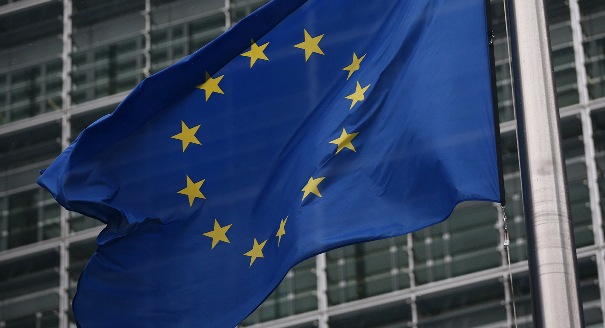
There is sobering news for the EU in two new polls from Georgia and Moldova, showing that public support for the European project is faltering.
The leaders of the European Union meet for their latest Eastern Partnership Summit in Riga this week in a gloomy mood.
Since the last summit in Vilnius at the end of 2013, Ukraine has sunk into crisis and conflict. With the small exception of Belarus, which is undergoing a slight thaw in its relations with Brussels, there is also bad news for the EU from the other countries that fall under the Eastern Partnership umbrella. Armenia has moved closer towards joining the Russia-led Eurasian Union project—even though Armenian imports to Russia have actually fallen over the last year. Azerbaijan has moved even further from Europe towards becoming a Central Asia style authoritarian regime.
In practice, this advice mainly applies to Georgia and Moldova, as Ukraine is currently more in need of emergency assistance than long-term reform projects.
But there is sobering news for the EU in two new polls from both countries, showing that public support for the European project is faltering.
In both places, the government is losing popularity. Last month’s opinion poll in Georgia, one in a regular series commissioned by the National Democratic Institute, shows a decline in support for the current governing Georgian Dream coalition, caused mainly by its disappointing performance on the economy. However, most voters have swung not to the party associated with the former government, the United National Movement, but into the “Don’t Know” column.
There is still fairly strong support among Georgians—68 percent in favor as against 16 percent against—for their country’s Association Agreement with the EU. But there is also a sharp increase in approval ratings for the Eurasian Union with 31 per cent of those surveyed now supporting Georgia joining the project. (Evidently, some Georgians want the impossible and to be part of both projects).
Moldova should have much more going for it. It has geographic proximity to the EU and the unstinting support of an EU neighbor, Romania. But here the news for Brussels is even worse. The latest Barometer of Public Opinion poll shows a strong swing in favor of the Eurasian Union (58 percent support) as against the European Union (40 percent support).
The consensus of Moldovan analysts is that public is venting its anger at the governing “pro-European” coalition of the Liberal Democratic Party (PLDM) and the Democratic Party (PDM) and its perceived implication in this year’s massive corruption scandal that has rocked the country in which one billion dollars has disappeared from three major banks. Few believe that the young businessman under house arrest and accused of the crime is the mastermind behind it.
There is fault on both sides for the stalling of the Eastern Partnership project.
Eastern European governments have not been fully honest with voters about the costs of European integration and tend to present approximation with the EU as something they are automatically entitled to. In all these countries there is still an ingrained habit of trying to play the would-be patrons, Brussels and Moscow, off against each other to win cost-free political support and economic aid—or, to put it another way, of treating them as the new Gosplan.
On the EU side, as Richard Youngs and I argue, the Brussels lacks a big vision and gives the impression that a re-design of the various EU “instruments” will solve the region’s problems.
In the shorter term, the EU does have one big carrot it can offer to both Georgia and Ukraine, having given the same to Moldova. This is visa liberalization. But in the longer term, there is only one incentive the EU can offer that can make a fundamental difference. That is an EU membership perspective, but it is something the European Union has still not put on the table.

Senior Fellow, Carnegie Europe
Thomas de Waal is a senior fellow at Carnegie Europe, specializing in Eastern Europe and the Caucasus.
Recent Work
Thomas de Waal
Thomas de Waal
Carnegie does not take institutional positions on public policy issues; the views represented herein are those of the author(s) and do not necessarily reflect the views of Carnegie, its staff, or its trustees.

Russia is testing the waters of NATO’s mutual defense clause. What do strikes in Romanian and Bulgarian territorial waters mean for the alliance’s posture toward Moscow?

Dimitar Bechev

With its public finances in shambles, the far right polling at 35 percent ahead of the 2027 presidential election, and a growing protest movement, is France’s crisis a threat to the EU’s geopolitical awakening?

Rym Momtaz, ed.

Ahead of a tough winter for Ukraine, Donald Trump’s swing back toward Russia bodes ill. But instead of panicking, Kyiv’s European allies are focusing on action.
Rym Momtaz

Funding Ukraine remains a priority for European leaders. As Russia’s war of aggression heads into another winter, two feasible options to mobilize support for Kyiv should be fast-tracked.


Vladyslav Rashkovan, Gregory P. Wilson

While the EU and European governments are embracing the much-lauded middle-power moment, this entails three difficult conundrums.

Richard Youngs