

Article
C. Raja Mohan, Darshana M. Baruah
{
  "authors": [
    "C. Raja Mohan"
  ],
  "type": "legacyinthemedia",
  "centerAffiliationAll": "dc",
  "centers": [
    "Carnegie Endowment for International Peace",
    "Carnegie India"
  ],
  "collections": [],
  "englishNewsletterAll": "ctw",
  "nonEnglishNewsletterAll": "",
  "primaryCenter": "Carnegie India",
  "programAffiliation": "SAP",
  "programs": [
    "South Asia"
  ],
  "projects": [],
  "regions": [
    "Asia",
    "South Asia",
    "India",
    "Central Asia"
  ],
  "topics": [
    "Foreign Policy"
  ]
}
Source: Getty
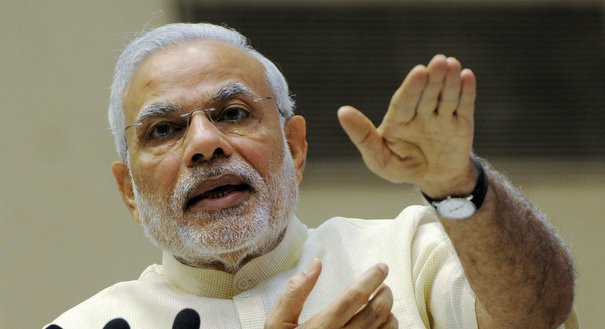
Modi’s trip to Central Asia is a welcome change in India’s relations in the area, but he will need a long-term strategy to overcome the constraints on India’s regional role.
Source: Indian Express
Prime Minister Narendra Modi’s extended trip to five Central Asian states, beginning today, is about reconnecting with a region that has inspired much political romanticism in New Delhi over the last quarter of a century, but little concrete action. When the Soviet Union broke up in 1991, Delhi had an advantage. As one of the few countries with special access to the five “stans” — Turkmenistan, Uzbekistan, Tajikistan, Kyrgyzstan and Kazakhstan — in the Soviet era, Delhi was well placed to cultivate lasting partnerships with the new republics.
India’s struggle to reform its economy, reconstruct relations with major powers after the Cold War and reconstitute ties with neighbours meant Central Asia was never high on Delhi’s foreign policy agenda.In deciding to travel to the region early on in his tenure, Modi is signalling change. That he plans to visit all the five countries of Central Asia in one go points to the prime minister’s high-octane diplomatic style and the new political will to make India relevant to the region.
As he travels across Central Asia, Modi will find that shifting tectonic plates have shattered the regional balance of power and are threatening the internal stability of its regimes. Modi will need much diplomatic skill and even more purposeful policies to seize the new geopolitical opportunities that are coming India’s way, and overcome the many traditional constraints on Delhi’s regional engagement.
One set of possibilities emerges from the rapid change in Central Asia’s external power structure. The unipolar moment that marked the end of the Cold War has been replaced by a widespread perception of American decline. If the US military’s failure in Iraq and the withdrawal of its armed forces from Afghanistan have heightened the sense of an American retreat, they only point to an enduring geopolitical fact — the West, even at the height of the colonial era, has never really been able to exercise dominance in inner Asia.
As Russia seeks to reassert its past primacy in Central Asia and a rising China expands its influence by the day, the strategic dynamic has become essentially regional. The Central Asian states are looking for a larger and more independent Indian role in the region. The words “larger” and “independent” are critical to understanding Modi’s inner Asian imperatives.
In responding to Central Asia’s quest to diversify its strategic partnerships, Modi must signal an important departure from the UPA government’s approach to the region.
In its second term, the UPA government tended to tail Russia and China in Central Asia. Its uncritical endorsement of the Russian and Chinese regional agendas signalled a profound lack of empathy on Delhi’s part for the region’s strong desire for “strategic autonomy” from both Russia and China.
Having escaped from Moscow’s orbit, the regional states have no wish to slip back into the Russian womb. While they are eager to benefit from China’s economic dynamism, they have no interest in replacing Moscow’s suzerainty over Central Asia with Beijing’s hegemony.
In the early 1990s, the newly independent republics were quite happy to welcome an American role in the region. The Central Asian regimes, however, were deeply disappointed by Washington’s confusing oscillation between the objectives of promoting their independence from Russia and preaching the virtues of Jeffersonian democracy.
No one in the region expects India to replace the Americans or challenge the Russians and the Chinese, who loom large over Central Asia. But they have no utility for an India that plays second fiddle to Moscow and Beijing. What they want to see is a more vigorous Indian role that can expand their room for strategic manoeuvre.
As Modi seeks to strengthen ties with America, Russia and China, he is in a good position to leverage the contradictions among these major powers. Amid the growing limitations on its role, the US has publicly supported a more visible Indian presence in the region.
Russia’s deteriorating relations with the US and Europe have inevitably pushed Moscow closer to Beijing. While its tactical interests have converged with those of China, Moscow is not too comfortable with China’s rapidly growing clout in Central Asia. Moscow, then, has every reason to support Indian activism in the region, which can promote a bit of regional multipolarity.
While Beijing is wary of India’s strategic dalliance with America, it is not averse to a measure of regional cooperation with Delhi. While it keeps propping up Pakistan against India, Beijing may not want to push India into a US-led coalition against China. Its support to the full membership of India and Pakistan in the Shanghai Cooperation Organisation is part of this new calculus.
While nimble diplomacy might let Modi turn this turbulence to Delhi’s advantage, he will need a long-term strategy to overcome the enduring constraints on India’s role in Central Asia. One of them is the lack of physical connectivity to the region. Delhi’s recent engagement with Iran on developing its port infrastructure and the transport corridor to inner Asia are important first steps.
Difficult geography has never prevented India from developing stronger economic ties. But Delhi’s trade and investment policies and its incapacity to implement infrastructure projects abroad have severely crimped India’s regional commercial profile. On the security front, too, the region wants India to step up cooperation in combating emerging threats from terrorism and religious extremism. The rise of the Islamic State in the region and the unfolding instability in Afghanistan have made such cooperation an urgent need. Modi also needs to end India’s traditional reluctance to embark upon an expansive military diplomacy in the region. Overcoming India’s inertia will certainly take a while. But Modi is well positioned to make a fresh start in Central Asia.
This article was originally published in the Indian Express.
Former Nonresident Senior Fellow, Carnegie India
A leading analyst of India’s foreign policy, Mohan is also an expert on South Asian security, great-power relations in Asia, and arms control.
Recent Work

C. Raja Mohan, Darshana M. Baruah


Alexander Gabuev, Paul Haenle, C. Raja Mohan, …
Carnegie does not take institutional positions on public policy issues; the views represented herein are those of the author(s) and do not necessarily reflect the views of Carnegie, its staff, or its trustees.

The EU can impose sanctions but struggles to enforce them without the United States. With Washington increasingly disinterested in backing European interests, the bloc must now fend for itself.


Nicu Popescu, Tiago Antunes

Russia is testing the waters of NATO’s mutual defense clause. What do strikes in Romanian territorial waters mean for the alliance’s posture toward Moscow?

Dimitar Bechev

With its public finances in shambles, the far right polling at 35 percent ahead of the 2027 presidential election, and a growing protest movement, is France’s crisis a threat to the EU’s geopolitical awakening?

Rym Momtaz, ed.

Ahead of a tough winter for Ukraine, Donald Trump’s swing back toward Russia bodes ill. But instead of panicking, Kyiv’s European allies are focusing on action.
Rym Momtaz

Funding Ukraine remains a priority for European leaders. As Russia’s war of aggression heads into another winter, two feasible options to mobilize support for Kyiv should be fast-tracked.


Vladyslav Rashkovan, Gregory P. Wilson