

Research
- +5
Alper Coşkun, Fatih Ceylan, Tacan İldem, …
{
  "authors": [
    "Sinan Ülgen"
  ],
  "type": "legacyinthemedia",
  "centerAffiliationAll": "dc",
  "centers": [
    "Carnegie Endowment for International Peace",
    "Carnegie Europe",
    "Malcolm H. Kerr Carnegie Middle East Center"
  ],
  "collections": [
    "Turkey’s Transformation"
  ],
  "englishNewsletterAll": "ctw",
  "nonEnglishNewsletterAll": "",
  "primaryCenter": "Carnegie Europe",
  "programAffiliation": "EP",
  "programs": [
    "Europe"
  ],
  "projects": [],
  "regions": [
    "Middle East",
    "Europe",
    "Türkiye",
    "Iran"
  ],
  "topics": [
    "Security"
  ]
}
Source: Getty
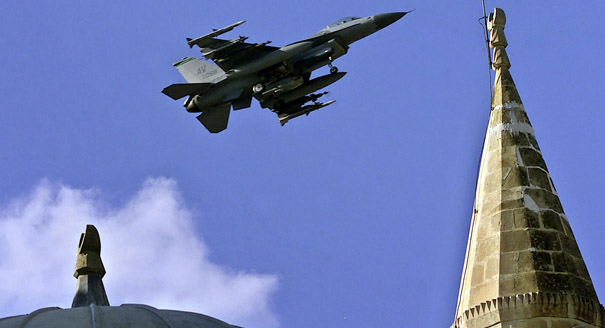
If Turkey wants to maintain its regional influence, it has to play a more concrete part in the coalition against the self-styled Islamic State.
Source: CNN
ARWA DAMON, CNN CORRESPONDENT: The sidelines are no longer an option. Turkey cannot afford to maintain its controversial, albeit cautious approach to the Syrian war raging next door.
SINAN ULGEN, CARNEGIE EUROPE: There has been a reassessment in Ankara that this policy cannot continue. In order for Turkey to be able to persevere and to maintain its own regional influence, it had to be part in a much more visible concrete way in the entire ISIS coalition.DAMON: Turkey is now bombing ISIS targets. And after lengthy negotiations with Washington, conceded on some of its positions such as, demanding strikes on the Assad regime and agreed to open Turkish bases and air space to the U.S. aircraft to create, not a no-fly zone, but a so-called ISIS-Free Zone.
ULGEN: And the weakness of this plan is essentially about who is going to be on the ground to protect us this zone free of ISIS.
DAMON: And can Turkey protect its own population against ISIS retaliation? Some people even stopped taking the Istanbul metro, after unsubstantiated reports that certain stations would be targeted.
Turkey also reopened the front with its domestic battle against the PKK, the Kurdistan workers party, which it deems a terrorist organization, a move that severely heightened tensions between the Turks and Kurds, tensions that, in the past three decades, have claimed some 40,000 lives.
Turkey needs to ensure that it has the capital to launch this multi- pronged contentious anti-terrorism campaign, calling on fellow NATO members to convene, a special meeting of the Alliance on Tuesday.
ULGEN: What Turkey wants to do with this is essentially two things. One is to communicate to its allies, the new security environment, its new threat assessment, after its decision to become a much more visible and active player in the anti-ISIS coalition. And secondly, it wants to get the political backing within NATO, for what it's called its campaign against terrorism, which on the one hand includes ISIS and, on the other hand, the PKK.
DAMON: These are all very intricate maneuvers when it comes to the regional game of chess. One that may not lead to the defeat of ISIS, but could help diminished its capabilities. These moves not necessarily a game changer, but they are changing how Turkey is playing the game.

Senior Fellow, Carnegie Europe
Sinan Ülgen is a senior fellow at Carnegie Europe in Brussels, where his research focuses on Turkish foreign policy, transatlantic relations, international trade, economic security, and digital policy.
Recent Work

Alper Coşkun, Fatih Ceylan, Tacan İldem, …
Carnegie does not take institutional positions on public policy issues; the views represented herein are those of the author(s) and do not necessarily reflect the views of Carnegie, its staff, or its trustees.

Are Germany’s economic, industrial, and political struggles becoming a liability for the EU’s ability to rise to the geopolitical moment?

Rym Momtaz, ed.

European Commission President Ursula von der Leyen is about to give her annual address on the state of the EU. Here’s what she won’t—but should—say.
Rym Momtaz

Radical-right parties are expected to do well in upcoming elections in four of the EU's biggest member states. If successful, they could prevent the union from addressing key challenges ahead.

Stefan Lehne

The aftermath of the Ceuta crisis shows Europe has drawn the wrong lessons. Rather than doubling down on failed migration policies, the EU needs to address the underlying roots of such episodes.

Richard Youngs

An overwhelming victory by a far-right-wing party in a small state in eastern Germany will have major repercussions for Chancellor Friedrich Merz’s coalition.

Judy Dempsey